Why Do My Ears Hurt? A Complete Guide to Hypoallergenic Jewelry
Why Your Ears Deserve Better Than Mass-Market Metal
Earrings for sensitive ears are pieces made from hypoallergenic materials that minimize irritation. If your ears get red, itchy, or painful after wearing earrings, you're likely reacting to metals like nickel, cobalt, or chromium found in low-quality jewelry.
Quick Solutions for Sensitive Ears:
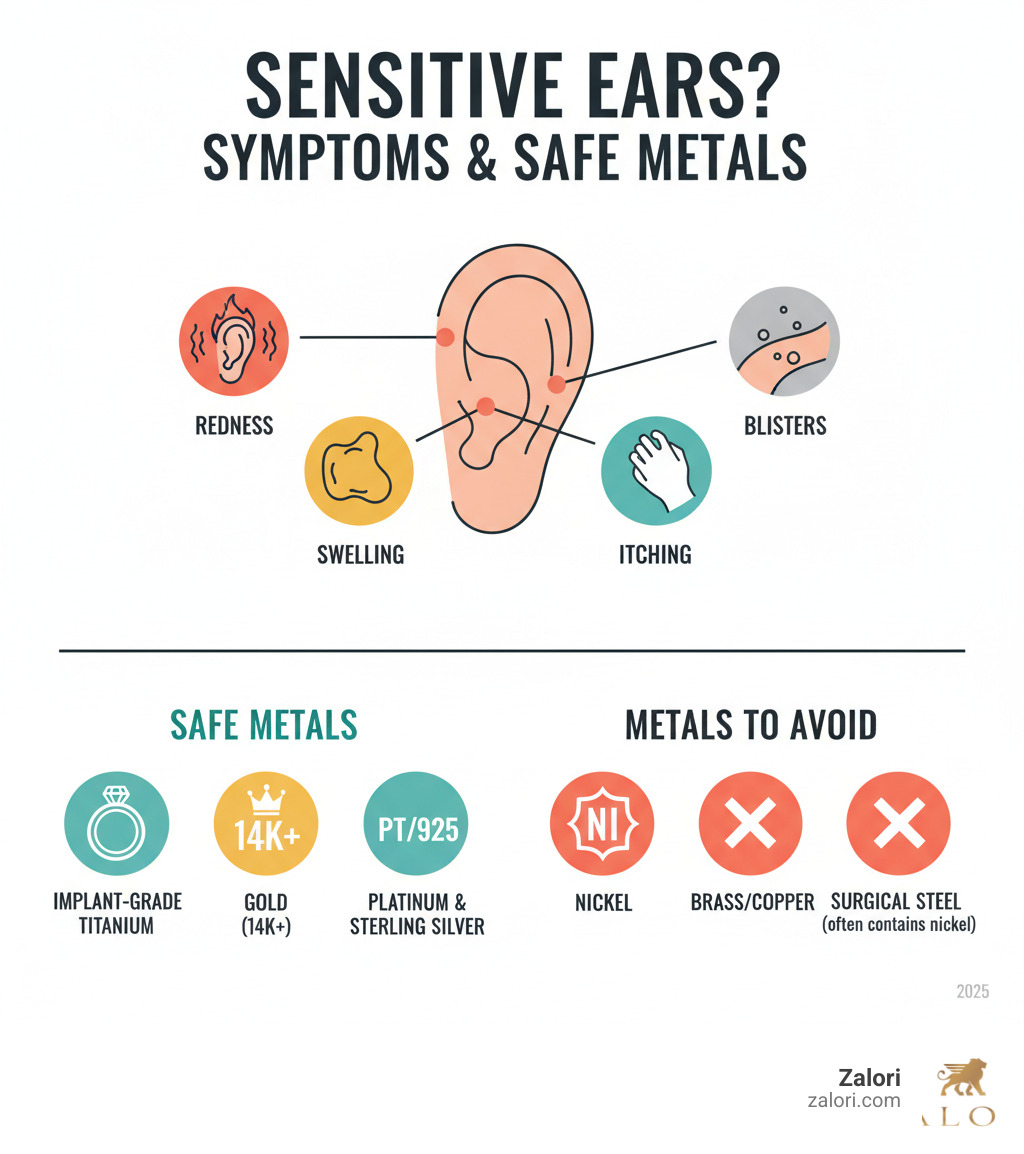
- Best Materials: Implant-grade titanium, 14k+ gold, platinum, or 925 sterling silver
- Avoid: Nickel, brass, copper, and "surgical steel" (often contains nickel)
- Safe Styles: Flat-back studs, lightweight hoops, and threadless posts
- Key Signs: Redness, itching, swelling, or pain around the piercing
You're not alone. As one person shared, "For years I thought I couldn't wear earrings because of a nickel allergy. But, I was wrong!" The real issue is often poor quality materials and ill-fitting designs that trap moisture, creating the perfect storm for irritation. The good news is that understanding the cause makes it easy to avoid.
I'm Eric Roach Zalori, and through my work with Summit Metals Holdings and Zalori, I've seen how quality materials make all the difference. Our commitment to starting with sterling silver as a base and using only genuine precious metals ensures you get jewelry that's both beautiful and safe for daily wear.
Understanding Why Your Ears React to Jewelry
When your ears react to jewelry, it's often contact dermatitis—your immune system overreacting to harmless metal particles. Your body launches an inflammatory response, and your earlobes become the battlefield. A nickel allergy is the most common trigger, and the moisture in your earlobes creates the perfect environment for a reaction.
Because piercings create a direct pathway into your body, earrings cause more problems than other jewelry. The intimate, long-term contact means even tiny amounts of problematic metals can trigger significant reactions.
For a deeper dive into how different metals affect sensitive skin, check out our guide on Unmasking the Metals Your Guide to Irritation-Free Jewelry. You can also find more detailed information about metal allergies at this helpful resource.
The Main Culprits Behind Ear Irritation
Knowing which metals to avoid is half the battle when shopping for earrings for sensitive ears.
- Nickel: The worst offender. It's cheap and widely used in inexpensive jewelry. Sensitivity can develop over time with repeated exposure.
- Cobalt and Chromium: Nickel's troublesome cousins. They can cause significant reactions and often hide in alloys and plated jewelry.
- Brass and Copper: These highly reactive metals oxidize, which can cause irritation and turn your skin green.
- Low-quality alloys: Vague terms like "mixed metals" can hide any combination of the problematic metals above.
- Plated Metals: These are deceptive. A thin layer of gold or silver can wear away, exposing an irritating base metal like nickel or brass underneath.
- "Surgical Steel": This term is misleading. Most surgical steel used in jewelry is 316L stainless steel, which can contain up to 12% nickel and cause reactions.
Recognizing the Symptoms of a Metal Allergy
Your ears will tell you when something is wrong. Recognizing the signs early can save you from days of discomfort.
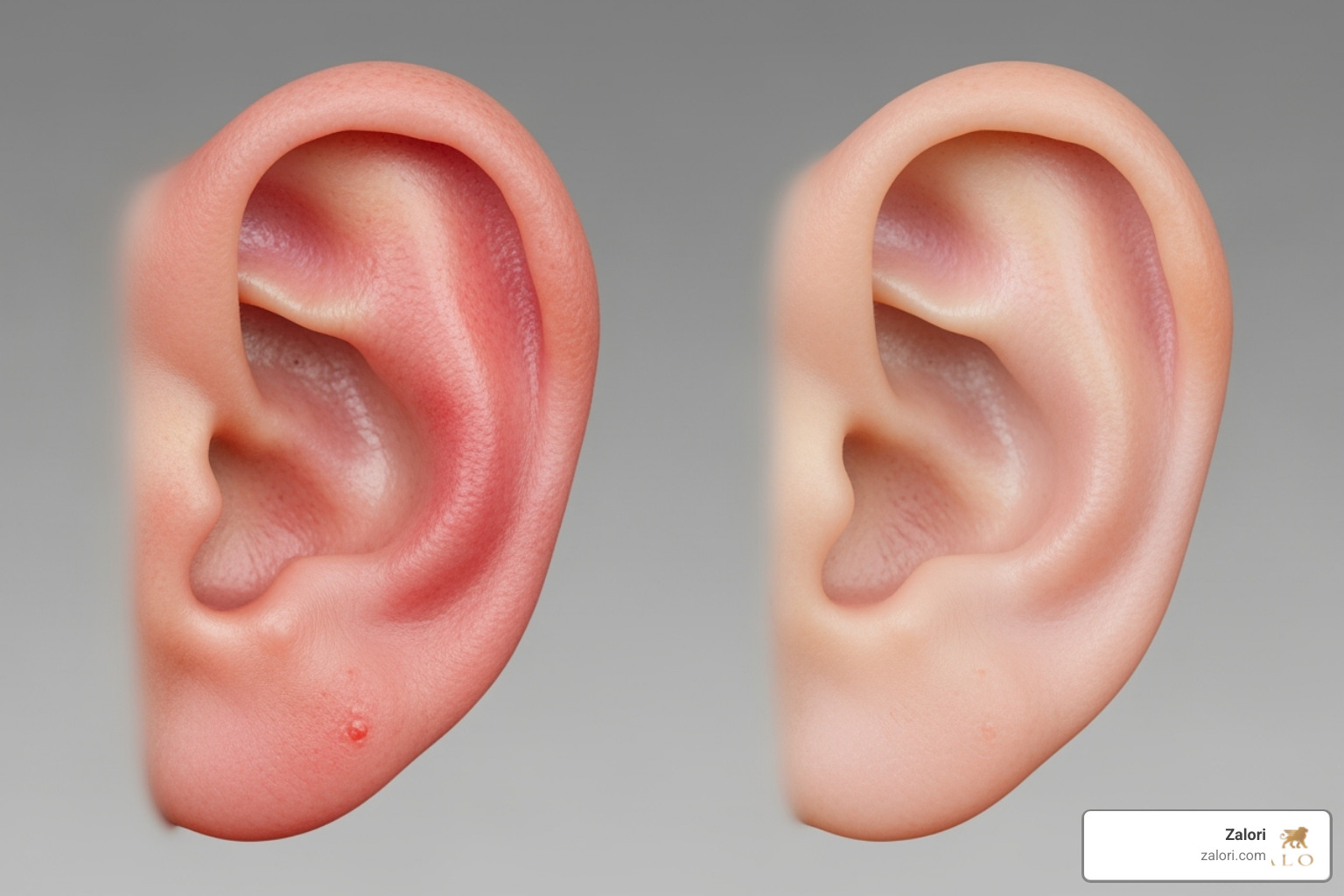
Common symptoms include:
- Itching: A persistent itch, often with a red, bumpy rash around the piercing.
- Redness and Swelling: The skin becomes inflamed, warm, and tender. Your earlobe may puff up noticeably.
- Pain and Tenderness: What starts as mild soreness can become intense pain.
- Blisters or Oozing: In severe cases, you might see fluid-filled blisters that can burst and crust over.
- Delayed Reactions: Symptoms can appear up to 72 hours after exposure, making it tricky to pinpoint the cause.
- Skin Discoloration: Green or black marks are a clear sign of a chemical reaction, especially with copper or brass.
It's important to distinguish an allergy from an infection. Allergic reactions typically involve itching and improve when the jewelry is removed. Infections usually involve persistent pain, warmth, yellow or green pus, and sometimes fever. If you suspect an infection, see a healthcare professional.
The Best Materials for Earrings for Sensitive Ears
Finding the perfect earrings for sensitive ears starts with choosing materials that are inherently safe and designed to work harmoniously with your skin.
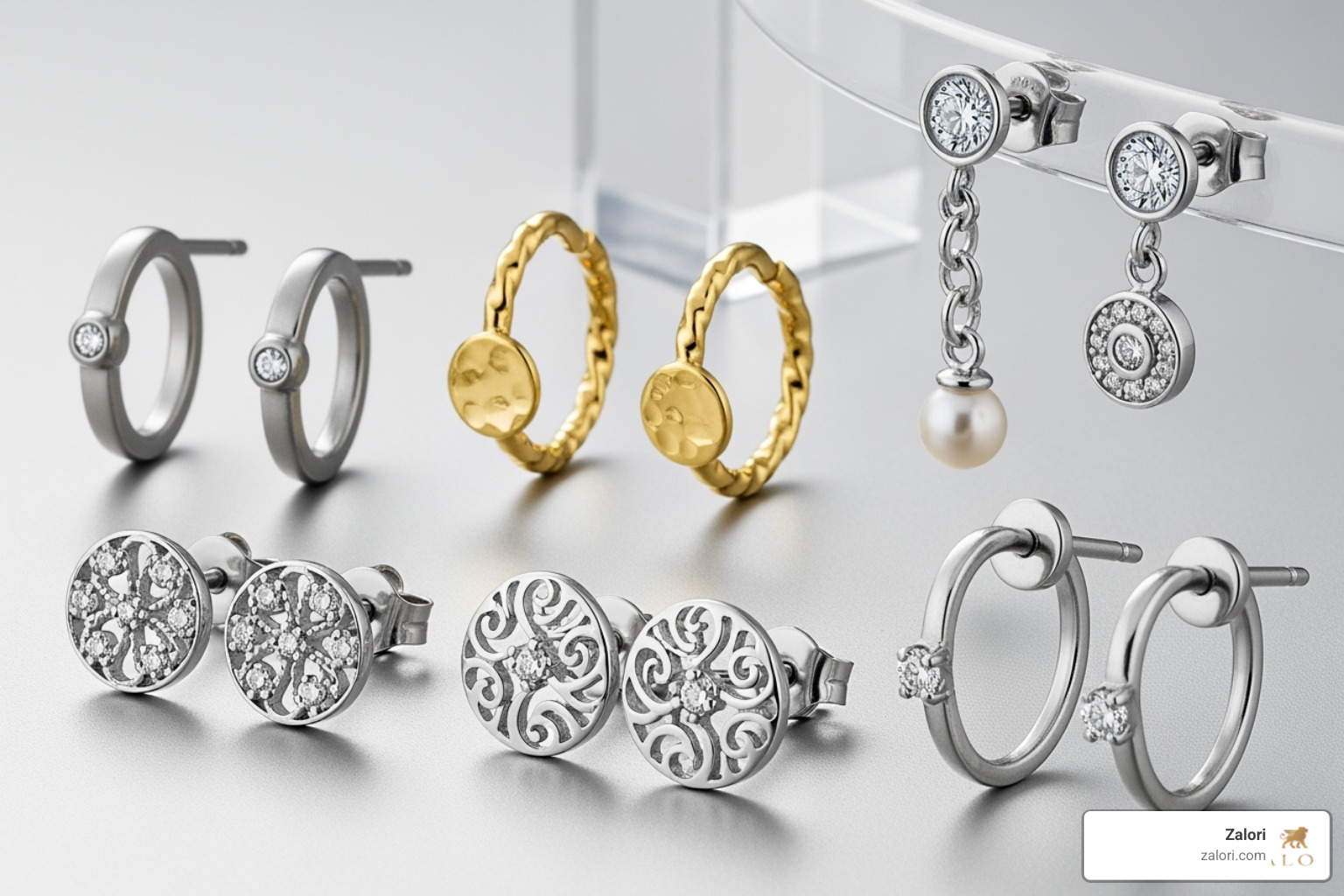
Here’s a comparison of the best materials for sensitive ears:
| Material | Pros | Cons | Best For |
|---|---|---|---|
| Implant-Grade Titanium | 100% nickel-free, lightweight, durable, medical-grade safety | Limited color options | Extremely sensitive ears, new piercings |
| Platinum | Hypoallergenic, extremely durable, premium white luster | Highest price point | Severe sensitivities, lifetime investment pieces |
| 14k-18k Solid Gold | Hypoallergenic (if nickel-free), classic beauty, holds value | Higher cost, lower karats may contain allergens | Daily wear, classic and luxury styles |
| 925 Sterling Silver | Affordable, versatile, hypoallergenic (if nickel-free) | Tarnishes and requires cleaning | Everyday jewelry, wide variety of designs |
For deeper insights, our guide on Sensitive Skin Best Jewelry Metal Options covers everything in detail.
Precious Metals: Gold and Platinum
Solid gold is naturally hypoallergenic, especially in higher purities like 14k (58.3% gold) and 18k (75% gold). The key is ensuring the other metals in the alloy are nickel-free, a non-negotiable standard at Zalori.
- Yellow gold is typically the safest choice.
- Rose gold gets its color from copper, which is generally well-tolerated.
- White gold traditionally uses nickel, so look for modern, high-quality versions made with palladium instead. Many pieces are also plated with rhodium (a hypoallergenic platinum-family metal) for extra protection and shine.
Learn more in our guides to 14k vs 18k Gold and Rhodium Plating.
Platinum is the ultimate in hypoallergenic luxury. It's 90-95% pure, naturally white, and incredibly durable, making reactions virtually impossible. While it has a premium price, it's a reliable long-term investment for those with severe sensitivities.
Biocompatible Metals: Titanium and Niobium
Developed for medical implants, these metals are designed to live peacefully inside the body.
- Implant-grade titanium (ASTM F136) is the gold standard for sensitive ears. It contains zero reactive metals, is lightweight, and is nearly indestructible.
- Niobium shares titanium's biocompatible properties but can be anodized to create vibrant, permanent colors without any dyes or plating.
Both are excellent, safe choices, though they are less common in mainstream jewelry.
Sterling Silver: A Classic and Safe Choice
925 sterling silver (92.5% pure silver, 7.5% other metals, usually copper) is a fantastic choice when made correctly. The crucial factor is ensuring it is nickel-free. Cheaper manufacturers may add nickel, so always buy from a reputable source like Zalori, where our silver is guaranteed nickel-free.
Silver's main quirk is tarnishing, a cosmetic issue that is easily cleaned. Regular wear often prevents significant tarnish. Its versatility and affordability make it an excellent foundation for any jewelry collection. For more comparisons, see our guide: Gold Vermeil vs Gold Filled vs Solid Gold and Sterling Silver The Clear No Regrets Jewelry Guide.
How to Choose and Care for Your Jewelry
With a few smart shopping strategies and proper care, you can enjoy beautiful earrings without irritation. Knowing what to look for and how to maintain your pieces is key. For a deeper look at quality, explore our guide on The Material World Uncovering the Secrets of True Quality.
Decoding Labels: What "Hypoallergenic" Really Means
The term "hypoallergenic" isn't regulated in most places, including the U.S. This means a product with this label could still contain nickel. It's a marketing term, not a guarantee.
Instead, look for the term "nickel-free," which is more specific and regulated, especially in the EU. The most reliable approach is to look for exact material descriptions like "implant-grade titanium," "14k solid gold," or "925 sterling silver." Vague descriptions like "fashion jewelry" are a red flag. At Zalori, we believe in transparency and always specify our materials.
The Importance of Earring Style and Design
The material is only half the story; the earring's design is crucial for comfort.
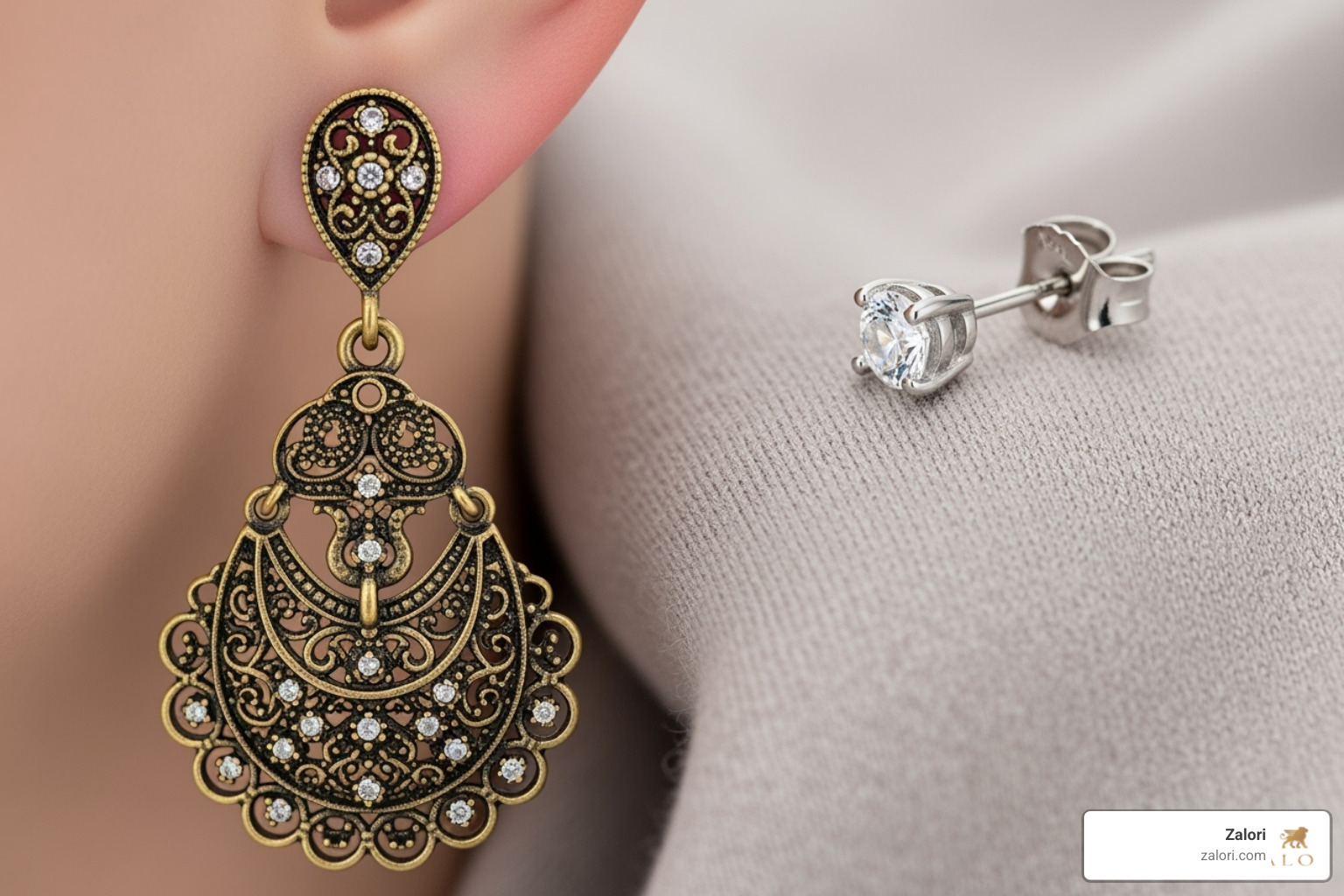
- Weight: Heavy earrings pull on piercings, causing soreness and stretching. Choose lightweight designs for all-day comfort.
- Style: Simple styles like studs and well-designed hoops often work best. For dangly earrings, pick lightweight options with smooth surfaces.
- Backs: Traditional butterfly backs can trap moisture and create pressure points. Flat-back posts and threadless studs are a game-changer. They distribute pressure evenly, allow airflow, and are comfortable enough for sleeping.
- Finishing: Poorly polished or rough surfaces create friction. Quality craftsmanship, a hallmark of Zalori, ensures every surface is smooth for maximum comfort.
Best Practices for Cleaning Your Earrings for Sensitive Ears
Even hypoallergenic earrings need regular cleaning to remove oils, skin cells, and grime that can cause irritation. Make it a weekly habit.
- Soak: Place your earrings in a bowl of lukewarm water with a drop of mild, unscented soap (like baby shampoo) for about ten minutes.
- Scrub: Gently scrub with a soft cloth or baby toothbrush, focusing on posts and crevices.
- Rinse: Rinse thoroughly under warm running water to remove all soap residue.
- Dry: Pat dry with a clean, lint-free cloth.
Hydrogen peroxide can be used for a deeper clean on plain metal earrings, but avoid it on pearls or porous stones. Never use harsh, abrasive chemicals, as they can damage finishes and leave irritating residues.
Store your jewelry properly in a clean, dry place away from humidity. Keep pieces separated to prevent scratching and use anti-tarnish bags for sterling silver.
Frequently Asked Questions about Earrings and Sensitive Ears
We get many questions about sensitive ears. Here are answers to the most common ones.
Is sterling silver always safe for sensitive ears?
Generally, yes. True 925 sterling silver is 92.5% pure silver alloyed with 7.5% other metals, typically copper, making it nickel-free and safe for most.
However, be cautious. Some low-cost manufacturers may use alloys containing nickel. That's why buying from a reputable source is crucial. At Zalori, we guarantee our sterling silver is nickel-free and meets true 925 standards. While pure silver is the absolute safest, it's too soft for jewelry. Well-crafted 925 sterling silver is the best balance of safety and durability.
Can I make my non-hypoallergenic earrings wearable?
While you can try temporary fixes for a beloved pair of earrings, they are not long-term solutions for earrings for sensitive ears.
- Protective coatings like clear nail polish or specialized jewelry sealants can create a temporary barrier between the metal and your skin.
- Silicone sleeves can be slipped over earring posts.
The problem is that these coatings wear off quickly, need frequent reapplication, and can trap moisture and bacteria, potentially worsening irritation. For daily comfort and peace of mind, investing in high-quality, truly hypoallergenic materials is always the best choice.
What earring back is best for sensitive ears?
The right earring back is critical for comfort. Traditional butterfly backs often pinch and trap moisture.
- Flat-back posts (labret studs) are the best choice. A flat disc sits comfortably against your ear, distributing pressure evenly and allowing airflow. They are comfortable enough to sleep in.
- Screw-backs are another great option, offering a secure fit without pinching.
- Leverbacks are ideal for dangle earrings. Their hinged closure is secure and doesn't put pressure on your earlobe. Our guide on Hypoallergenic Leverback Earrings explains more.
If you use butterfly backs, ensure they are made from a safe material and don't push them too tightly against your ear.
Conclusion: Adorn Your Ears with Confidence and Comfort
Finding the perfect earrings for sensitive ears is achievable. By understanding what causes reactions and knowing which materials to trust, you can enjoy beautiful jewelry without fear of irritation.
The key is to prioritize quality materials. Choosing implant-grade titanium, platinum, 14k+ solid gold, or genuine 925 sterling silver is an investment in your comfort and health. Look for clear labels like "nickel-free" and avoid vague marketing terms. The design also matters—lightweight styles with flat-back posts or leverback closures can make a huge difference in comfort.
Investing in safe jewelry means choosing pieces that will serve you for years. At Zalori, this philosophy drives us. Our uncompromising standards for craftsmanship mean we never cut corners. We start with sterling silver as our base and use only genuine precious metals because we believe luxury should be comfortable.
When you choose quality, you're not just buying jewelry—you're buying peace of mind. Our commitment to irritation-free luxury ensures that true elegance comes from pieces you can wear confidently and joyfully.
Ready to find jewelry that truly works for you? Explore our thoughtfully crafted pieces in Sparkle and Style Finding the Best Necklaces Earrings Bracelets and More, where every item is selected with sensitive ears in mind.
Explore our full collection of fine jewelry and experience the difference that quality materials and exceptional craftsmanship can make.
Related Articles
View all