Build Your Jewelry Capsule: 10 Timeless Pieces That Do Everything (Men & Women)
A jewelry capsule is the calm way to look polished every day without overthinking. With a tight roster of hardworking pieces, you can mix, match, and elevate any outfit in under a minute. This guide shows you how to build a jewelry capsule from the ground up—what to include, how to mix metals, which lengths and widths play nicely, and how to buy for longevity and sensitive skin. We’ll reference clear industry guidance along the way, so your choices feel confident and your capsule works for both weekdays and special occasions. Ready to simplify without sacrificing style?
What is a jewelry capsule?
A jewelry capsule is a small, intentional set of pieces that cover your real life—work, weekends, events—without clutter. Think of it like a wardrobe foundation: versatile silhouettes, thoughtful textures, and a few “joy” pieces that spark compliments. When you keep your metals consistent (or deliberately mixed) and choose lengths that layer cleanly, everything plays together. That means fewer decisions each morning and more impact per piece. A great capsule prioritizes quality (solid metals, secure clasps, smooth finishes) and proportion (widths and drops that flatter your frame) so wear feels as effortless as it looks.
How many pieces do you actually need?
Ten is a sweet spot for most people: enough variety to cover dress codes, not so many that storage gets messy. Your aim is redundancy‑free coverage—daily minimal, one or two statements, and a few smart “connectors” that let items layer seamlessly. Select durable metals first (gold, sterling silver, platinum), then add texture and color with a pendant or gemstone. Choose lengths using standard industry ranges so stacks land where you want them; trade groups outline collar through rope lengths that make sizing choices simple. See a concise reference in the Jewelers of America necklace guide. (JA necklace length guide)
The 10‑piece jewelry capsule (shop‑ready picks and proportions)
1) Everyday studs (one pair)
Choose small round or bezel studs in solid gold or sterling for daily ease. A flush setting won’t snag hair or masks, and a flat back feels great at a laptop. If your ears are reactive, consider high‑purity metals and nickel‑free posts; platinum is an excellent option for sensitive skin. Browse refined options in Zalori’s Women’s Earrings and build around a pair you’ll wear five days a week.
2) Huggies or hoops (one pair)
A 12–20 mm huggie or a slim 20–35 mm hoop adds movement without shouting. Keep metal consistent with your studs for a clean swap‑in, or choose a textured hoop for contrast. Hoops are the fastest way to dress up a tee or blazer while staying comfortable all day.
3) A quiet chain (2–3 mm; your base layer)
Pick a low‑profile link like box or snake at 18–22 inches for most frames. This becomes your capsule’s anchor—the chain you forget you’re wearing, and the one that sets spacing for layers. Use our Necklace & Chain Length Guide to place it precisely, then explore minimal profiles in Men’s Necklaces & Chains to lock in your base.
4) A textured chain (3–5 mm; visual interest)
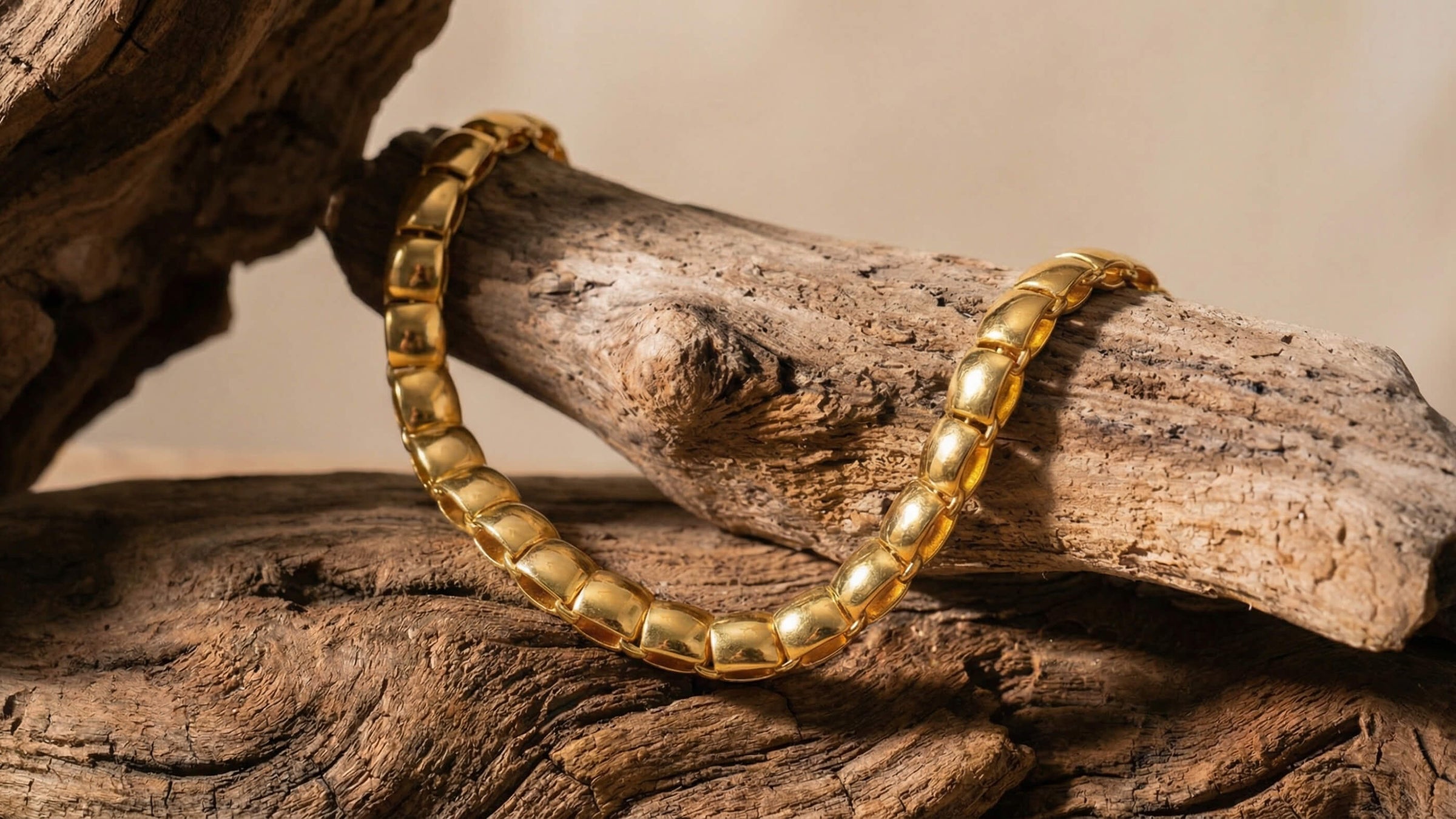
Add pattern and shine with curb, rope, wheat/foxtail, or Byzantine. Texture prevents stacks from blending into a single line and gives you a strong solo option with knits. Zalori’s artisan Foxtail Chains are a versatile way to introduce depth and movement.
5) A meaningful pendant (your focal point)
Pick a symbol or motif you’ll love long‑term and hang it on your quiet chain. Keep bails sized to your chain width to avoid gaps. For warm, timeless glow, try a small solid‑gold charm like the 14k Yellow Gold Dove Pendant or go celestial with a crescent motif. A single solid pendant instantly personalizes a clean base.
6) Stackable rings (one or two)
Start with a slim band and add a complementary profile—knife‑edge with rounded, high‑polish with satin, silver with gold—so the pair reads intentional. If you like heft, reserve the second slot for a signet or a wider band. Find mix‑and‑match options in Shop All Jewelry and use your knuckle as a fit check; wider bands may need a half‑size up.
7) A bold cuff or bangle (your structured statement)
A single, substantial wrist piece reads polished with zero fuss. A refined example is The Silhouette – Sterling Silver Cuff: clean, hand‑finished, and comfortable alone or flanking a watch. Keep the finish high‑polish for modern minimal or lightly brushed for a quieter look.
8) An everyday chain bracelet (stack connector)
Choose a 3–6 mm link that echoes your textured necklace—curb, foxtail, or byzantine. This “connector” bridges your watch and cuff, or partners with a simple tee when you want just one piece. Explore durable styles in Men’s Bracelets to get the weight and clasp security you prefer.
9) One gemstone “pop” (studs, pendant, or ring)
A single color accent keeps the capsule from feeling too neutral. Diamonds, sapphires, and rubies offer excellent durability for daily wear; if you prefer softer stones, wear them in lower‑risk formats like pendants or earrings and follow gem‑specific care. For durability context, gemological guides note corundum (ruby/sapphire) ranks 9 on the Mohs scale and handles daily wear well. (GIA ruby care and hardness)
10) A special‑occasion hero (just one)
Pick the piece that makes you stand taller—a heavier chain, a larger hoop, or a luminous 24K accent. Wear it solo with crisp tailoring or layer it into your usual stack when you want extra presence. If pure‑gold color speaks to you, consider a classic 24K chain as an heirloom‑grade statement.
How to mix metals (so it looks intentional, not random)
Mixed metal stacks feel modern when you set rules. Try one of these:
- Keep one dominant metal and repeat it three times (ear, neck, wrist), then add a single accent in the other metal.
- Keep textures consistent across metals—polished with polished, rope with rope—so your eye reads harmony.
- Use a “bridge” piece that already combines metals to tie everything together.
If you love a crisp white finish over silver or white gold, know that rhodium finishing is a normal way to achieve mirror‑bright white and will need periodic refresh with heavy wear. For sensitive ears or skin, minimize nickel exposure; dermatology guidance cites nickel as a common trigger for contact dermatitis, and recommends precious metals like platinum or nickel‑free gold alloys for sensitive wearers. (AAD nickel‑allergy tips)
Quality and sustainability checklist (buy once, wear for years)
- Check the stamp. Gold should be marked by karat (e.g., 14K/585; 18K/750), sterling silver by 925, and platinum by its fineness (e.g., 950 Pt). U.S. consumer guidance explains what these marks mean and why they matter. (FTC buying gold and platinum)
- Match the story. If a description says “solid 14K,” the stamp should agree; if it’s “gold‑plated,” the base metal should be clear. The FTC’s Jewelry Guides set expectations for truthful metal and treatment disclosures across gold, silver, platinum, and gemstones. (FTC Jewelry Guides overview)
- Ask about sourcing. If you care about recycled or fully traceable metals, look for credible programs. The Responsible Jewellery Council’s Chain‑of‑Custody standard outlines requirements for handling gold, silver, and platinum‑group metals in a traceable, responsibly sourced way across the supply chain. (RJC Chain‑of‑Custody)
- Prioritize secure closures. Spring rings are fine for light links; for heavier chains or bracelets, a robust box or pusher clasp reduces accidental loss. Smooth interiors and well‑finished edges dramatically improve comfort for all‑day wear.
Placement basics that make layering effortless
Necklaces layer best when lengths differ by at least two inches—say 18" + 20" + 22"—and when one chain is quiet and one is textured. Standard definitions for collar, choker, princess, matinee, opera, and rope lengths are widely used in the trade, which makes online selection predictable. If you’re mapping your own stack, use the Zalori length guide and then browse clean anchors in Men’s Necklaces & Chains to lock in your base.
Care and storage that protect your capsule
Gentle routines preserve finish and shape. After wear, quick‑wipe with a soft cloth; store pieces individually to avoid rub marks; keep silver dry to slow tarnish. Clean gold and silver with mild soap and lukewarm water; dry thoroughly before storing. For gemstones, tailor care by species and setting. Harder stones like ruby and sapphire handle daily wear well; softer or cleavable gems (such as moonstone or kunzite) prefer pendants and careful storage. For deeper gem‑specific care, see gemological references by species (e.g., GIA ruby care). When in doubt, book a quick checkup and cleaning.
Build your first capsule in 60 seconds (three foolproof recipes)
- Minimalist daily: bezel studs + quiet 20" box chain + slim band. Add a 3 mm bracelet when you want a touch more.
- Elevated casual: huggies + quiet 18" snake + 3–4 mm foxtail + cuff. Pop in a small gold pendant for color.
- Event‑ready: larger hoop + textured 5–7 mm chain + signet + hero 24K accent. Keep everything else simple.
Shop the flexible building blocks in Shop All Jewelry, then tailor lengths with the Necklace & Chain Length Guide.
The calm next step
If you want help curating your jewelry capsule for your face shape, frame, and wardrobe, we’ll make it personal. Explore the core pieces in Shop All Jewelry, or meet a specialist for one‑on‑one guidance via our About page. (Meet Zalori & book a consult) Your capsule will feel like you—timeless, intentional, and ready for anything.
Related Articles
View all