Jewelry Finishes, Decoded: High Polish vs Satin, Matte, Hammered, and Florentine
You’ve picked your metal and style—now the question is how you want it to look day to day. That’s where jewelry finishes come in. The finish is the final surface texture that controls how a piece catches light, hides wear, and feels in your routine. Choosing the right finish is as important as choosing 14K vs 18K, sterling vs 950 platinum, or the perfect chain style. This guide breaks down the most useful jewelry finishes, how they’re created, how they age, and how to care for them—so you can shop and wear with confidence.
What a finish is (and isn’t)
A finish is the surface texture applied at the end of manufacturing: mirror-like, softly diffused, visibly directional, or deliberately hand‑worked. It’s different from alloy, thickness, and plating. Plating (for example, gold plate, gold‑filled, or vermeil over silver) is a separate surface layer governed by truth‑in‑advertising rules; the FTC explains terms like gold electroplate and vermeil and when marketers must disclose coatings clearly. When a listing describes both alloy and finish—say “14K, brushed” or “sterling, hammered”—you know what the metal is through and through and how the surface was refined. See the FTC’s consumer guidance for definitions.
High polish: luminous and classic
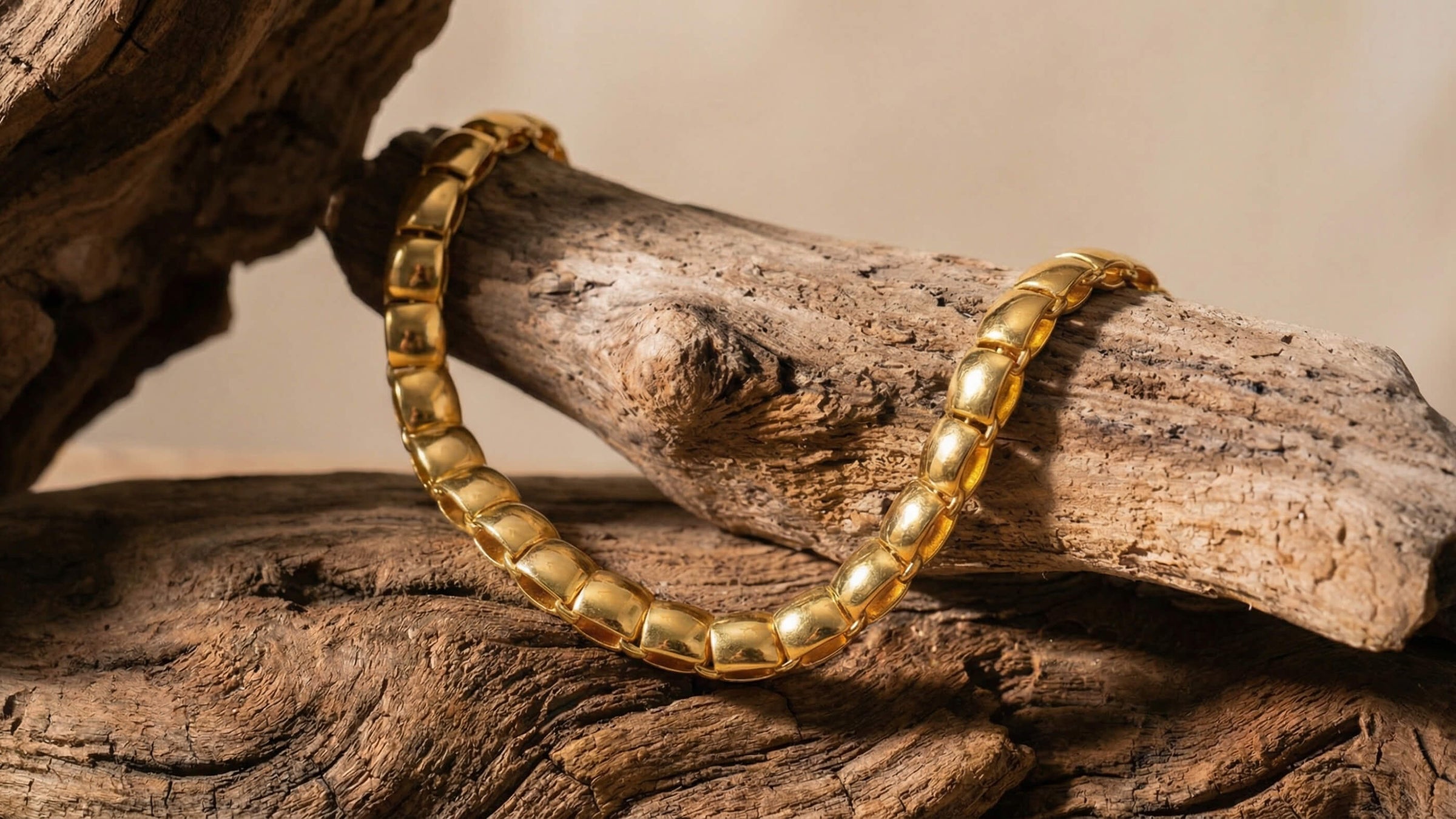
What it looks like: a mirror‑bright surface that throws crisp highlights. It’s the showroom standard because it showcases form and gem sparkle. How it’s made: progressive sanding and buffing on mops charged with compounds until scratches are removed and reflectivity peaks. Reality check: high polish shows micro‑scratches fastest, especially on rings and bracelets that contact desks, bags, and weights. The upside is easy maintenance—buffing restores brilliance quickly. If your piece is white gold, its “chrome‑bright” look usually comes from rhodium plating over the polished base; over time that plating thins and needs refreshing to keep the color and pop that many people expect from white gold, as GIA notes in its white‑metal guidance.
Satin and brushed: low‑glare, lived‑in elegance
What they look like: a soft, even glow (satin) or visible, directional lines (brushed) that mute reflections. Why people love them: fingerprints and minor scuffs blend in, so the surface looks calm for longer. How they’re made: by abrading the metal with fine media—brass or steel brushes, Scotch‑Brite‑type wheels, or tumbling—to create controlled micro‑texture. Bench references like Ganoksin describe satin as a finely textured finish (often produced with soapy brass brushing) and brushed as a coarser, more visibly lined version; both can be renewed cleanly by a jeweler. Tip for shoppers: if you like subtly textured bands, a 6–8 mm brushed men’s ring reads confident without glare. If you prefer an easygoing glow, satin is your friend.
Matte and sandblasted: modern, artful restraint
What they look like: diffuse, non‑reflective surfaces with a faint, velvety feel (matte) or a frosted, micro‑pebbled look (sandblasted). Why choose them: they emphasize silhouette and form over shine—great for sculptural cuffs or contemporary pendants. Trade‑offs: matte finishes can burnish smoother in high‑contact zones and may show shiny spots over time; sandblasting creates a lovely frost, but it’s still a surface texture that gradually softens with wear on rings and bracelets. A jeweler can re‑establish either finish during routine service. For pendants and earrings, matte holds beautifully because contact is light; for daily rings, expect periodic touch‑ups if you want the original look.
Hammered and hand‑textured: character that hides life well
What they look like: organic, rhythmic facets created by striking the surface with rounded hammers or specialty tools. Why they’re fantastic for real life: the texture scatters light and visually absorbs new nicks, so the piece reads “intentional” as it ages. Care notes: hammered links or bands still benefit from gentle washing and a lint‑free dry. When deeper dings accumulate, a jeweler can planish high spots and refresh the texture. If you like this aesthetic in precious metals, compare a polished cuff to a textured piece side by side—you’ll see how the hammered surface keeps looking composed between polishes. Want a polished reference point? See our bright‑finish staple, the 2.5in 24K Gold Bangle Bracelet.
Florentine, engraved, and milgrain: heritage details with presence
What they look like: intersecting, hand‑cut lines (Florentine); decorative cut patterns (hand engraving); or tiny beaded rims (milgrain). These finishes are usually created by hand with gravers, wheels, or knurlers after the main surface is set. Why choose them: they add dimensional interest, provide visual grip on wide bands, and lean timeless rather than trendy. Practical note: deep, hand‑cut textures hide light wear well; shallow decorative cuts can soften at contact points and need re‑touching over years. Because these are artisan touches, preserving crisp edges matters—skip harsh abrasives and ask for professional detailing when you want a full refresh.
Oxidized or blackened silver: dramatic contrast that highlights detail
What it is: a controlled darkening of sterling silver (usually via sulfur‑based solutions) that settles in recesses and leaves high points lighter—think dark fields behind bright dots, granulation, or braid. Why people love it: it makes patterns pop and delivers an antique‑meets‑modern vibe. Care reality: aggressive dips and frequent polishing can lighten the patina. Museum conservators emphasize that every polish removes some underlying silver and prefer prevention and gentle care first; that thinking translates neatly to jewelry with oxidized accents. Clean with mild soap and water, pat dry, and store in low humidity to slow tarnish; re‑darkening can be done by a pro when needed.
How finishes age in real life
- Friction burnishes texture. Keyboard edges, gym grips, handbags, and pockets will gradually soften satin, matte, and sandblasted areas.
- Micro‑scratches happen everywhere. Even common dust contains hard quartz particles that can mark softer surfaces over time; that’s why wiping with a clean, soft cloth matters.
- Plating thins predictably. On rhodium‑finished white gold and some sterling, the bright, cool tone will mellow at contact points as months pass. GIA’s guidance underscores that periodic replating is normal for white gold.
- Chemicals are the enemy. Chlorine and pool/hot‑tub water can pit alloys and dull finishes; industry care basics from Jewelers of America recommend keeping jewelry out of chlorinated and salt water and away from lotions and sprays.
A quick buying checklist (so your finish fits your life)
- Daily ring that sees keyboards and weights? Consider brushed or hammered to camouflage scuffs; keep high polish for special‑occasion bands or plan occasional buffs.
- Pendant or earring you rarely bump? Matte or sandblasted stays gorgeous with minimal upkeep.
- White‑metal look with maximum pop? High‑polish white gold that’s rhodium‑plated will look ice‑bright but will need periodic refresh; platinum keeps a naturally white patina and can be repolished without plating.
- Love oxidized contrast? Choose sterling designs where the dark sits in protected recesses; avoid strong dips at home to preserve the look.
Care, finish by finish (the simple, safe routine)
- For solid gold: lukewarm water, a drop of mild dish soap, a soft brush for crevices, and a thorough dry. Skip abrasives that can thin decorative textures. Our step‑by‑step walkthrough is here: How to Clean Gold Jewelry the Right Way.
- For sterling silver: same gentle wash, then store dry and airtight with anti‑tarnish tabs. Avoid rubber bands and steamy bathrooms; conservator guidance shows low humidity and sealed storage slow tarnish. For deeper help, bookmark Sterling Silver Care 2025.
- For rhodium‑finished pieces: clean gently and expect professional replating when the color softens where you touch most. If you want the essential how‑it‑works, read What Is Rhodium Plating?.
- For oxidized silver: wash lightly and pat dry; avoid silver dips and aggressive polishes that strip patina from recesses. A jeweler can re‑darken and rebalance highlights quickly.
Pro service: when and what to ask for
A good jeweler can:
- repolish high‑gloss pieces;
- re‑establish satin/brushed or matte textures;
- refresh hammered or engraved details; and
- reapply rhodium on white gold or selectively plate accents.
Ask for:
- a quick inspection of settings and clasps;
- confirmation that gemstones and coatings can tolerate the requested work; and
- advice on cadence based on your wear pattern.
As a rule of thumb, rings and cuffs see the most contact and benefit from annual checkups, while pendants and earrings can go longer between services. Ready to try textures in real life? Explore our Men’s Necklaces for sculptural links, then compare the quiet glow of satin to the brilliance of polish by handling both.
Why this matters at Zalori
We design and curate for longevity: precious‑metal pieces with finishes that look beautiful out of the box and age gracefully with you. If you’re deciding between finishes for a custom order or want a texture refreshed on a favorite, our specialists are happy to advise via a quick virtual appointment or email. In the meantime, choose the finish that matches your rhythm—polish for spotlight shine, satin for calm confidence, matte for modern minimalism, hammered for character, and Florentine for heirloom flair—and enjoy the way it tells your story.
Sources worth a peek while you shop
- The FTC’s consumer advice on precious‑metal coatings and plating clarifies terms like “gold electroplate” and “vermeil.”
- GIA’s white‑metal guides explain why white gold is often rhodium‑plated and how that affects care.
- Jewelers of America outlines practical care dos and don’ts that keep finishes looking their best.
- Conservator guidance from the Canadian Conservation Institute shows why low humidity and gentle methods preserve silver surfaces.
Related Articles
View all