Hooked on Comfort Top Hypoallergenic Earring Picks for Every Age and Location
Why Sensitive Ears Deserve Gold
Gold hypoallergenic earrings offer a safe, comfortable solution for anyone who experiences irritation from their jewelry. The key is choosing the right type of gold and understanding what makes certain metals react with your skin.
Quick Guide to Gold Hypoallergenic Earrings:
- Best Options: 14K or 18K solid gold (not plated)
- Avoid: Nickel-containing alloys, cheap gold plating
- Top Styles: Flatback studs, thin hoops, huggie earrings with hinge closures
- Key Benefit: Solid gold won't wear off to expose irritating base metals
- Investment Range: $240-$360+ for quality pieces that last
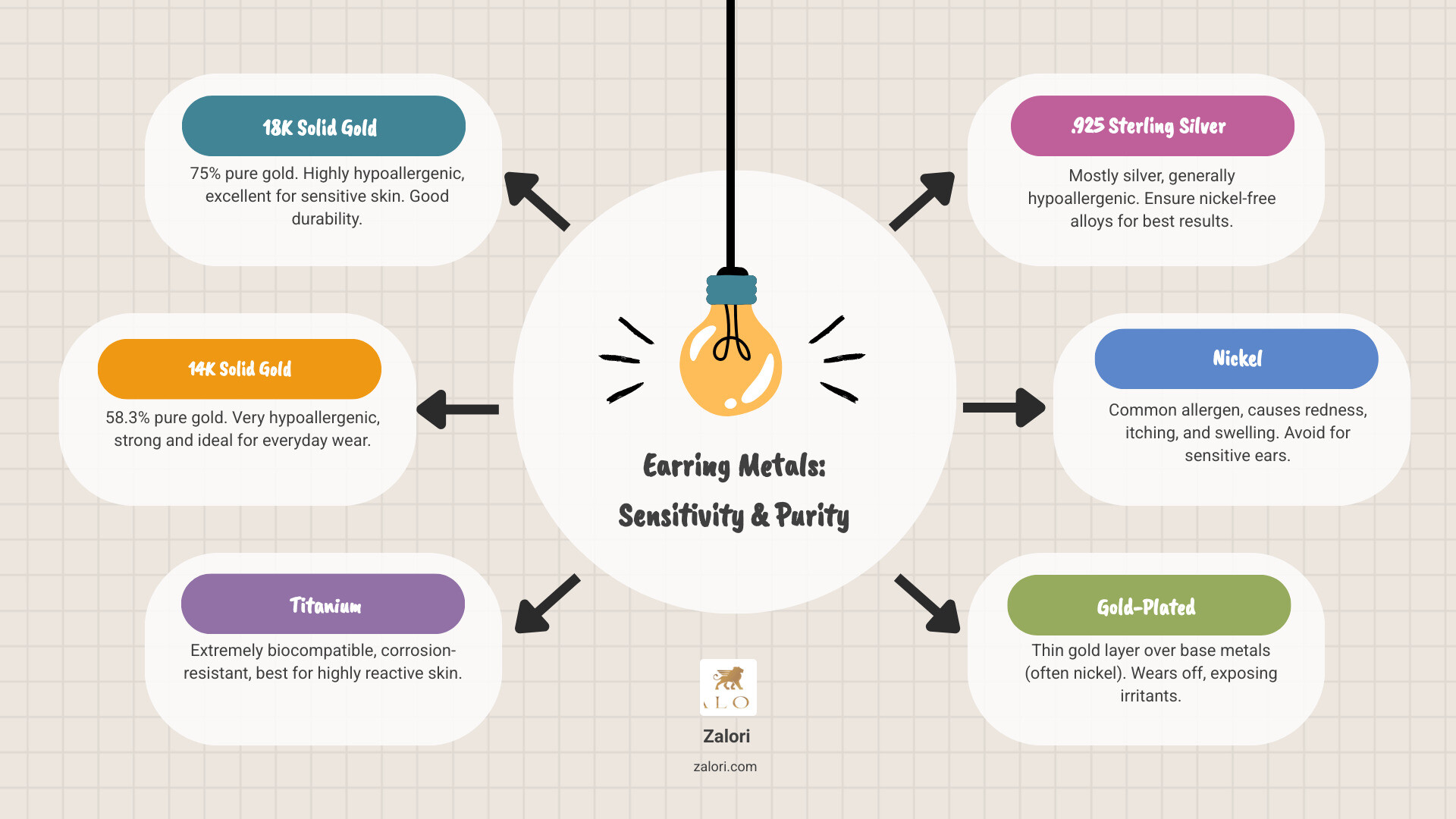
If you've ever had red, itchy earlobes after wearing jewelry, you're not alone. Nickel is the most common metal allergen, and it's often hidden in alloys or beneath thin plating, even in earrings marketed as "gold." The solution is to choose jewelry made from purer metals. Dermatologists consistently recommend .925 sterling silver or at least 14-karat gold for sensitive ears, as higher precious metal content reduces the risk of a reaction.
I'm Eric Roach Zalori, founder of Zalori. We address a simple problem: people want lasting jewelry made from genuine precious metals, not pieces with hidden irritants. Our focus on gold hypoallergenic earrings stems from understanding that quality starts with the base material. The choice between 14K, 18K, or plated options isn't just about price; it's about how the metal interacts with your skin. Solid gold retains its hypoallergenic properties indefinitely, while plated jewelry can wear away to expose irritating base metals.
Why Gold? Decoding Hypoallergenic Precious Metals
When you're searching for gold hypoallergenic earrings, you're looking for jewelry that won't betray your sensitive skin. Gold delivers on that promise, but not all gold is created equal.
In its purest form (24K), gold is naturally hypoallergenic but too soft for durable jewelry. That's why it's mixed with other metals to create stronger alloys. The potential pitfall lies in which metals are added. Nickel is the villain in most jewelry allergy stories, as it's the most common cause of reactions. Choosing gold with a higher purity level builds a protective barrier between your skin and these irritants.
The sweet spot for gold hypoallergenic earrings is 14K or 18K gold. These purities offer enough gold to keep ears happy while maintaining the durability needed for daily wear. Our guide on Solid Gold Jewelry: 14K vs. 18K vs. 24K explores these differences, but here’s a quick comparison:
| Gold Type | Sensitivity Level | Durability | Cost | Notes |
|---|---|---|---|---|
| 14K Gold | Excellent | High | Medium | Ideal balance of purity and durability for sensitive ears. Minimal alloy metals. |
| 18K Gold | Excellent | Medium-High | High | Higher gold content, slightly softer than 14K, but still very durable. Excellent for sensitive skin. |
| Gold-Filled | Good | Medium | Medium-Low | Thick layer of gold mechanically bonded to a base metal. Less likely to irritate than plated, but can still wear over time. |
| Gold-Plated | Poor-Fair | Low | Low | Thin layer of gold over a base metal, often nickel. Prone to wearing off, exposing irritants. Not recommended for sensitive ears. |
At Zalori, our commitment to exceptional craftsmanship means we scrutinize every component. We don't cut corners on materials because we know your comfort depends on what's actually touching your skin.
Solid Gold vs. Plated and Filled Options
The difference between solid, filled, and plated jewelry is crucial for sensitive ears.
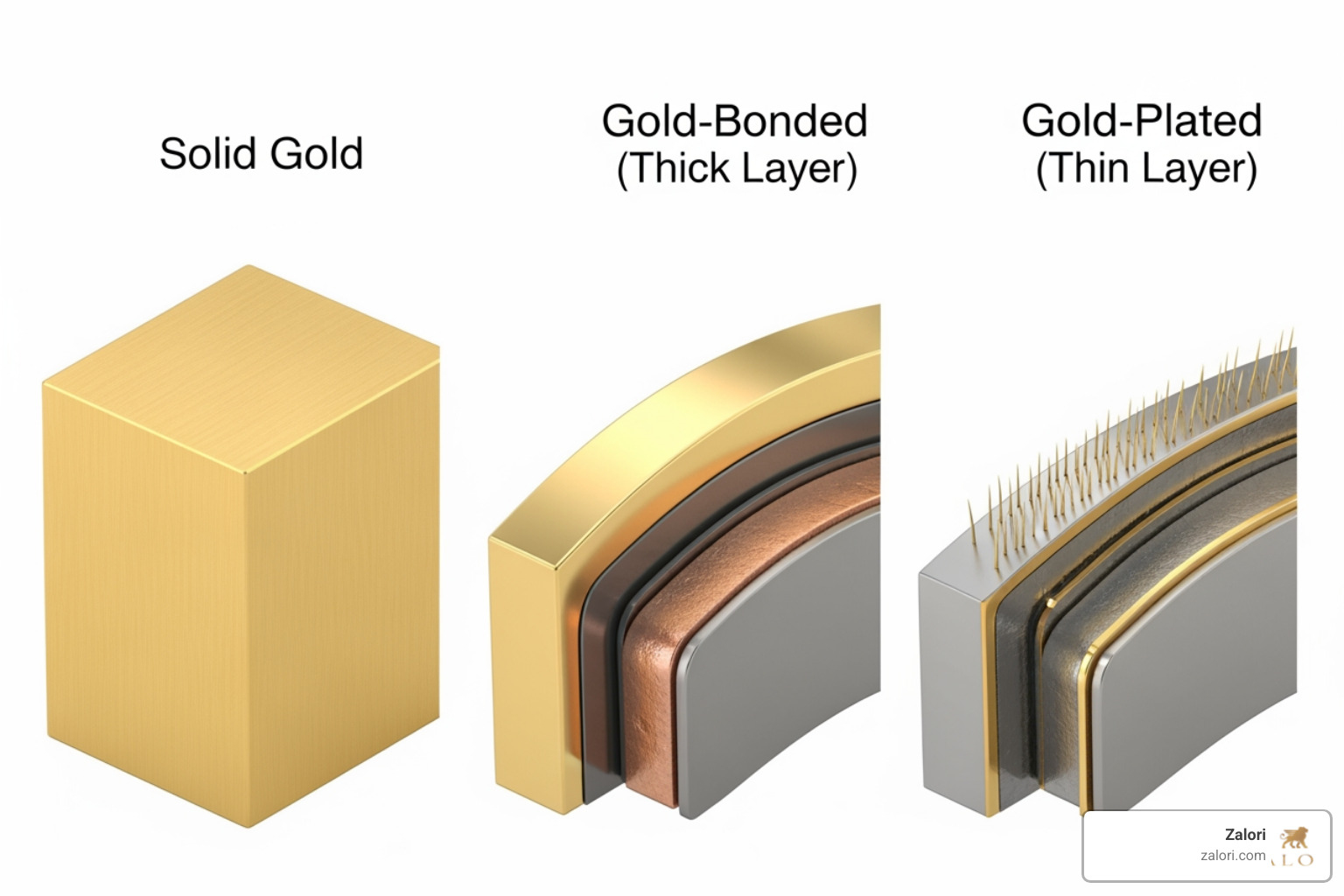
Solid gold means the entire earring is made of a 14K or 18K gold alloy. There's no hidden base metal. Even if it scratches, you're still touching the same hypoallergenic alloy, which is why it's the gold standard for sensitive skin.
Gold-filled jewelry has a thick layer of gold mechanically bonded to a base metal core (often brass). This layer is much thicker than plating, making it more durable and a better choice for sensitive ears than plated options. However, it can wear thin over many years, potentially exposing the base metal.
Gold-plated pieces have a whisper-thin layer of gold over a base metal, which is often nickel. This coating wears away quickly, leaving your skin in direct contact with potential irritants. For true peace of mind, solid gold is the clear winner for gold hypoallergenic earrings.
Our guides on 14K vs. 18K Gold and the Best Jewelry Metal Options for Sensitive Skin can help you choose wisely.
Our Top Picks: The Best Gold Hypoallergenic Earrings for Every Style
Finding the perfect pair of earrings shouldn't mean choosing between style and comfort. Gold hypoallergenic earrings come in every style imaginable, from minimalist studs to statement dangles. At Zalori, we create pieces that look stunning and feel even better, because what's the point of beautiful jewelry if you can't wear it comfortably? Let's explore styles that work beautifully for sensitive ears.
The Everyday Essential: Minimalist Gold Studs
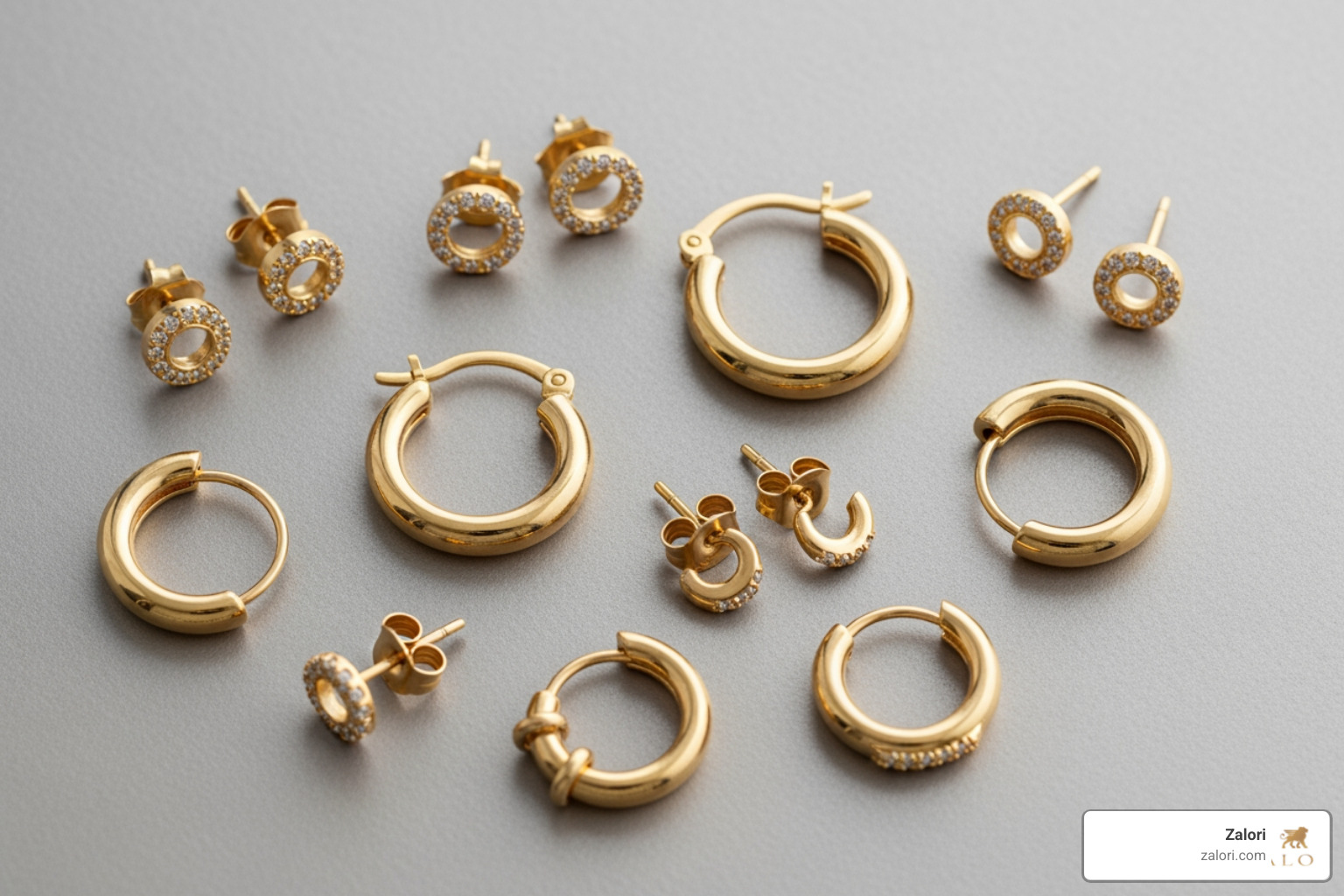
Simple gold studs are effortlessly chic and endlessly versatile. For sensitive ears, they are often the smartest choice. Many find that leaving in a pair of minimal studs 24/7 can cause less irritation than constantly removing and reinserting earrings. The backing makes all the difference. While traditional butterfly backs work for many, flatback closures are a game-changer. They sit flush against your ear, eliminating the poke behind your ear, which is ideal for side sleepers or anyone who wears their earrings around the clock. Simple gold balls, delicate geometric shapes, or tiny gemstones set in solid gold become a comfortable part of your daily life. Learn more about preventing irritation in our guide, Why Do My Ears Hurt? A Complete Guide to Hypoallergenic Jewelry.
The Timeless Classic: Gold Hypoallergenic Hoops and Huggies
If studs are quiet confidence, hoops are the exclamation point. Huggies are a perfect starting point for sensitive ears. These small hoops "hug" the earlobe, minimizing movement and maximizing comfort. Their secure hinge closures are easy to use and stay firmly in place, making them comfortable enough for many to sleep in. For those who prefer a larger hoop, the key is lightweight construction. Thin or hollow hoops reduce the metal's weight and contact with your skin, preventing pulling and irritation. At Zalori, we focus on these details—weight, closure smoothness, and fit—when crafting our gold hypoallergenic earrings. Our guide on Hypoallergenic Leverback Earrings explores another secure closure option.
The Neat Statement: Dangle & Drop Gold Hypoallergenic Earrings
Sensitive ears can absolutely handle statement earrings—as long as they are designed with comfort in mind. The key factors for dangle and drop earrings are weight and materials. A well-designed statement earring should feel surprisingly light. We achieve this by using solid 14K or 18K gold thoughtfully, creating visual impact without the burden. The closure is also crucial. Leverback earrings offer excellent security, while well-crafted ear wire closures glide smoothly and rest comfortably. These pieces are perfect for when you want your jewelry to start a conversation. Our commitment to craftsmanship ensures every gold hypoallergenic earring balances aesthetic appeal with wearability. Explore more inspiration in our guide, Top Picks for Solid Gold Fashion Jewelry.
Sensitive Skin Savvy: Identifying Reactions and Authenticity
Living with sensitive ears means learning to read your body's signals. It's important to know whether you're having an allergic reaction or an infection, as each requires a different approach.
When Your Ears Are Just Not Having It
An allergic reaction typically announces itself with itching, redness, puffiness, and dry or flaky skin. The hallmark sign is a persistent itch that makes you want to remove your jewelry immediately.
An infection, on the other hand, is usually painful. You might notice warmth, yellow or green discharge, and more pronounced swelling. If your piercing feels hot or throbs with pain, it's a red flag for infection.
As Dr. Marisa K. Garshick, MD, FAAD, advises, it's best to get it checked out if you're unsure. Consulting a dermatologist ensures you get the right treatment. You can find expert advice from a board-certified dermatologist to guide your situation.
Spotting the Real Deal: Quality Hallmarks That Matter
Shopping for gold hypoallergenic earrings requires some detective work. Reputable jewelers will clearly state the karat (14K or 18K), specify that it's solid gold, and confirm their pieces are nickel-free. At Zalori, we believe this transparency is fundamental.
Look for quality hallmarks stamped on the jewelry, which prove its gold content and authenticity. Also, check the craftsmanship. High-quality earrings have smooth finishes and secure closures, without rough edges that could cause irritation. Our uncompromising standards at Zalori mean we scrutinize every detail, because your comfort depends on it.
Preserve the Shine: Caring for Your Gold Earrings
You've invested in beautiful gold hypoallergenic earrings—now let's keep them shining! Proper care maintains their luster and prevents the buildup of irritants. While 14K and 18K gold are durable and tarnish-resistant, a little attention goes a long way.
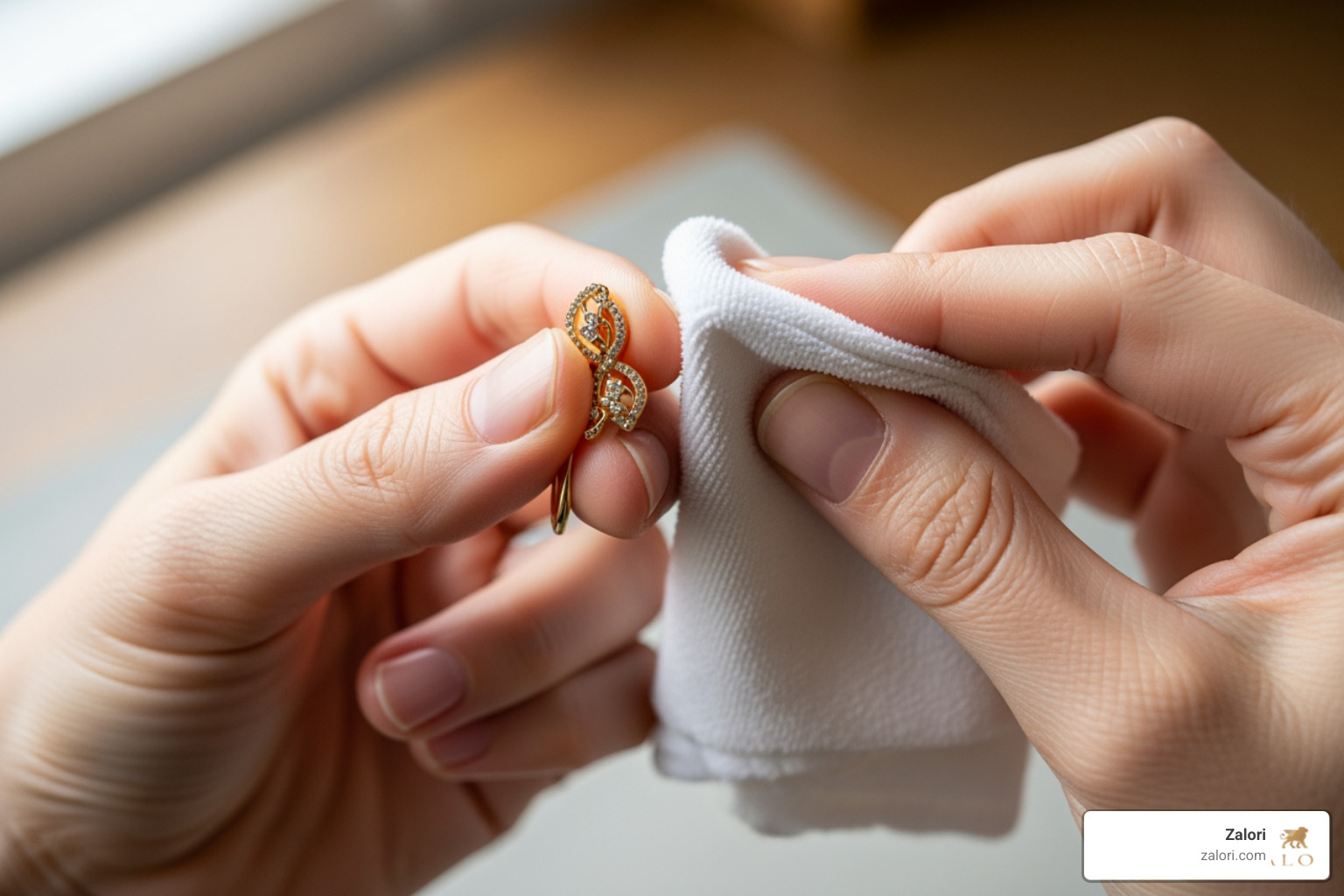
Regular cleaning is essential, especially for daily-wear pieces, to remove oils, lotions, and dust. Simply wash your earrings with mild soap and warm water, using a soft cloth or a very soft-bristled brush to clean any crevices. Rinse thoroughly to remove all soap residue, then wipe dry with a soft cloth.
Storage matters as much as cleaning. Keep your earrings in a jewelry box with separate compartments or in individual soft pouches to prevent scratching. Store them in a cool, dry place away from direct sunlight.
Finally, avoid harsh chemicals. Apply perfumes, hairsprays, and lotions before putting on your earrings. Remove them before showering, swimming in chlorinated water, or using household cleaners. Following these simple steps will keep your earrings sparkling and your sensitive ears comfortable for years. For a comprehensive guide, visit: Unlock the Luster: Best Ways to Clean 14K Gold Jewelry at Home.
Frequently Asked Questions about Gold Hypoallergenic Earrings
We often hear similar questions from our customers about gold hypoallergenic earrings. Here are answers to some of the most common ones.
Are 24k gold earrings the most hypoallergenic option?
While 24K gold is 99.9% pure and technically the most hypoallergenic, it's not the best choice for earrings. It's incredibly soft and malleable, meaning it would bend, scratch, and lose its shape with regular wear. That's why 14K and 18K gold are the sweet spots. They contain a high percentage of pure gold (58.3% for 14K, 75% for 18K) to remain gentle on skin, while the added nickel-free alloys provide the durability needed for lasting jewelry. They offer the ideal balance of comfort and strength.
Can you suddenly develop an allergy to earrings you've worn for years?
Yes, unfortunately, this is possible. An allergy can develop at any age due to prolonged exposure to an allergen, especially nickel. Your immune system can become sensitized over time, and what was once fine can suddenly trigger a reaction. This often happens with gold-plated earrings. The plating wears off over time, exposing the underlying base metal (often containing nickel) to your skin. This is why we recommend choosing high-quality gold hypoallergenic earrings from the start. For more on this, see our guide: Why Do My Ears Hurt? A Complete Guide to Hypoallergenic Jewelry.
What's the real difference between gold-plated and gold-filled for sensitive ears?
The difference lies in the thickness of the gold layer and its durability.
Gold-plated earrings have a microscopic layer of gold over a base metal, which is often nickel. This layer wears away quickly, exposing your skin to potential irritants. We don't recommend them for sensitive ears.
Gold-filled jewelry has a much thicker layer of gold mechanically bonded to a base metal core. This layer is 50-100 times thicker than plating, making it far more durable and a better option for sensitive skin. However, for persistent sensitivities, solid gold remains the gold standard because it's hypoallergenic all the way through. Our guide, Sensitive Skin: Best Jewelry Metal Options, explores this further.
Find Your Perfect, Pain-Free Pair
You deserve earrings that make you feel beautiful and completely comfortable. As we've explored, gold hypoallergenic earrings are a necessity for anyone with sensitive ears. The solution is simple: solid 14K or 18K gold offers the perfect marriage of purity and durability, giving you jewelry you can enjoy without irritation.
From minimalist studs to neat dangles, there is a hypoallergenic option that fits your personal style. At Zalori, our philosophy is that you should never have to choose between beauty and comfort. Our uncompromising standards for exceptional craftsmanship and meticulous selection of high-quality, authentic materials ensure every piece is designed with your skin in mind.
It's time to reclaim the joy of wearing jewelry that looks stunning and feels even better. Investing in quality gold hypoallergenic earrings means years of confident, comfortable wear.
To learn more about making informed choices, read our guide Unmasking the Metals: Your Guide to Irritation-Free Jewelry.
When you're ready to find your perfect pair, we invite you to explore our full collection of luxury jewelry.
Related Articles
View all