The A to AAA of Pearls: A Buyer's Guide to Quality
Why Pearl Grading Matters for the Discerning Buyer
AAA quality pearls represent a premium tier in pearl grading, making them the standard for fine jewelry. But unlike diamonds with their standardized 4Cs, pearl grading standards are notoriously inconsistent. As one industry expert bluntly puts it: "Pearl grading standards are a MESS... they vary from seller to seller, farmer to farmer and auction to auction." One jeweler's AAA might be another's AAAA, creating confusion for buyers.
Quick Guide to AAA Pearl Quality:
- Surface Quality: 90-95% blemish-free, with imperfections typically unobservable to the untrained eye
- Luster: Very high to excellent, with sharp, mirror-like reflections
- Shape: Round to near-round (minimal deviation from perfect sphere)
- Nacre: Thick and durable coating
- Matching: Excellent uniformity in color, size, and luster across strands
- Typical Use: Fine jewelry including necklaces, earrings, and rings
This inconsistency matters because roughly 90% of annual pearl production is commercial grade. Understanding what separates exceptional pearls from average ones protects your investment and ensures you get the quality you deserve for a piece meant to last generations.
At Zalori, we believe in cutting through the confusion. This guide will break down the grading systems, explain the GIA's 7 Pearl Value Factors, and give you the knowledge to confidently identify true quality in AAA quality pearls.
The "Messy" Truth About Pearl Grading
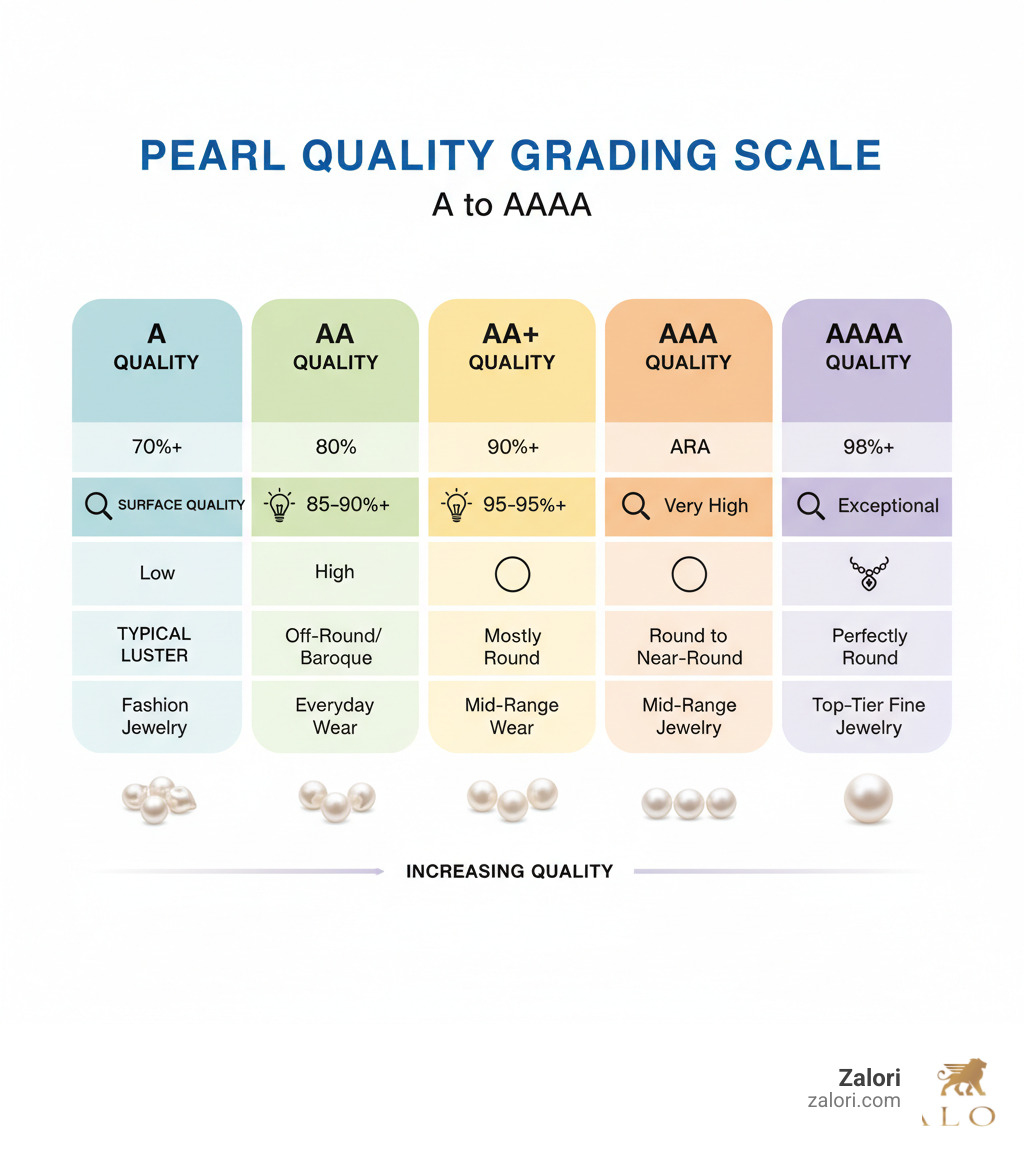
The primary reason for confusion when shopping for pearls is the lack of a universal grading standard like the 4Cs for diamonds. Jewelers often use proprietary scales, such as the A-AAA System or A-AAAA System, where the top grade (be it AAA or AAAAA) simply represents the best pearls in that store's inventory, not a universal benchmark.
These seller-specific grades mean a "AAA" from one retailer might not match the quality of a "AAA" from another. The complexity increases with different pearl types, which have their own grading traditions:
- Akoya pearls typically use the Japanese A-AAA scale.
- Freshwater pearls are often graded on a scale extending to A-AAAA.
- Tahitian and South Sea pearls use an A-D system, which sellers often convert to the A-AAAA scale for simplicity. You can learn more in our guide, The Pearl Primer: Exploring South Sea, Akoya, and Statement Varieties.
While these are approximations, the following table shows how grades generally translate across the industry:
| Grade | Surface Quality (Blemish-Free) | Luster | Shape | Typical Use |
|---|---|---|---|---|
| A | 70%+ | Low | Off-Round / Baroque | Fashion Jewelry |
| AA | 80%+ | Medium | Off-Round | Everyday Wear |
| AA+ | 85-90%+ | High | Mostly Round | Mid-Range Jewelry |
| AAA | 90-95%+ | Very High | Round To Near-Round | Fine Jewelry |
| AAAA | 98%+ | Exceptional | Perfectly Round | Top-Tier Fine Jewelry |
So when we talk about AAA quality pearls, we're referring to a high standard—but the exact specifications can shift depending on the pearl type and the retailer you're working with.
What's the Difference Between AAA and AAAA Pearls?
If AAA quality pearls are excellent, AAAA pearls are virtually perfect—the top 0.03% of yearly harvests. The distinction lies in minute details:
- Surface Quality: AAAA pearls are 98%+ blemish-free, while AAA pearls are 90-95% blemish-free. Imperfections on AAAA pearls are nearly invisible even under scrutiny.
- Luster: Both have high luster, but AAAA pearls exhibit exceptional, mirror-like luster with sharper reflections.
- Shape: AAAA pearls are perfectly round (less than 2% deviation), a rarity that commands a premium. AAA pearls are "round to near-round."
Due to their rarity, AAAA pearls are reserved for top-tier fine jewelry. AAA quality pearls offer an excellent balance of beauty and value, making them the standard for most fine jewelry. The choice often depends on budget and the pursuit of perfection.
Why Isn't There a Universal Standard?
The lack of a universal standard stems from history. Pearl trading evolved over thousands of years across diverse cultures, each with its own evaluation methods. Unlike the diamond market, where the GIA established the 4Cs, no single governing body emerged to standardize pearl grading.
This patchwork of competing grading systems makes it challenging for consumers to compare products. The same grade can mean different things at different retailers, which is why the need for education is critical. At Zalori, we prioritize transparency by providing clear, detailed descriptions of our pearls and the criteria we use for grading, a commitment we detail in Beyond the Bling: Finding Your Authentic Stone Jewelry Online.
Understanding what defines AAA quality pearls empowers you to make a confident purchase, regardless of the grading scale used.
Decoding the GIA's 7 Pearl Value Factors
To steer the confusing world of pearl grading, the Gemological Institute of America (GIA) provides a reliable framework: the 7 Pearl Value Factors. Instead of a single letter grade, the GIA evaluates seven distinct characteristics to provide a complete picture of a pearl's quality.
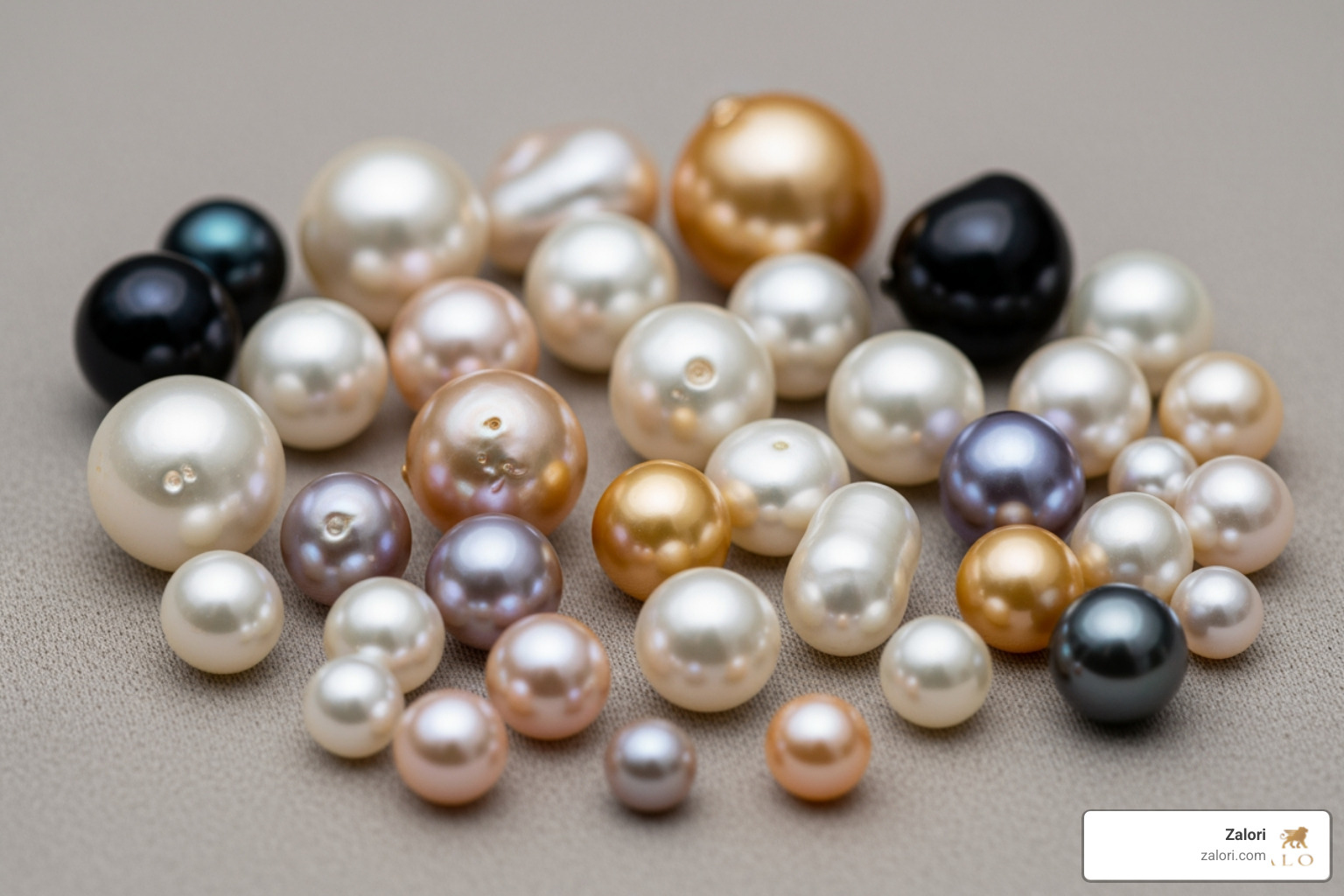
The seven factors are size, shape, color, luster, surface quality, nacre quality, and matching. This system is valued for its consistency, creating a common language that cuts through the confusion of retail grading. Understanding these factors allows you to evaluate any pearl with confidence, regardless of its assigned grade. You can explore the GIA's approach in their detailed article, Pearl Classification: The GIA 7 Pearl Value Factors.
Luster and Surface Quality
Among the seven factors, luster is king. It is the way light reflects off a pearl's surface, creating its signature glow. High-luster pearls have bright, sharp, mirror-like reflections, while low-luster pearls appear dull and chalky. AAA quality pearls exhibit "very high" to "excellent" luster, giving them depth and visual impact.
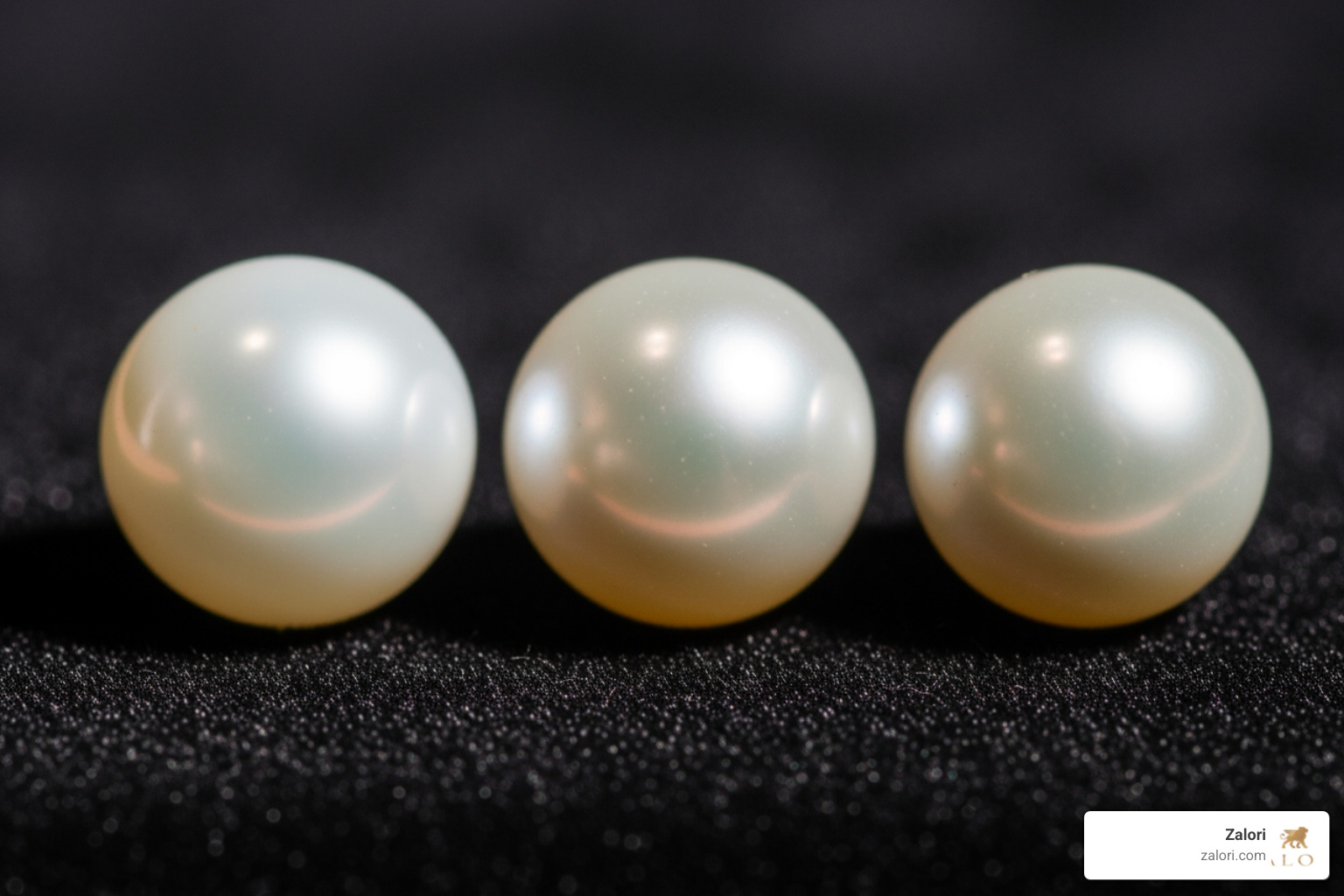
Surface quality works with luster to define a pearl's beauty. As organic gems, pearls naturally have some imperfections. Common blemishes include pinpricks, pits, wrinkles, and chalky spots. For AAA quality pearls, the surface should be 90-95% blemish-free, with any flaws being minor and difficult to spot. It's important to distinguish blemishes from natural growth characteristics (like mottling), which can add unique character rather than detract from value.
Shape, Size, and Color
Shape: Perfectly round pearls are the rarest and most prized shape. AAA quality pearls are "round to near-round," appearing spherical to the naked eye. Irregular baroque shapes, while less traditional, are also valued for their unique character.
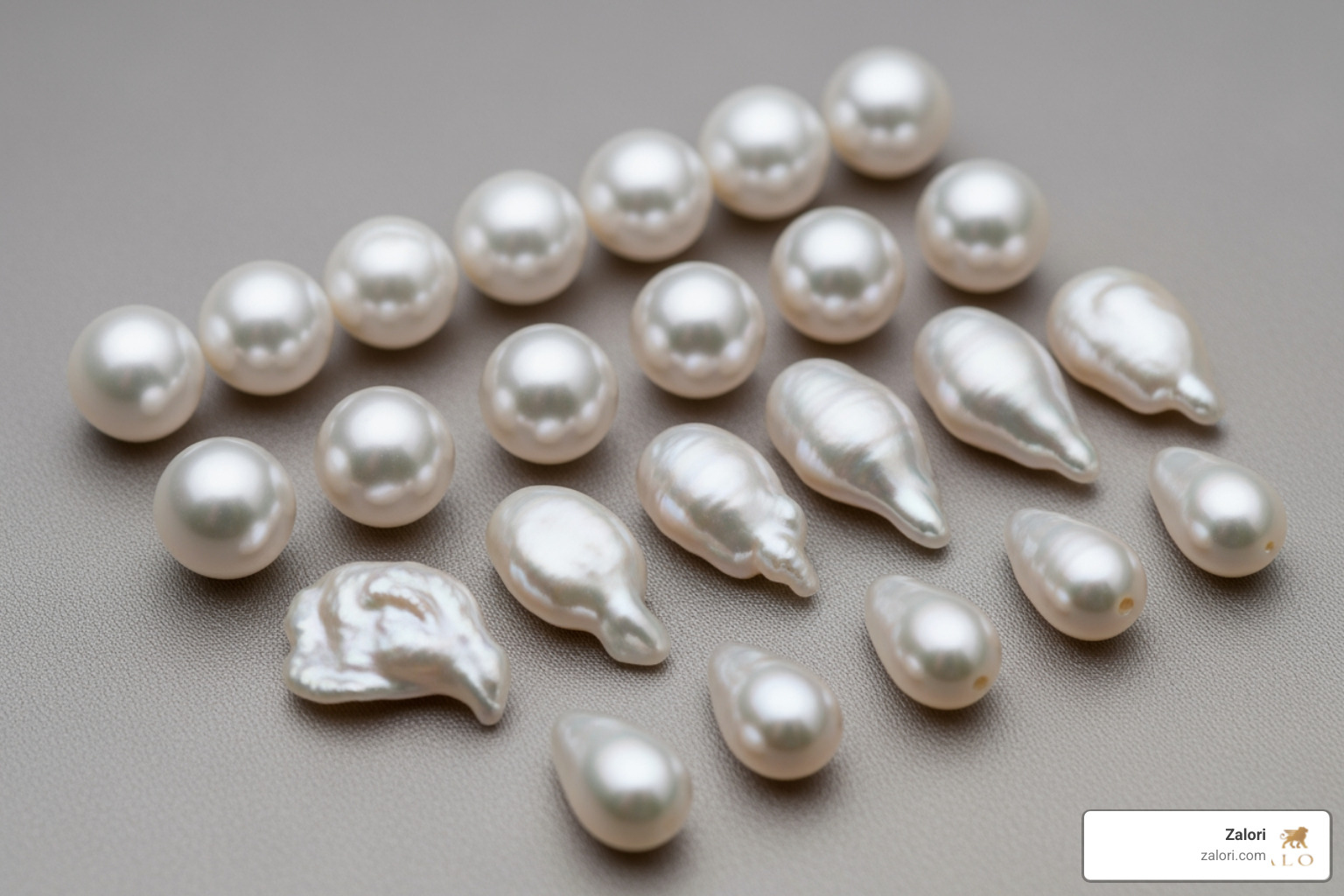
Size: Value increases exponentially with size, as larger pearls are much rarer. A 6mm pearl can be significantly more expensive than a 3mm one, with prices climbing dramatically for pearls over 10.0mm.
Color: This complex factor includes three components: bodycolor (the dominant hue, like white or black), overtone (a translucent secondary color, like rose), and orient (a shimmering, rainbow-like effect). While color choice is personal, AAA quality pearls should have rich, even, and consistent coloration.
Nacre, Matching, and Pearl Type
Nacre Quality: Nacre is the iridescent substance that gives a pearl its beauty. Nacre thickness is crucial for both luster and durability. Thin nacre leads to a chalky appearance and a less durable pearl. AAA quality pearls must have a thick, solid nacre coating, a commitment to quality materials we explore in The Material World: Uncovering the Secrets of True Quality.
Matching: For jewelry with multiple pearls, like strands or earrings, matching is critical. A well-matched piece shows uniformity in size, shape, color, luster, and surface quality. AAA quality strands feature excellent matching with minimal variation between pearls.
Pearl Type: Today, about 95% of pearls are cultured (formed with human assistance), while natural pearls (formed without intervention) are extremely rare. The GIA's 7 Value Factors apply to both, providing a consistent way to evaluate quality.
What Defines AAA Quality Pearls?
AAA quality pearls represent the sweet spot where exceptional beauty meets accessible luxury. As the benchmark for fine jewelry, this grade delivers a stunning visual impact and represents a smart investment. These are the pearls you'll find in pieces meant to be passed down through generations.

At Zalori, our dedication to authentic materials and craftsmanship means every pearl we select must meet strict criteria for brilliance and quality, a philosophy we explore in Crafted to Perfection: Understanding What Makes a Product Truly High Quality.
The Key Characteristics of AAA Quality Pearls
A pearl must meet several criteria to earn the AAA designation. These factors work together to create a remarkable gem:
- Surface Quality: 90-95% blemish-free. To the naked eye, the surface appears smooth and pristine.
- Luster: Very high to excellent. Reflections are sharp and clear, creating a deep, captivating glow.
- Shape: Round to near-round. The pearl appears perfectly spherical, ideal for classic jewelry designs.
- Nacre: Thick and durable. This ensures a lasting luster and protects the pearl from wear.
- Color: Rich, even, and consistent. The bodycolor is uniform, often improved by beautiful overtones.
- Matching: Exceptional uniformity in strands and sets. Pearls are carefully selected to harmonize in all quality factors.
The Price and Value of AAA Quality Pearls
AAA quality pearls command a premium price due to their rarity. The combination of high luster, clean surfaces, and round shapes is not common. For example, a 7.5mm AAA pearl set might be priced around ₹7,100.00 (~$85 USD), while 10.0-11.0mm AAA South Sea studs could be $3,400.00, reflecting the exponential increase in value with size and type.
This investment buys you durability and lasting beauty. The thick nacre of AAA quality pearls ensures they can become heirlooms, resisting the dulling and damage that affect lower-grade pearls. The visual difference is striking; their brilliance is immediately apparent compared to pearls with duller finishes.
As the standard for fine jewelry, AAA pearls are used in exquisite necklaces, earrings, and rings suitable for both special occasions and everyday luxury. At Zalori, we select only AAA quality pearls that meet our strict standards, ensuring every piece reflects our commitment to authentic luxury. Find your style in our complete collection at Shop All Jewelry.
Frequently Asked Questions about Pearl Quality
How can I tell if a pearl is high quality at home?
You can assess a pearl's quality at home with a few simple tests:
- Check the Luster: Under a bright light, a high-quality pearl will have sharp, clear reflections. A dull or blurry reflection indicates lower luster.
- Do the Roll Test: Roll a strand of pearls on a flat surface. Truly round pearls will roll smoothly and evenly.
- Inspect the Surface: Look closely for blemishes like pits, bumps, or spots. A high-quality pearl (like AAA grade) will appear very clean to the naked eye.
- Feel the Pearl: Genuine pearls feel cool to the touch and have some weight. Imitations often feel lighter and room temperature.
- Try the Tooth Test (Gently): A real pearl will feel slightly gritty against your tooth, while an imitation will feel smooth. Use caution to avoid scratching the surface.
Are AAA quality Freshwater pearls as good as Akoya pearls?
Yes, thanks to advances in cultivation, the finest AAA quality Freshwater pearls can rival the beauty of saltwater Akoyas. Here's a quick comparison:
- Luster: Akoyas are known for their exceptionally sharp, mirror-like luster. High-quality Freshwater pearls have a beautiful glow that can come very close.
- Shape: Akoyas are more consistently round due to their bead nucleus. Perfectly round Freshwater pearls are rarer, making them highly valued.
- Durability: Freshwater pearls are the clear winner here. They are composed of solid nacre, making them more durable and resistant to chipping than bead-nucleated Akoyas.
- Color: Freshwater pearls offer a wider range of natural colors, including pinks, peaches, and lavenders, while Akoyas are typically white or cream.
A top-tier AAA quality Freshwater pearl offers comparable beauty to an Akoya and superior durability, making the choice a matter of personal preference. Learn more in our Freshwater Pearls Decoded: The 2025 Buying & Care Guide.
Does a GIA report matter for buying pearls?
A GIA report is not always necessary for buying pearls, but it's important to understand its role. The GIA does not use letter grades like "AAA." Instead, it issues descriptive reports detailing the 7 Pearl Value Factors (size, shape, color, etc.).
For most cultured pearl purchases, a GIA report is not cost-effective. They are most valuable for very rare, investment-grade, or natural pearls where authenticity and origin are critical.
For most buyers, the key is to purchase from a reputable jeweler who provides detailed grading information. At Zalori, we are transparent about our standards for AAA quality pearls, allowing you to make an informed decision. Understanding the GIA's 7 factors and buying from a trusted source provides the confidence you need. You can learn more about the GIA's methodology here: Learn more about GIA's approach.
Conclusion: Investing in Timeless Elegance
Navigating pearls—with its competing A-AAA systems and GIA factors—can be confusing. The key takeaway is this: understanding pearls isn't about memorizing grades, but knowing what makes them beautiful.
We've defined what sets AAA quality pearls apart: an exceptional 90-95% blemish-free surface, very high luster, a round to near-round shape, and thick, durable nacre.
The lack of a universal standard makes transparency crucial. At Zalori, our commitment is to show you exactly what you're getting. When we say AAA quality pearls, we mean pearls selected to the highest standards of beauty and durability—pieces we'd be proud to pass down ourselves.
Armed with this knowledge, you can shop with confidence, asking the right questions about luster, surface quality, and nacre. Buying pearls should be a joy, not a guessing game. Pearls are more than jewelry; they are heirlooms that connect generations.
We invite you to explore our collections, where every piece reflects our passion for genuine quality and meticulous craftsmanship.
Related Articles
View all