Sensitive Ears? Find Your Metal Match for Happy Lobes
Why Your Ears React to Certain Earrings
Metals for sensitive ears can make the difference between comfortable all-day wear and painful, irritated earlobes. If you've ever experienced redness, itching, or swelling after wearing certain earrings, you're likely dealing with contact dermatitis - an allergic reaction to specific metals in your jewelry.
Quick Answer: The Best Metals for Sensitive Ears
- Titanium (implant-grade, ASTM F-67 compliant) - Lightweight, durable, less than 0.6% allergy rate
- Platinum - Highly inert, non-reactive, premium choice for sensitive skin
- High-karat gold (14k, 18k) - Must be nickel-free alloys only
- Sterling silver - Only if nickel-free (look for copper alloys instead)
The culprit behind most earring allergies is nickel - a cheap, strong metal commonly used in jewelry alloys. Approximately 10-20% of the population develops a nickel allergy after prolonged contact, with symptoms ranging from mild itching to painful blisters and rashes.
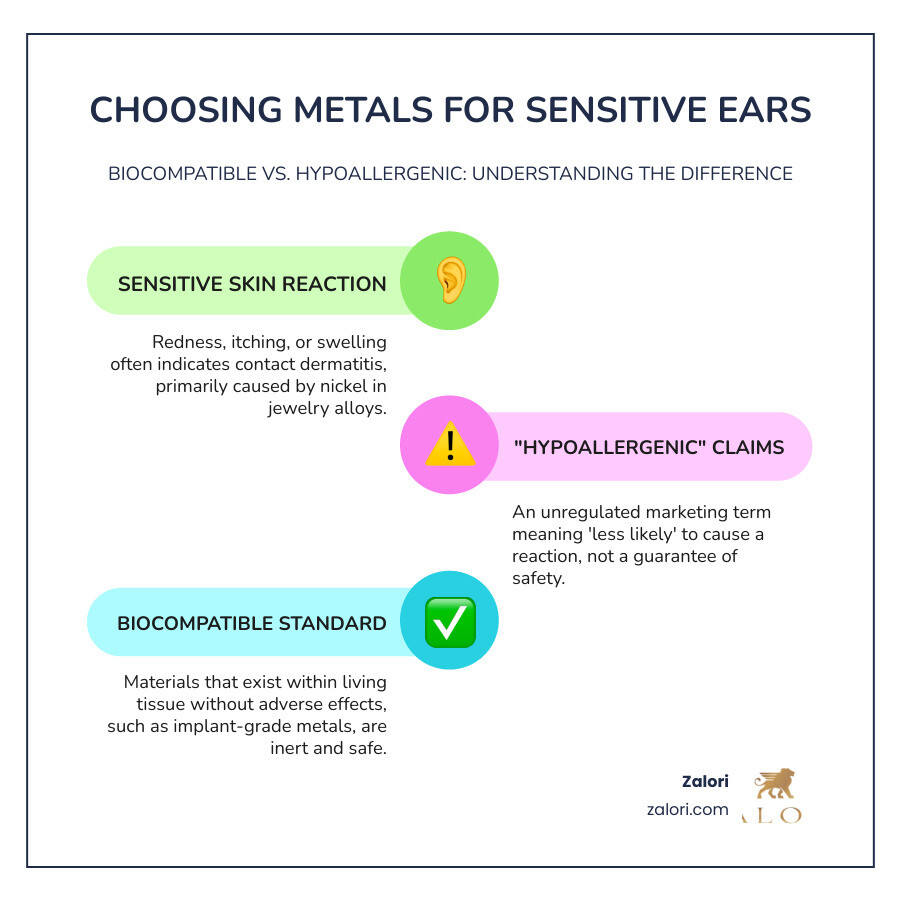
What makes this frustrating is that many people don't realize they have a metal sensitivity until after they've invested in jewelry. The term "hypoallergenic" isn't regulated in the jewelry industry, so it simply means "less likely to cause an allergy" - not a guarantee of safety.
I'm Eric Roach Zalori, and through my work with Summit Metals Holdings and launching Zalori, I've focused extensively on sourcing the highest quality metals for sensitive ears, ensuring our jewelry starts with sterling silver as a base and uses only premium, biocompatible materials. My experience in precious metals has taught me that when it comes to sensitive skin, the purity and authenticity of your materials matter more than anything else.
The Best Metals for Sensitive Ears: Your Safe & Stylish Guide
If you've ever wondered why some earrings feel amazing while others make your ears angry, it all comes down to understanding the difference between "hypoallergenic" and "biocompatible" materials. Here's the thing - "hypoallergenic" is basically a marketing buzzword that means "less likely to cause problems." It's not regulated, so anyone can slap that label on jewelry.
Biocompatible is where things get serious. This term describes materials that can hang out with your body tissue without causing drama. Think of it as your skin's best friend - materials so well-behaved that they're used in medical implants that stay in people's bodies for years.
When we're talking about metals for sensitive ears, we always look for implant-grade materials. These follow the same strict standards as surgical equipment. If it's good enough for a hip replacement, it's definitely good enough for your earlobes.
Here's how our top three recommendations stack up:
| Metal | Biocompatibility | Cost | Weight | Appearance |
|---|---|---|---|---|
| Titanium | Excellent | Moderate | Very Light | Silvery-gray, can be anodized for color |
| Platinum | Excellent | High | Heavy | Lustrous silvery-white, does not tarnish |
| High-Karat Gold | Good (if pure) | Moderate | Moderate | Yellow, rose, or white depending on alloy |
Titanium: The Lightweight Champion
Titanium is basically the superhero of metals for sensitive ears. This incredible metal checks all the boxes - it's implant-grade, medical-grade, and ASTM F-67 compliant. That's fancy talk for "your ears will thank you."
What makes titanium so amazing? First off, it's ridiculously lightweight. We're talking so light you might forget you're wearing earrings. If you've ever had your ears hurt from heavy jewelry, titanium will feel like a miracle.
But don't let that lightness fool you - this stuff is tough. Titanium is incredibly durable and won't corrode, tarnish, or get weird when it meets your skin's natural oils and sweat. The best part? Less than 0.6% of people are allergic to it. Those are pretty fantastic odds.
Here's a cool bonus - titanium can be anodized to create beautiful colors without any coatings or plating. The process actually changes how light hits the surface, creating gorgeous blues, purples, and golds while keeping the metal 100% pure and safe.
Platinum: The Ultimate Luxury for Sensitive Skin
If you want to go full luxury while keeping your ears happy, platinum is your answer. This precious metal is highly inert and non-reactive, which means it plays incredibly well with sensitive skin. It's so stable that it practically never causes allergic reactions.
Platinum doesn't just look stunning with its lustrous silvery-white shine - it's also incredibly durable and tarnish-resistant. Unlike other metals that might change color or get funky over time, platinum stays gorgeous forever. It's heavier than titanium, giving your earrings a substantial, premium feel.
We consider platinum the ultimate safe choice for piercings and sensitive ears. When you invest in platinum, you're getting a metal that will look and feel amazing for generations. For more insights on choosing the right materials, check out our guide on sensitive skin jewelry options.
High-Karat Gold: The Classic Safe Bet
Gold has been making people happy for thousands of years, and it can definitely work as one of the best metals for sensitive ears - but there's a catch. The secret is in the purity and making sure it's nickel-free.
Pure 24k gold is 100% gold and completely non-reactive. Your skin will love it. The problem? It's so soft that your earrings would bend if you looked at them wrong. That's why most jewelry uses 14k gold (58.3% pure) or 18k gold (75% pure), mixed with other metals for strength.
Here's where things get tricky. Some jewelers add nickel to gold alloys because it's cheap and strong. But nickel is the villain in most jewelry allergies. The importance of nickel-free alloys cannot be overstated - even a tiny amount can cause problems.
We always use nickel-free gold alloys in our pieces, so you get the classic beauty of gold without the worry. While 24k gold is too soft for durable everyday earrings, 14k and 18k gold with the right alloys offer the perfect balance of beauty, durability, and skin-friendliness.
Want to become a gold expert? Our comprehensive gold buying guide will help you make the perfect choice for your needs.
Metals to Avoid and Common Jewelry Misconceptions
Let's be honest – not all metals are created equal, especially when it comes to metals for sensitive ears. While we've covered the safe options, it's equally important to know which metals can turn your favorite earrings into a nightmare of itching, redness, and irritation.
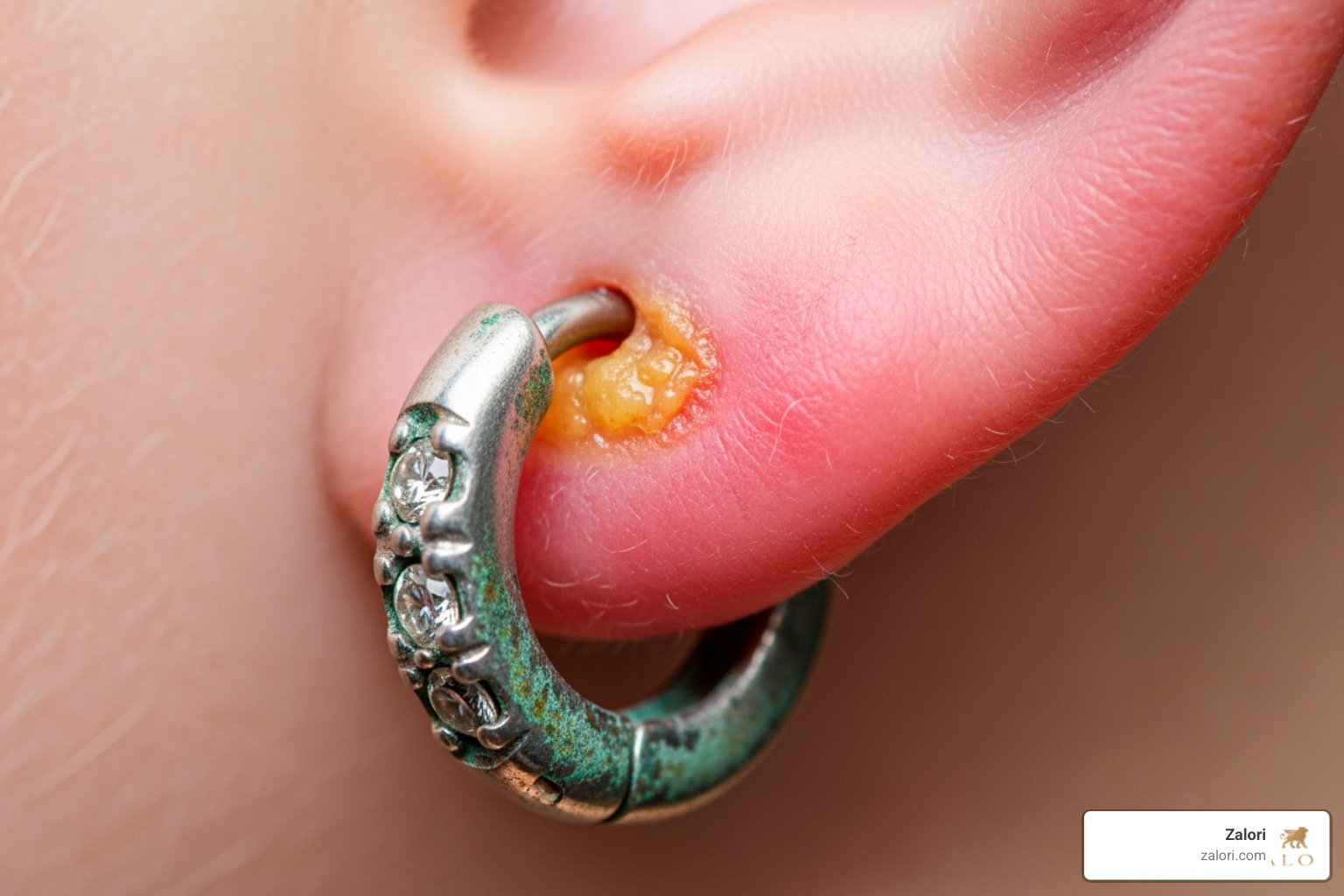
The biggest troublemaker in the jewelry world is nickel. This cheap, strong metal shows up in countless jewelry pieces, especially those tempting costume jewelry finds. It's the leading cause of metal allergies, affecting up to 20% of the population. Cobalt often tags along with nickel and causes similar reactions – think red, itchy, sometimes even blistered skin.
Copper might seem harmless, but it's incredibly reactive. You know that green mark it leaves on your skin? That's copper oxidizing, and for sensitive individuals, it can cause real irritation beyond just the discoloration. Brass, which combines copper and zinc, is even worse – it's so reactive that professional piercing associations won't approve it for body jewelry.
Perhaps most concerning are those mystery alloy pieces where you have no idea what you're getting. If a piece of jewelry doesn't clearly state its metal content – especially if it's suspiciously inexpensive – it's likely a cocktail of potentially irritating metals.
The reality is that many manufacturers prioritize keeping costs low over keeping your ears comfortable. That's why we're so passionate about transparency at Zalori. Every piece we create uses carefully selected, authentic materials that meet our uncompromising standards. Understanding what constitutes true quality in materials makes all the difference – you can learn more in our guide: The material world: Uncovering the secrets of true quality.
The Truth About "Hypoallergenic" Jewelry
Here's where things get frustrating for anyone searching for metals for sensitive ears: that reassuring "hypoallergenic" label on jewelry? It's not regulated at all. Zero. Zilch. No industry standards, no legal requirements, no official oversight.
What "hypoallergenic" actually means is "less likely to cause an allergy" – not "guaranteed safe" or "allergy-proof." A manufacturer could slap this label on jewelry containing a small amount of nickel simply because it has less nickel than another product. But for someone with a severe nickel sensitivity, even that tiny amount could trigger a painful reaction.
The plot thickens when you consider that many "hypoallergenic" claims refer to coated or plated jewelry. A coating might initially create a barrier between your skin and irritating base metals. But here's the catch – these coatings are often thinner than a human hair and wear off over time.
Picture this: you buy "hypoallergenic" earrings that feel fine for months. Then suddenly, they start causing irritation. What happened? The protective coating wore away, exposing your sensitive ears to the very allergens you thought you were avoiding. It's like finding the friendly neighbor you've known for months has been wearing a mask the whole time.
This delayed reaction scenario is incredibly common and utterly maddening. That's why we focus on providing truly biocompatible materials from the start – no coatings, no surprises, just honest, quality metals that won't betray you down the road.
Why to Steer Clear of Plated, Filled, and Vermeil Earrings
When it comes to metals for sensitive ears, plated, gold-filled, and vermeil earrings are like wolves in sheep's clothing. They look gorgeous on the surface, but underneath lurks potential trouble for sensitive skin.
The fundamental problem is their construction: a thin layer of precious metal covering a base metal that often contains common allergens like nickel, copper, or brass. It's not the pretty outer layer that causes problems – it's what's hiding underneath.
Gold-plated jewelry has the thinnest precious metal layer imaginable – we're talking millionths of an inch. This microscopic coating flakes off with normal wear, sweat, and even just the friction of putting earrings on and taking them off. Once it's gone, your sensitive ears are in direct contact with whatever irritating metals lie beneath.
Gold-filled pieces sound more substantial, and they are – the gold layer is mechanically bonded and thicker than plating. But "thicker" is relative when you're dealing with high-friction areas like earring posts and backs. That layer still wears down, especially with daily wear.
Gold vermeil uses sterling silver as its base, which sounds promising since sterling silver can be a good option for sensitive ears. However, the gold layer is still relatively thin. When it inevitably wears off, you're left with whatever alloy was used in that sterling silver – and if it contains nickel, you're back to square one.
For sensitive ears, especially new or healing piercings, these layered constructions are simply too risky. The constant contact, moisture from your body, and daily friction create the perfect storm for exposing irritating base metals. We believe your comfort shouldn't depend on hoping a thin coating holds up over time.
True luxury means using solid, authentic materials that don't need to hide behind a facade. For a comprehensive look at why we always choose solid materials over their layered counterparts, explore our detailed guide: Gold vermeil vs gold filled vs solid gold and sterling silver: The clear no regrets jewelry guide.
Practical Tips for Happy, Healthy Earlobes
Living with sensitive ears doesn't mean you have to sacrifice style or comfort. With the right approach, you can enjoy beautiful earrings without constantly worrying about irritation. Think of it as becoming a jewelry detective - once you know what to look for and how to care for your pieces, you'll wonder why you ever put up with uncomfortable earrings in the first place.
The secret lies in being proactive rather than reactive. Instead of waiting for a reaction to happen, we can take simple steps to prevent problems before they start. Smart shopping habits, proper testing methods, and good jewelry care can transform your relationship with earrings from stressful to joyful.
How to Test for a Metal Allergy Before You Buy
Nobody wants to find they're allergic to their new favorite earrings after they've already caused a painful reaction. The good news is that you can test for metal allergies before making a purchase, saving yourself both discomfort and disappointment.
The gold standard for identifying metal allergies is dermatologist patch testing. During this professional test, your dermatologist applies small patches containing various common metal allergens to your back. You'll wear these patches for a few days while your doctor monitors your skin's reactions. This method gives you definitive answers about which specific metals trigger your sensitivities, creating a personalized roadmap for future jewelry purchases.
If you can't get to a dermatologist right away, you can try a simple "wear test" at home. Take the questionable earring and tape the post to your inner arm or another less sensitive area of skin for 24 to 48 hours. While this isn't as comprehensive as professional testing, it can give you valuable clues. If redness, itching, or a rash develops during this test, your ears would likely react the same way.
The key is to always observe your reactions carefully when trying new jewelry. Even if a piece seems fine initially, pay attention to any delayed reactions that might develop over the first few days of wear.
Making Your Current Earrings Wearable
We've all been there - you find the perfect pair of earrings that completes your outfit, only to find they make your ears angry within hours. Before you toss them in the back of your jewelry box, consider these clever workarounds that can make problematic pieces temporarily wearable.
The clear nail polish barrier method is a time-tested favorite among jewelry lovers with sensitive ears. Simply paint a thin, even layer of clear nail polish on the earring posts, backs, and any area that touches your skin. Let it dry completely before wearing. This creates a protective barrier between the irritating metal and your sensitive skin. Just remember to reapply every few wears as the polish can chip or wear away.
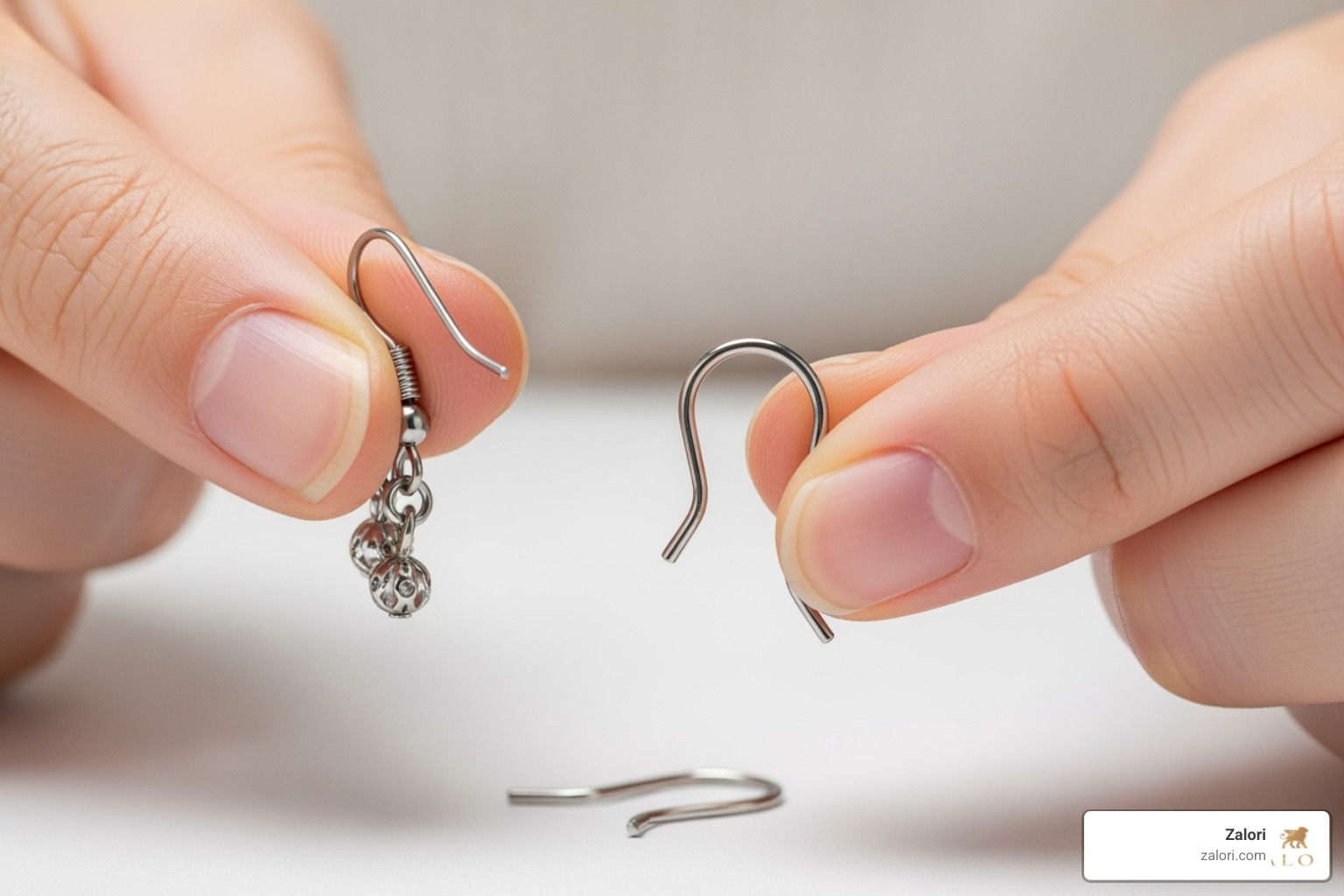
For dangle or drop earrings, replacing hooks with titanium wires can be a game-changer. You can find implant-grade titanium or surgical steel ear wires at craft stores or online. Using jewelry pliers, gently open the loop connecting the decorative element to the old hook, swap in your new safe wire, and close the loop. It's like giving your favorite earrings a biocompatible upgrade.
Plastic earring sleeves offer another quick fix. These small, clear sleeves slide over earring posts, creating a physical barrier between the metal and your earlobe. While not as permanent as other solutions, they're perfect for occasional wear of beloved pieces.
These methods work wonderfully for special occasions or cherished pieces that aren't made from ideal metals for sensitive ears. However, for everyday comfort, we still believe in choosing earrings crafted from truly biocompatible materials from the start.
Caring for Your Jewelry to Prevent Irritation
Even the safest metals for sensitive ears can cause problems if they're not properly maintained. Think of jewelry care as preventive medicine for your earlobes - a little attention goes a long way toward preventing irritation and keeping your pieces looking beautiful.
Regular cleaning with gentle soap should become second nature, especially for earrings that come into direct contact with your skin. After each wear, give your earrings a gentle wipe with a soft, clean cloth. For deeper cleaning, wash them periodically with mild soap and lukewarm water. A soft brush like an old toothbrush can help you reach into small crevices, but always rinse thoroughly and dry completely with a lint-free cloth afterward.
Proper dry storage protects both your jewelry and your skin. Moisture encourages tarnish and can harbor bacteria that might irritate sensitive ears. Store your earrings in a clean, dry place, ideally in individual pouches or compartments. This prevents scratching while keeping dust and moisture at bay.
When it comes to cleaning, avoiding harsh chemicals and abrasive cleaners is crucial. Never expose your fine jewelry to bleach, pool chlorine, or harsh household cleaners. These chemicals can damage the metal's surface and potentially compromise any alloys, making them more likely to react with your skin. Stick to gentle methods that preserve both the beauty and safety of your pieces.
For comprehensive care instructions that will keep your silver jewelry looking pristine, check out our detailed guide: Stop silver tarnish in its tracks: How to clean sterling silver jewelry.
Frequently Asked Questions about Metals for Sensitive Ears
When it comes to choosing the right metals for sensitive ears, we get a lot of thoughtful questions from our customers. After years of helping people find comfortable, beautiful jewelry, we've learned that a little knowledge goes a long way in preventing painful reactions and ensuring you can wear your favorite pieces with confidence.
Are sterling silver earrings good for sensitive ears?
Sterling silver can be a wonderful choice for sensitive ears, but there's an important detail you need to know. When you see "925" stamped on silver jewelry, it means the piece is 92.5% pure silver. That remaining 7.5% is where things get interesting - and potentially problematic.
The composition of that other 7.5% is absolutely crucial for sensitive ears. Some manufacturers use nickel in their silver alloys to make the metal harder and whiter. If you have a nickel allergy (and many people do), this type of sterling silver will cause the same irritating reactions you're trying to avoid.
The good news? High-quality sterling silver typically uses copper or other non-reactive metals instead of nickel. At Zalori, we exclusively use nickel-free sterling silver in all our pieces. This gives you the beautiful lustrous appearance of genuine silver without the worry of allergic reactions.
Always look for "nickel-free" when shopping for sterling silver. A reputable jeweler will be happy to confirm this detail for you. If you're curious about identifying authentic silver and understanding quality standards, our guide Is your silver chain 925? A buyer's guide to genuine silver covers everything you need to know.
What are the best non-metal alternatives for very sensitive ears?
Sometimes even the safest metals for sensitive ears aren't enough. If you have multiple metal allergies or extremely reactive skin, non-metal alternatives can be absolute lifesavers. These materials eliminate any possibility of metal-related reactions while still allowing you to enjoy wearing beautiful earrings.
Medical-grade plastic tops our list of recommendations. It's completely inert, meaning it won't react with your skin at all. It's also surprisingly lightweight and comes in various colors and styles. Many professional piercers use medical-grade plastic for initial piercings precisely because of its safety profile.
Glass earrings offer another excellent option. They're smooth, non-porous, and completely non-reactive. Glass jewelry has become increasingly popular among people with sensitive ears, and you'll find some truly stunning artisanal pieces available. The material is also easy to clean and maintain.
Silicone rounds out our top three non-metal choices. Medical-grade silicone is soft, flexible, and incredibly gentle against sensitive skin. It's often used for earring backs or entire earring designs, providing comfort that many people with metal sensitivities have never experienced before.
These materials are ideal if you've tried various metals without success and need a completely metal-free solution to enjoy wearing earrings again.
Where can I find high-quality metals for sensitive ears?
Finding truly high-quality metals for sensitive ears requires knowing where to look and what questions to ask. Not all jewelry retailers prioritize the materials and transparency that sensitive skin demands.
Reputable fine jewelers should be your first stop. At Zalori, we take pride in our uncompromising standards for material quality and transparency. We clearly state the composition and purity of our gold and silver, ensuring they're nickel-free and suitable for sensitive skin. You can visit our physical locations in Salt Lake City UT, New York City NY, Los Angeles CA, Dallas TX, San Diego CA, Maui HI, and Chicago IL, as well as shop online throughout the United States, Canada, and the European Union.
Professional piercing studios are another excellent resource, especially for implant-grade materials. They typically carry titanium and surgical stainless steel that meet strict ASTM or ISO compliance standards. These professionals understand biocompatibility requirements and can guide you toward the safest options.
The key to shopping anywhere is asking for specific material specifications. Don't accept vague terms like "hypoallergenic." Instead, look for precise descriptions like "implant-grade titanium (ASTM F-136 compliant)," "nickel-free 14k gold," or "nickel-free 925 sterling silver." A trustworthy seller will always provide these details willingly.
When you invest in fine jewelry, you're choosing pieces that will interact with your body daily. That's why we've created a comprehensive resource to help you make informed decisions: The ultimate guide to buying fine gold and luxury jewelry online.
Conclusion: Invest in Comfort and Quality
Finding the right metals for sensitive ears doesn't have to be a journey of trial and error filled with irritated earlobes and abandoned jewelry. Armed with the knowledge we've shared, you can now make informed choices that prioritize both your comfort and your style.
We've uncovered the truth behind those painful reactions - that nickel is often the hidden culprit lurking in seemingly beautiful pieces. We've explored your safest bets: implant-grade titanium with its feather-light comfort and medical-grade reliability, luxurious platinum that offers best purity and prestige, and high-karat nickel-free gold that delivers timeless elegance without compromise.
Perhaps most importantly, we've pulled back the curtain on misleading industry terms like "hypoallergenic" and revealed why plated, filled, and vermeil pieces can turn from friend to foe as their protective layers wear away. Knowledge truly is power when it comes to protecting your sensitive skin.
Quality over quantity isn't just a philosophy - it's a practical approach to building a jewelry collection that serves you well. When you choose biocompatible materials, you're investing in pieces that will bring you joy for years to come, not just until the coating wears off or the allergic reaction kicks in.
At Zalori, we understand that jewelry should improve your life, never complicate it. Our commitment to exceptional craftsmanship and the meticulous selection of high-quality, authentic materials means every piece we create is designed with your comfort in mind. We believe that true luxury lies not just in how a piece looks, but in how it makes you feel - confident, comfortable, and beautiful.
Your sensitive ears deserve jewelry that respects them. When you prioritize health and comfort alongside beauty, you're not just buying an accessory - you're investing in daily comfort and peace of mind. Find what makes our approach to quality so different: Crafted to perfection: Understanding what makes a product truly high quality.
Ready to experience the difference that truly compatible metals for sensitive ears can make? Explore our collection of fine jewelry and find pieces crafted with your comfort and style in perfect harmony.
Related Articles
View all