In Depth Guide to Solid Gold Jewelry
Why Solid Gold Jewelry Remains the Ultimate Investment in Lasting Beauty
Solid gold jewelry is the gold standard for anyone seeking pieces that combine timeless elegance with genuine value. Unlike gold-plated or gold-filled alternatives, solid gold contains precious metal throughout—not just on the surface—making it exceptionally durable, tarnish-resistant, and worthy of passing down through generations.
Quick Answer: What You Need to Know About Solid Gold Jewelry
- Definition: Jewelry made from gold alloys throughout (no base metal core)
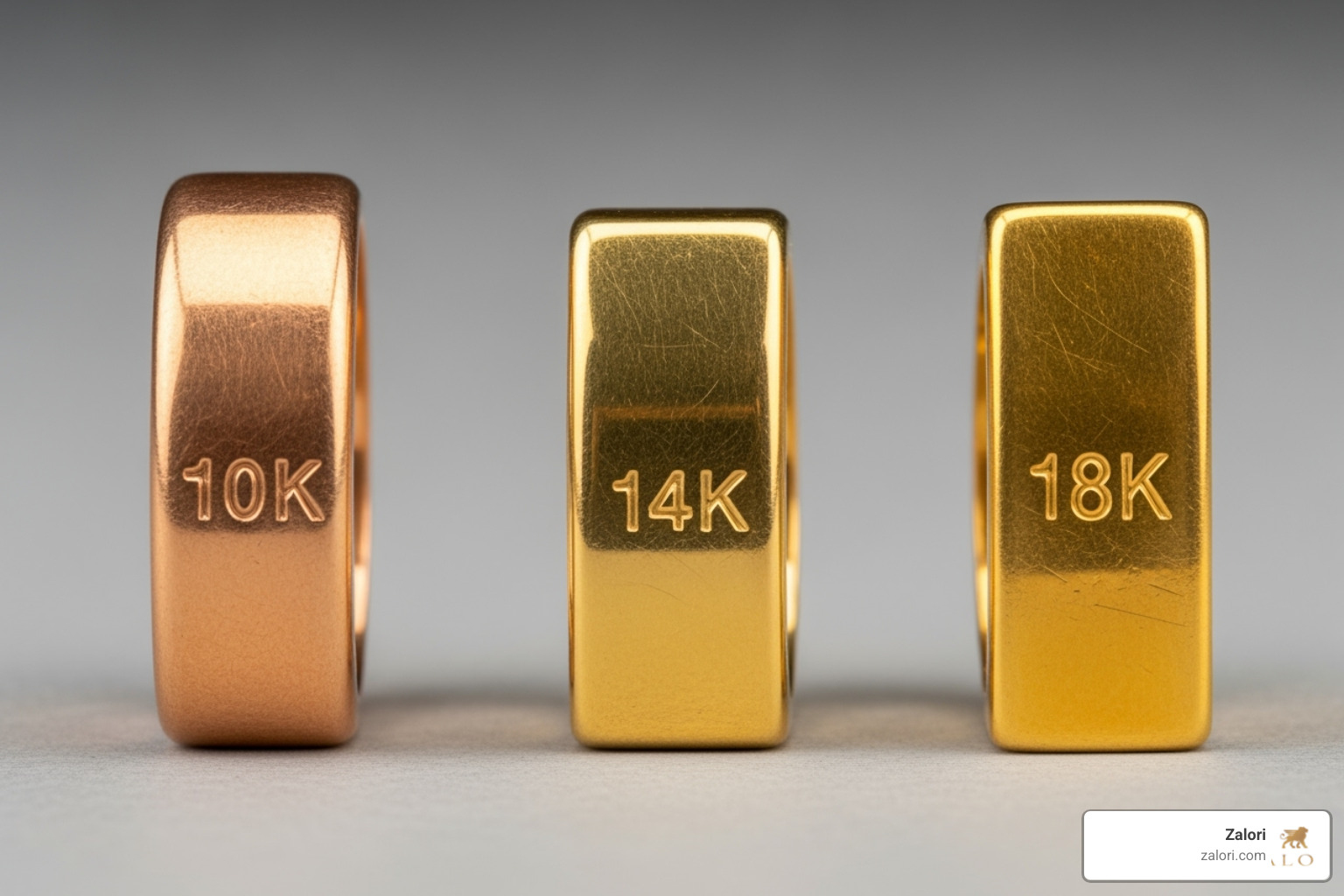
- Common Karats: 10K (41.7% pure), 14K (58.3% pure), 18K (75% pure), 24K (99.9% pure)
- Key Benefits: Won't tarnish, waterproof, hypoallergenic, retains value
- Durability: Lasts a lifetime with minimal care
- Price Range: $150-$20,000+ depending on weight, karat, and design
- Identification: Look for hallmark stamps (14K, 585, 750, etc.)
The research is clear: solid gold jewelry stands apart from other materials because of its lasting quality and intrinsic value. As one jewelry brand puts it, these are "the pieces you'll never want to take off"—and for good reason. Solid gold doesn't tarnish like lower-quality metals, can be worn in the shower and while swimming, and maintains its radiant appearance over decades.
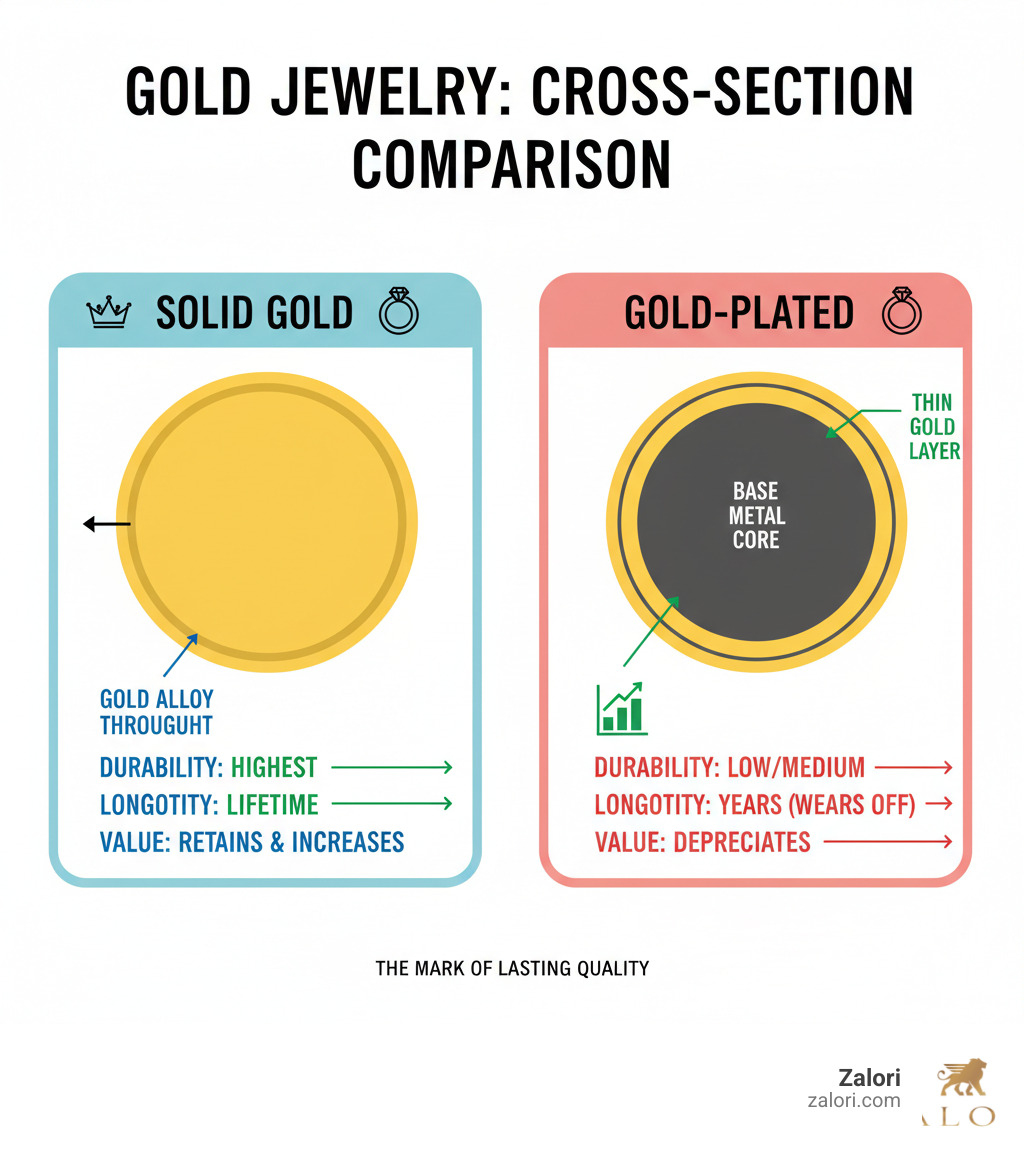
The difference between solid gold and plated jewelry is substantial. While gold-plated pieces feature only a thin layer of gold over a base metal (which wears away over time), solid gold jewelry is made from gold alloys all the way through. This means it won't flake, peel, or lose its luster, even with daily wear.
Understanding the karat system is essential for making an informed purchase. The karat measures gold purity—24K is pure gold, while 14K contains 58.3% gold mixed with stronger metals like copper or silver. Lower karats (10K, 14K) offer more durability for everyday wear, while higher karats (18K, 24K) provide richer color and maximum gold content.
Price factors vary widely based on several elements: the weight of the gold, the karat purity, the intricacy of the design, any gemstones included, and the reputation of the designer or brand. From simple chains starting around $150 to elaborate statement pieces exceeding $20,000, solid gold jewelry spans every budget—but all pieces share that fundamental quality of being genuine, lasting investments.
The ethical considerations matter too. Many jewelers now use recycled gold and adhere to standards set by organizations like the Responsible Jewelry Council, ensuring your purchase supports sustainable practices and conflict-free mining.
I'm Eric Roach of Zalori, and through my work with Summit Metals Holdings and launching Zalori, I've focused on bringing high-quality precious metals to people who value authentic craftsmanship—including solid gold jewelry that's made to last, not mass-produced overseas. My background as a serial entrepreneur and investor has taught me that true luxury lies in materials that hold their value and pieces that become treasured heirlooms.
What is Solid Gold and How is it Measured?
When you invest in solid gold jewelry, you're choosing pieces made entirely from gold alloys—not just a thin coating over cheaper metals. This is what separates fine jewelry from everything else. The gold goes all the way through, which means your necklace, ring, or bracelet will maintain its beauty and integrity for decades, even generations.
Think of it this way: solid gold is the real deal, while plated jewelry is more like a beautiful disguise that eventually wears off.
What Defines Solid Gold Jewelry?
Solid gold jewelry means exactly what it sounds like: gold throughout the entire piece. There's no brass, copper, or other base metal hiding underneath a gold coating. Instead, every bit of the jewelry is made from a gold alloy—a carefully balanced mix of pure gold and other metals.
Why mix gold with other metals at all? Pure 24K gold is stunning, but it's also incredibly soft. You could easily bend a pure gold ring just by squeezing it. By blending gold with metals like silver, copper, or zinc, jewelers create pieces that can handle the bumps and scrapes of daily life.
These alloy metals do more than just strengthen your jewelry. They also create those gorgeous color variations you've seen—the warm blush of rose gold or the cool elegance of white gold. But no matter the color, if it's solid gold, it's precious metal all the way through.
This composition is what gives solid gold its remarkable longevity and hypoallergenic properties. There's no base metal to oxidize or irritate sensitive skin. If you want to understand the specific markings that prove your jewelry is genuine, our guide on Jewelry Hallmarks, Metal Stamps Decoded breaks down exactly what those tiny stamps mean.
Understanding Gold Karats: 10K, 14K, 18K, and 24K
The karat system tells you how much actual gold is in your jewelry. It's pretty straightforward once you understand the basics. Pure gold is 24 karats—that's 99.9% gold with almost nothing else mixed in.
But here's where it gets interesting. That ultra-pure 24K gold? It's too soft for most jewelry you'd want to wear regularly. This is where the different karat levels come into play, each offering its own balance of purity and practicality.
24K gold is as pure as gold gets at 99.9%. It has that deep, rich yellow color that's unmistakably gold. You'll see it in gold bars and traditional jewelry in some cultures, but it's rarely used for everyday pieces because it scratches and dents so easily.
18K gold contains 75% pure gold mixed with 25% other metals. This is where luxury meets durability. The color is still wonderfully rich—almost as vibrant as pure gold—but the piece can actually withstand regular wear. Many of our finest pieces at Zalori use 18K gold for exactly this reason. For more details on choosing between these purities, check out our 14k vs 18k vs 24k Gold guide.
14K gold is the sweet spot for many people. At 58.3% pure gold, it offers beautiful color, excellent durability, and a more accessible price point than 18K. This is what we use for much of our solid gold jewelry designed for everyday wear. It's tough enough to handle your morning workout, your workday, and your evening plans without losing its luster.
10K gold is the most durable option at 41.7% pure gold. The higher percentage of alloy metals makes these pieces incredibly resistant to scratches and wear. The color is slightly lighter than higher karats, but if you need jewelry that can truly withstand anything, 10K delivers.
Choosing the right karat really depends on how you plan to wear your jewelry. Need something for daily wear that can take a beating? 10K or 14K is your friend. Want a special piece with maximum gold content and that gorgeous, rich color? 18K might be worth the investment. Our guide on How to Choose the Right Karat for Your Everyday Jewelry walks you through the decision in more detail.
The beauty of solid gold is that regardless of which karat you choose, you're getting genuine precious metal that will last. It's not a question of "good" versus "bad"—it's about finding the right balance of purity, durability, and color for your lifestyle and budget.
Solid Gold vs. Gold-Plated Jewelry: A Clear Comparison
Understanding the difference between solid gold jewelry and gold-plated pieces is essential when you're investing in jewelry that matters. It's not just about the price tag—it's about what you're actually getting and how long it will last.
Let's break down what sets these two types apart:
| Feature | Solid Gold Jewelry | Gold-Plated Jewelry |
|---|---|---|
| Gold Content | Made entirely from gold alloys throughout the piece—no base metal core hiding underneath. The gold you see is the gold you get, all the way through. | Features only a thin layer of gold (usually measured in microns) over a base metal like brass or copper. That golden surface is just skin-deep. |
| Durability | Built to withstand daily wear without losing its integrity. You can wear it every day for years, and it maintains its structure and appearance. | The thin gold coating gradually wears away with use, especially at points of friction like clasps or ring bands. Eventually, the base metal shows through. |
| Value | Holds intrinsic value based on its gold content and weight. You're investing in actual precious metal that retains worth over time. | The value lies mainly in the design rather than the materials. Once the plating wears off, there's minimal precious metal value. |
| Longevity | Lasts a lifetime—and beyond. These are the pieces you pass down through generations as family heirlooms. | Typically lasts anywhere from several months to a few years, depending on how often you wear it and how well you care for it. |
| Tarnish Resistance | Won't tarnish in the traditional sense, though lower karats may show some patina over time due to the alloy metals mixed with the gold. Higher karat gold stays brilliantly lustrous. | The gold plating itself resists tarnish, but once it wears through to the base metal, tarnishing becomes a real problem. |
Durability, Longevity, and Value
When you choose solid gold jewelry, you're making a decision that goes beyond today. These pieces are designed to be with you through every chapter of your life. They don't wear out, flake off, or lose their luster with regular use.
The investment value speaks for itself. Solid gold maintains its worth because it contains actual precious metal throughout. If you ever need to sell or trade it, the gold content gives it resale value. Gold-plated pieces, on the other hand, hold little material value once the thin coating wears away.
Think about cost-effectiveness over time, too. Yes, gold-plated jewelry costs less upfront—sometimes significantly less. But if you need to replace it every year or two because the plating has worn off, you're spending more in the long run. A single piece of solid gold jewelry can outlast dozens of plated replacements.
There's also something deeply satisfying about knowing your jewelry will look as beautiful decades from now as it does today. That's the promise of solid gold. It's why these pieces become treasured heirlooms, carrying memories and meaning across generations.
For more insights on the true value of your gold jewelry, explore our guide on Is Your Gold Jewelry a Smart Investment?
At Zalori, we craft our pieces with this long-term vision in mind—jewelry that becomes part of your story, not just your outfit.
Related Articles
View all