How to Clean Gold Jewelry, Even if You've Never Tried it Before
Why the Best Way to Clean Gold Jewelry Matters for Your Investment
The best way to clean gold jewelry is simpler than you think, but getting it wrong can damage your investment. Here's the quick answer:
The Safest Method for Cleaning Gold Jewelry:
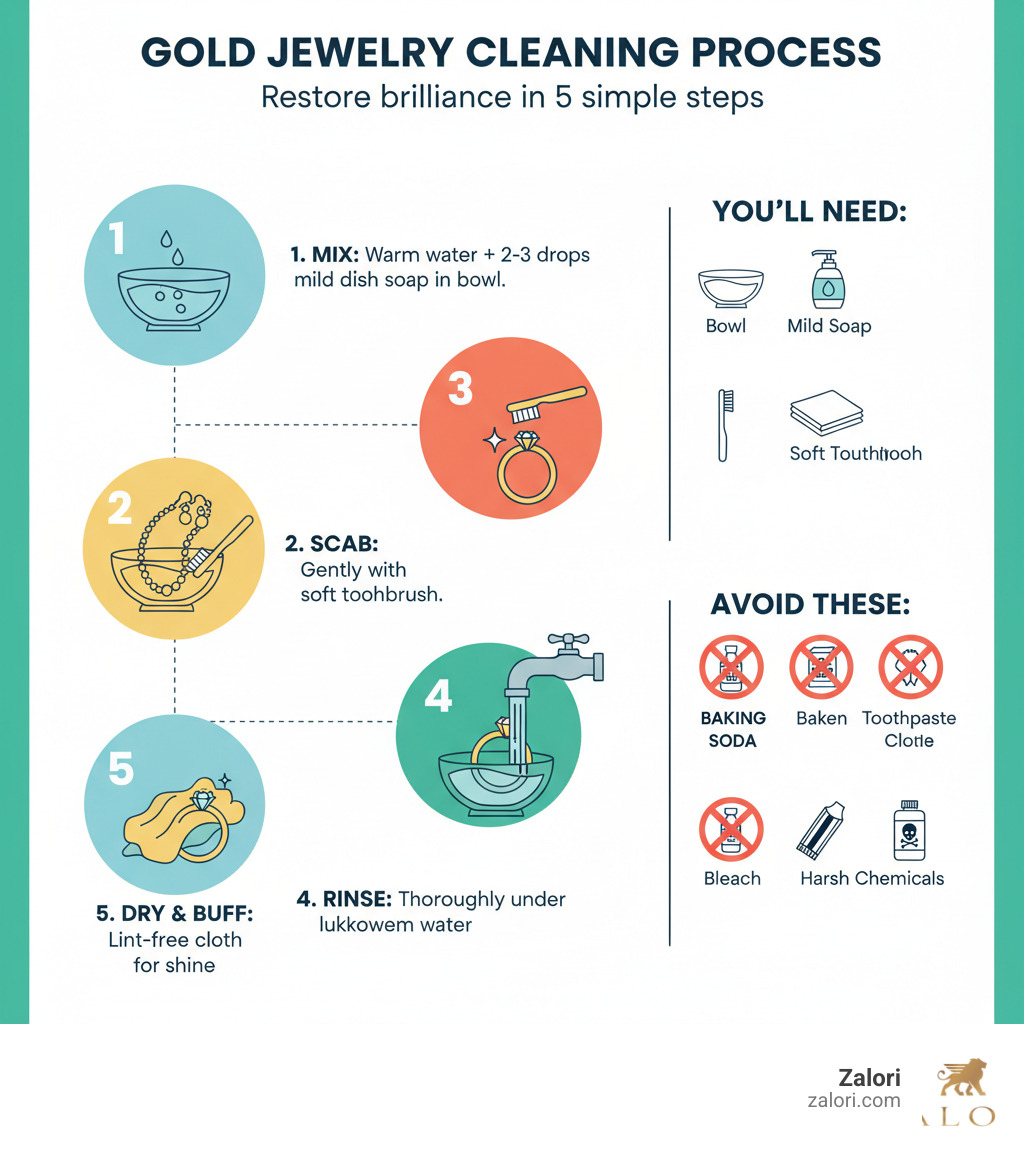
- Mix warm water with 2-3 drops of mild dish soap.
- Soak your gold jewelry for 20 minutes.
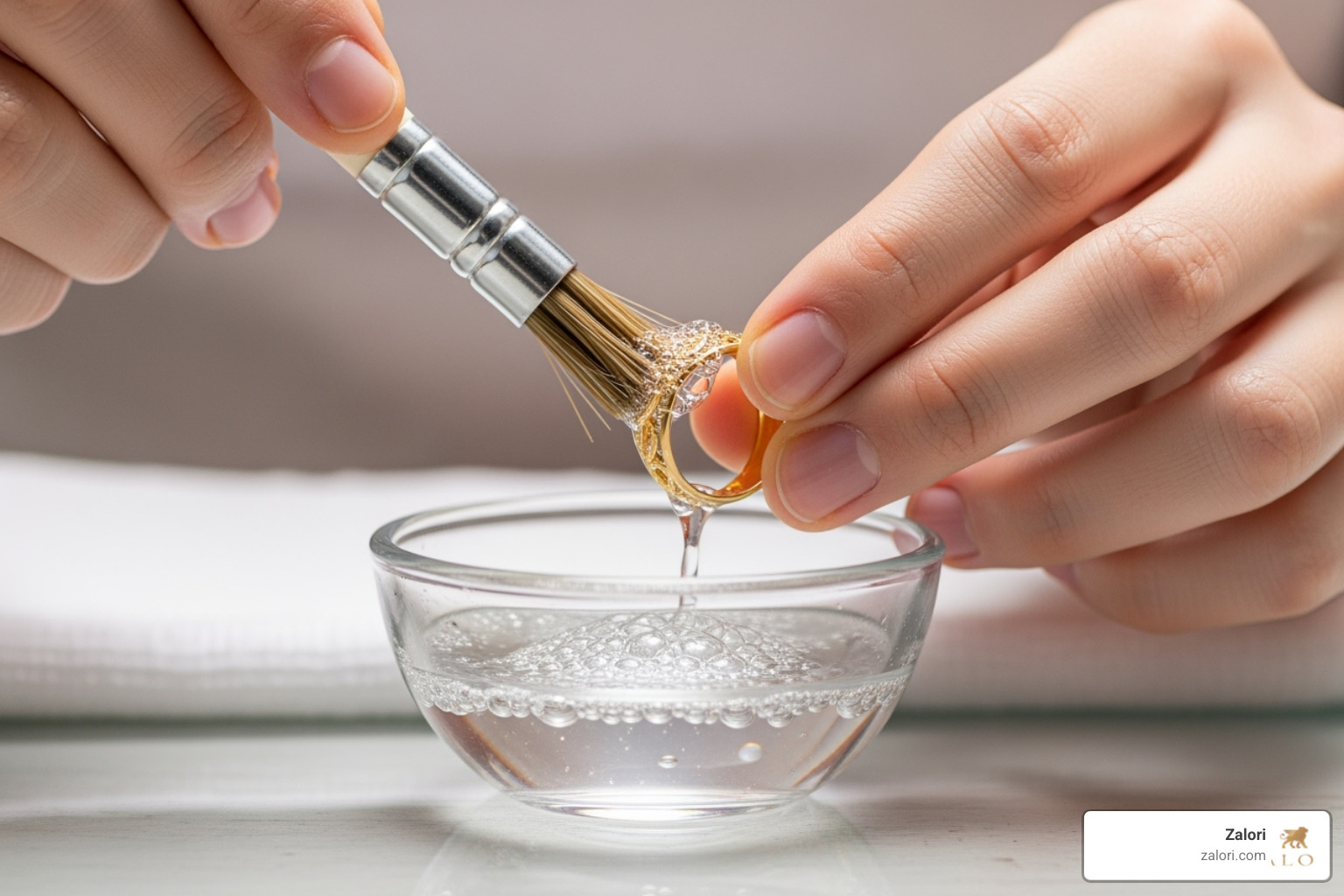
- Scrub gently with a soft-bristled toothbrush.
- Rinse under lukewarm water.
- Dry with a soft, lint-free cloth and buff to restore shine.
What to Avoid: Never use bleach, chlorine, baking soda, toothpaste, or harsh metal cleaners—these can scratch or damage your gold.
Even the finest gold loses its luster when body oils, lotions, and grime build up. The good news is you don't need expensive solutions for routine maintenance. A simple mix of warm water and dish soap is enough to keep your gold gleaming.
Regular cleaning is about protecting your investment, not just aesthetics. A gentle weekly cleaning prevents buildup and helps you spot issues like loose stones or worn prongs before they become costly problems.
However, many people unknowingly damage their pieces with abrasive materials like baking soda or harsh chemicals like bleach. Pure 24-karat gold is soft, so most jewelry uses alloys (gold mixed with other metals) for durability. These alloys are stronger but can tarnish or react to improper cleaning. Different pieces, like gold-plated items or those with porous gemstones like pearls, require special care.
I'm Eric Roach Zalori of Zalori, and I've seen how proper care makes jewelry impress. Understanding the best way to clean gold jewelry ensures your high-quality pieces maintain their beauty and value for generations. Let's get started.
Understanding Your Gold Jewelry Before You Clean
Before cleaning, know what your jewelry is made of. Understanding its composition helps you choose the best way to clean gold jewelry without causing damage.
Gold Properties and the Karat System
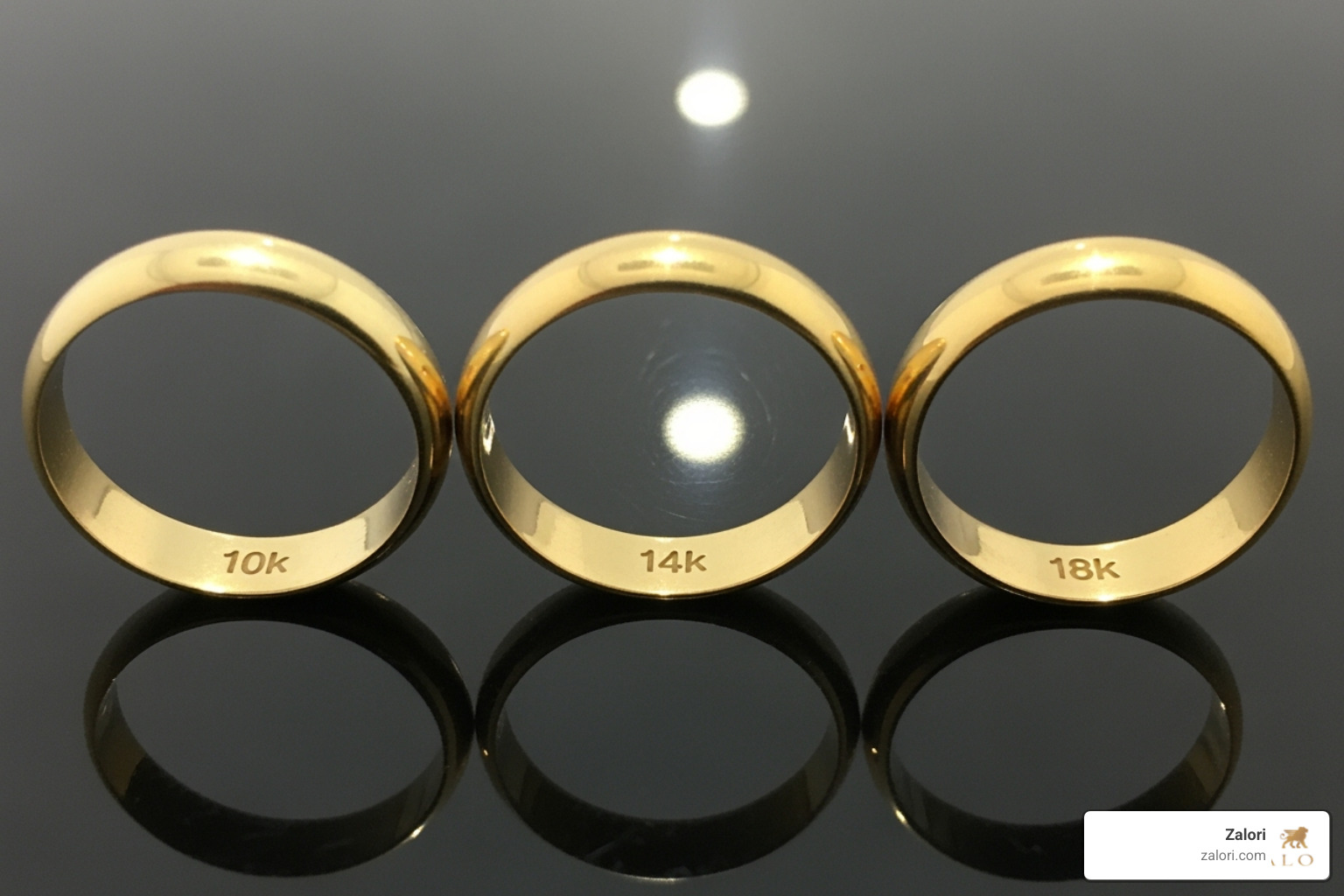
Pure gold is always 24 karat gold, but it's too soft for everyday wear as it scratches and bends easily. To improve durability, pure gold is mixed with other metals (alloys). The karat system indicates the ratio of pure gold to other metals.
- 24k gold is 24/24 parts pure gold (100%).
- 18k gold is 18/24 parts pure gold (75%).
- 14k gold is 14/24 parts pure gold (58.3%).
While pure gold doesn't tarnish, the alloys in lower-karat gold can react to chemicals and cause discoloration. To learn more about choosing the right karat, see our guide on 14k vs 18k Gold: How to Choose the Right Karat for Your Everyday Jewelry.
Yellow, White, and Rose Gold
The color of gold depends on the alloys used. All three main types can be cleaned with the same gentle method.
- Yellow gold is mixed with copper and silver for its classic warm color.
- White gold is mixed with white metals like palladium or nickel and is usually coated in rhodium for a bright, silvery finish. This plating can wear off, so it requires extra gentle cleaning. Learn more in our article: Is Rhodium-Plated Gold Right For You? Unveiling Its Secrets.
- Rose gold gets its pink hue from a higher copper content in the alloy.
Solid Gold vs. Gold-Plated and Gold-Filled
This distinction is crucial for proper cleaning.
- Solid gold is a gold alloy throughout, making it durable and easy to clean.
- Gold-plated jewelry has a very thin layer of gold over a base metal. It requires an extremely gentle touch to avoid scrubbing off the plating.
- Gold-filled jewelry has a thicker, bonded layer of gold than plated pieces. It's more durable but still needs careful handling to protect the outer layer.
Unsure what you have? Our Gold Vermeil vs Gold Filled vs Solid Gold and Sterling Silver: The Clear No-Regrets Jewelry Guide can help.
The Best Way to Clean Gold Jewelry at Home: A Step-by-Step Guide
This simple, safe, and effective method will restore your jewelry's shine by gently removing dirt, oils, and grime.
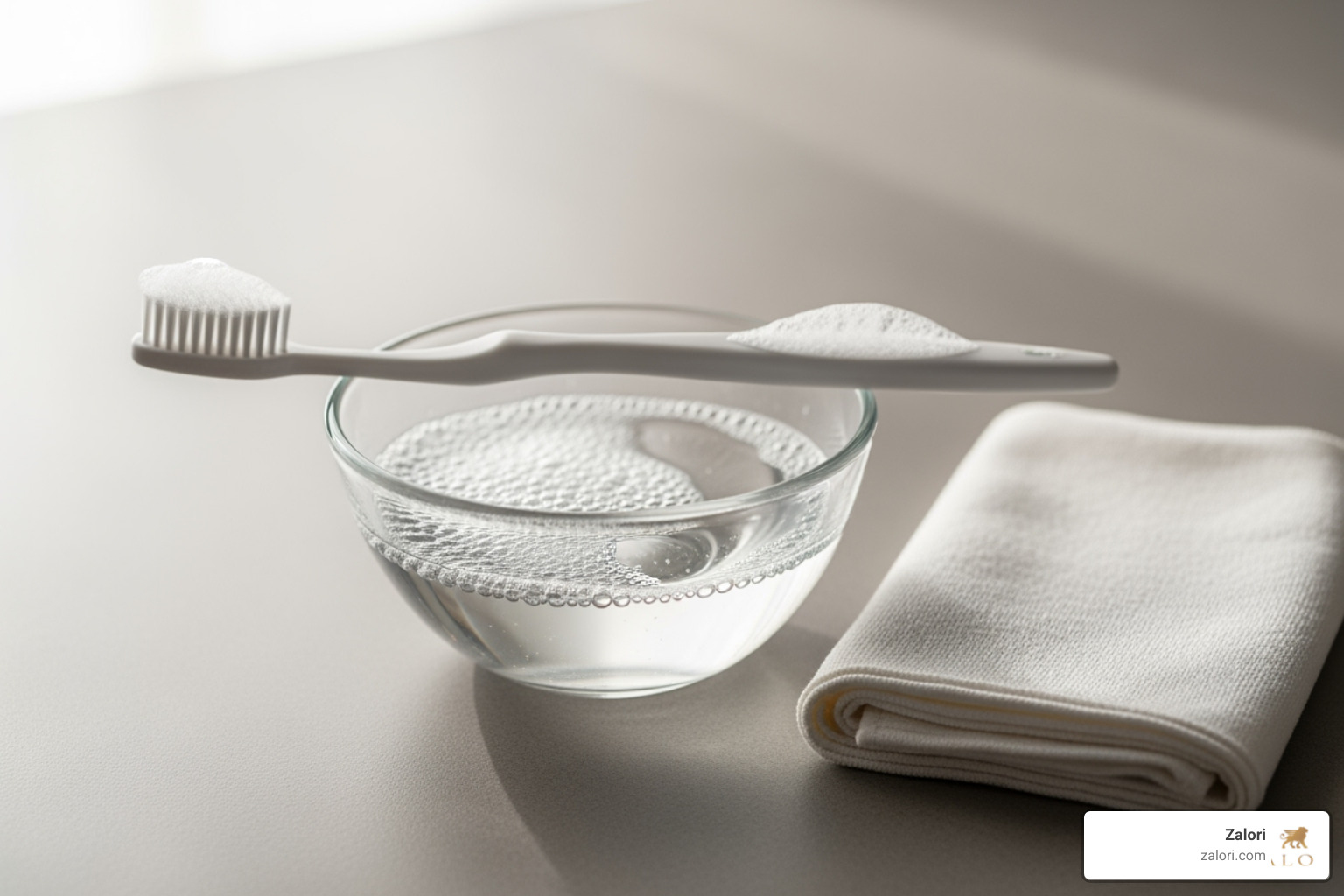
What You'll Need:
- Warm water
- Mild dish soap (like Dawn)
- A small bowl
- A soft-bristled brush (a baby toothbrush is perfect)
- A soft, lint-free cloth (microfiber is ideal)
Pro-Tip: When working near a sink, cover the drain with a cloth to prevent losing small items. Always be gentle to protect your jewelry's integrity.
Step 1: Prepare a Gentle Cleaning Solution
Fill a small bowl with warm water—not hot, as high temperatures can damage some gemstones. Add 2-3 drops of mild dish soap and swish to create a light, bubbly solution. The soap acts as a degreaser, breaking down oils and grime without harsh chemicals.
Step 2: Soak Your Jewelry
Place your gold pieces in the solution and let them soak for about 20 minutes. This allows the soapy water to penetrate crevices and loosen buildup. For very grimy pieces, you can extend the soaking time. To prevent scratching, clean only one or two pieces at a time.
Step 3: Gently Scrub Away Buildup

Using your soft-bristled brush, gently scrub each piece. Focus on nooks and crevices where dirt hides, such as behind stone settings or in engravings. A Q-tip can help reach very tight spots. Use only light pressure. For pieces with stones, be extra careful around the prongs to avoid loosening them.
Step 4: Rinse and Dry Thoroughly
Rinse each piece under a gentle stream of lukewarm running water to remove all soap residue. Alternatively, rinse items in a separate bowl of clean water to eliminate the risk of losing them down the drain.
Pat your jewelry dry with a soft, lint-free cloth. A microfiber cloth works best as it's highly absorbent and won't leave fibers behind. Gently buff the piece as you dry to restore its shine. You can also let your jewelry air dry on a soft cloth, but ensure it's completely dry before storing to prevent tarnish.
Important: Avoid paper towels, as their fibers are abrasive and can scratch the surface of your gold.
Special Cleaning Considerations for Different Jewelry Types
While the soap and water method is great for most plain gold, some pieces require special care. Understanding these nuances is key to keeping every item in your collection looking its best.
Here's a quick reference guide:
| Jewelry Type | Cleaning Method | Key Precautions |
|---|---|---|
| Plain Gold | Soak in warm, mild soapy water (20 min), gently scrub with soft brush, rinse, pat dry. | Avoid harsh chemicals (bleach, chlorine) and abrasives (baking soda, toothpaste). |
| Gold with Hard Gems (Diamonds, Sapphires) | Soak in warm, mild soapy water (20 min), gently scrub with soft brush, rinse, pat dry. | Be extra careful around stone settings to avoid loosening prongs. |
| Gold with Porous Gems (Pearls, Opals) | Wipe metal gently with a soft, damp cloth only. | NEVER SOAK. Water and chemicals can damage these delicate stones. |
| Gold-Plated Jewelry | Short soak (5-10 min) in mild soapy water, then gently wipe with a soft cloth. | NO SCRUBBING. The thin gold layer wears off easily. Pat dry immediately. |
How to Clean Gold Jewelry with Gemstones
The right cleaning method depends on the stone.
- Hard Stones: Diamonds, rubies, and sapphires are durable and can handle the standard soap and water soak. Use a soft brush around the settings, but don't apply pressure to the prongs holding the stone.
- Porous & Delicate Gems: Pearls, opals, emeralds, and turquoise can be damaged by water and chemicals. Never soak them. Instead, gently wipe the metal parts with a slightly damp cloth, avoiding the stones. If a stone seems loose, take it to a jeweler.
How to Clean Gold-Plated and Gold-Filled Jewelry
These pieces have a thinner layer of gold and require an extra-gentle approach to prevent wear.
- Soak for only 5 to 10 minutes in a mild soap solution.
- Do not scrub. Instead, wipe gently with a soft, lint-free cloth.
- Pat dry immediately and thoroughly to protect the base metal.
For more details, see our Jewelry Care 101: Your Complete Jewelry Care Guide for Gold Sterling Silver.
What Cleaning Products to Avoid
Using the wrong product can cause permanent damage. Always avoid:
- Bleach and Chlorine: These chemicals react with the alloys in gold, weakening the metal and causing it to break. Always remove jewelry before swimming or using bleach-based cleaners.
- Baking Soda and Toothpaste: These are abrasive and will create micro-scratches that dull your gold's finish.
- Ammonia and Harsh Metal Cleaners: While professionals sometimes use diluted ammonia, it's too risky for at-home use as it can damage many gemstones and alloys.
Stick with mild dish soap and warm water—it's the safest and most effective choice.
Long-Term Care: How to Keep Your Gold Gleaming
Consistent care is the secret to keeping your gold radiant for years. It's about building good habits to protect your pieces.
How Often Should You Clean Gold Jewelry?
Cleaning frequency depends on how often you wear your jewelry.
- For frequently worn pieces: Perform a quick weekly wipe-down with a soft cloth to remove daily oils and lotions.
- About once a month: Give these pieces a proper deep clean with the soap and water method.
- Clean immediately if your jewelry looks dull or after exposure to sweat, chlorine, or other chemicals.
Proper Storage and Daily Habits
How you store your jewelry is as important as how you clean it.
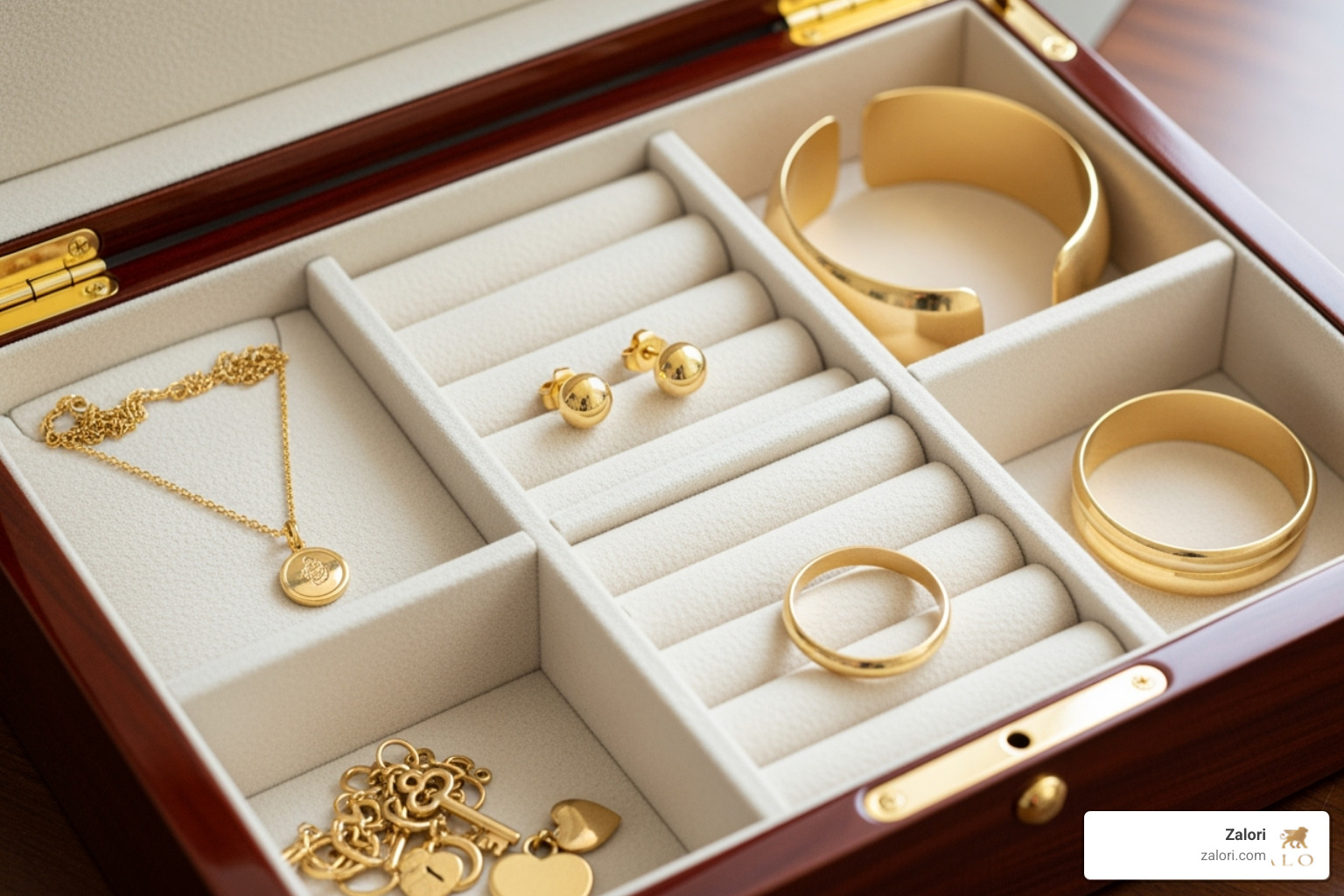
- Storage: Use a fabric-lined jewelry box with separate compartments to prevent scratching. For extra protection against tarnish, use anti-tarnish pouches and store them in a cool, dry place. Find more tips in our guide on How to Store Jewelry to Prevent Tarnish.
- Daily Habits: Follow the "last on, first off" rule. Put jewelry on after applying lotions, perfumes, and hairspray. Take it off first when you get home.
- Avoid Chemicals: Remove jewelry before swimming, bathing, or using household cleaners to avoid damage from chlorine and other chemicals.
When to Seek Professional Cleaning
While at-home care is effective, some situations require a professional jeweler.
- Stubborn tarnish or discoloration that doesn't come off with gentle cleaning.
- Deep scratches that need professional polishing.
- Loose stones or damaged prongs. This is crucial to prevent losing a gemstone.
- Intricate designs that are difficult to clean thoroughly at home.
We recommend a professional cleaning and inspection at least once a year for your most-worn pieces. This annual checkup (often costing $25-$50) ensures your jewelry remains in perfect condition. At Zalori, we believe exceptional craftsmanship deserves exceptional maintenance.
Frequently Asked Questions about Cleaning Gold Jewelry
Here are answers to some common questions about caring for your gold.
How do you remove tarnish from gold jewelry?
Tarnish doesn't come from pure gold, but from the other metals (alloys) mixed in. For light tarnish, our recommended soap and water method is effective. The soap lifts away oils and grime that contribute to the dull appearance. For heavy tarnish that significantly darkens the piece, a professional cleaning is the safest option. Jewelers have specialized equipment to remove stubborn tarnish without damaging your jewelry.
Can I use vinegar or baking soda to clean gold?
No. We strongly advise against using these common household products. Vinegar is acidic and can damage the alloys in your gold, causing discoloration. Baking soda is abrasive and will create tiny scratches that dull the metal's shine. Stick to mild dish soap and water for safe, effective cleaning.
Is it safe to use an ultrasonic cleaner at home?
Ultrasonic cleaners can be risky for jewelry with gemstones. The high-frequency vibrations are great for dislodging dirt but can loosen stone settings or even crack fragile gems like pearls, opals, and emeralds. Unless your piece is solid gold with no stones, it's safer to use the gentle hand-cleaning method or consult a professional jeweler.
Preserve Your Investment with Proper Care
Your gold jewelry is an investment in beauty and quality. Keeping it radiant is simple: the best way to clean gold jewelry is with regular, gentle care.
By using warm water, mild dish soap, and a soft brush, you protect your pieces' appearance and integrity. This prevents the buildup that dulls gold's luster and helps you spot issues like loose stones before they become problems.
High-quality jewelry, like the pieces we craft at Zalori, is designed to last for generations with your partnership. Combining proper cleaning with smart daily habits ensures your treasures maintain their value and beauty. At Zalori, we believe exceptional craftsmanship deserves exceptional care. A little maintenance allows your timeless pieces to become heirlooms that shine on.
Ready to expand your care routine? Explore our complete jewelry care guide. To add to your collection, discover our collections of fine gold jewelry crafted with the quality that makes proper care so worthwhile.
Related Articles
View all