Is Rhodium Plated Gold Right for You? Unveiling Its Secrets
Why Rhodium Plated Gold is the Secret to Brilliant Jewelry
Rhodium plated gold is the reason your favorite white gold ring sparkles like a mirror and feels incredibly smooth. This ultra-thin coating of rhodium—one of the world's rarest and most expensive metals—transforms ordinary gold jewelry into pieces with exceptional shine and durability.
Quick Answer: What You Need to Know About Rhodium Plated Gold
- What it is: A thin layer (0.75-1.0 microns) of rhodium metal applied over gold jewelry
- Key benefits: Mirror-like shine, scratch resistance, tarnish protection, hypoallergenic surface
- Lifespan: 6-18 months depending on wear and care
- Cost to replate: $50-$150 per piece
- Best for: White gold jewelry, pieces worn frequently, sensitive skin
If you've wondered why some jewelry maintains a brilliant white shine while others dull, the answer is often rhodium plating. This process is the industry standard for enhancing the beauty and performance of gold jewelry, particularly white gold.
The global production of rhodium is only about 30 tons yearly, making it incredibly rare. At approximately $5,365 per ounce—1.6 times more expensive than gold—rhodium's value reflects its exceptional properties and scarcity.
I'm Eric Roach from Zalori. My work with precious metals has shown me how rhodium plating transforms the look and durability of fine jewelry. Understanding this process is essential for anyone investing in pieces that last.
This guide covers everything you need to know about rhodium plated gold, from the science behind its shine to practical care. You'll learn when it's worth the investment and how to make your plating last.
The Science Behind the Shine: What is Rhodium and How is it Applied?
Ever wondered what gives your favorite white gold ring that stunning mirror-like finish? The secret lies in rhodium – a metal so extraordinary that it's practically jewelry's best-kept secret.
Rhodium: The Metal of Miracles (Almost)
Rhodium belongs to the prestigious platinum group metals, finded in 1803 by William Hyde Wollaston. Its name comes from the Greek word "rhodon," meaning rose-colored, though pure rhodium itself displays a brilliant silvery-white appearance that puts other metals to shame.
What makes rhodium such a superstar in the jewelry world? This remarkable metal brings together properties that seem almost too good to be true.
Hardness is rhodium's first claim to fame. It's significantly harder than gold, creating an incredibly durable surface that laughs in the face of daily wear and tear. Think of it as giving your jewelry a suit of armor – but one that's impossibly thin and gorgeous.
The corrosion resistance of rhodium is equally impressive. While other metals might tarnish or dull over time, rhodium maintains its brilliance indefinitely. It simply doesn't oxidize, which means your rhodium plated gold jewelry keeps that fresh-from-the-jeweler look.
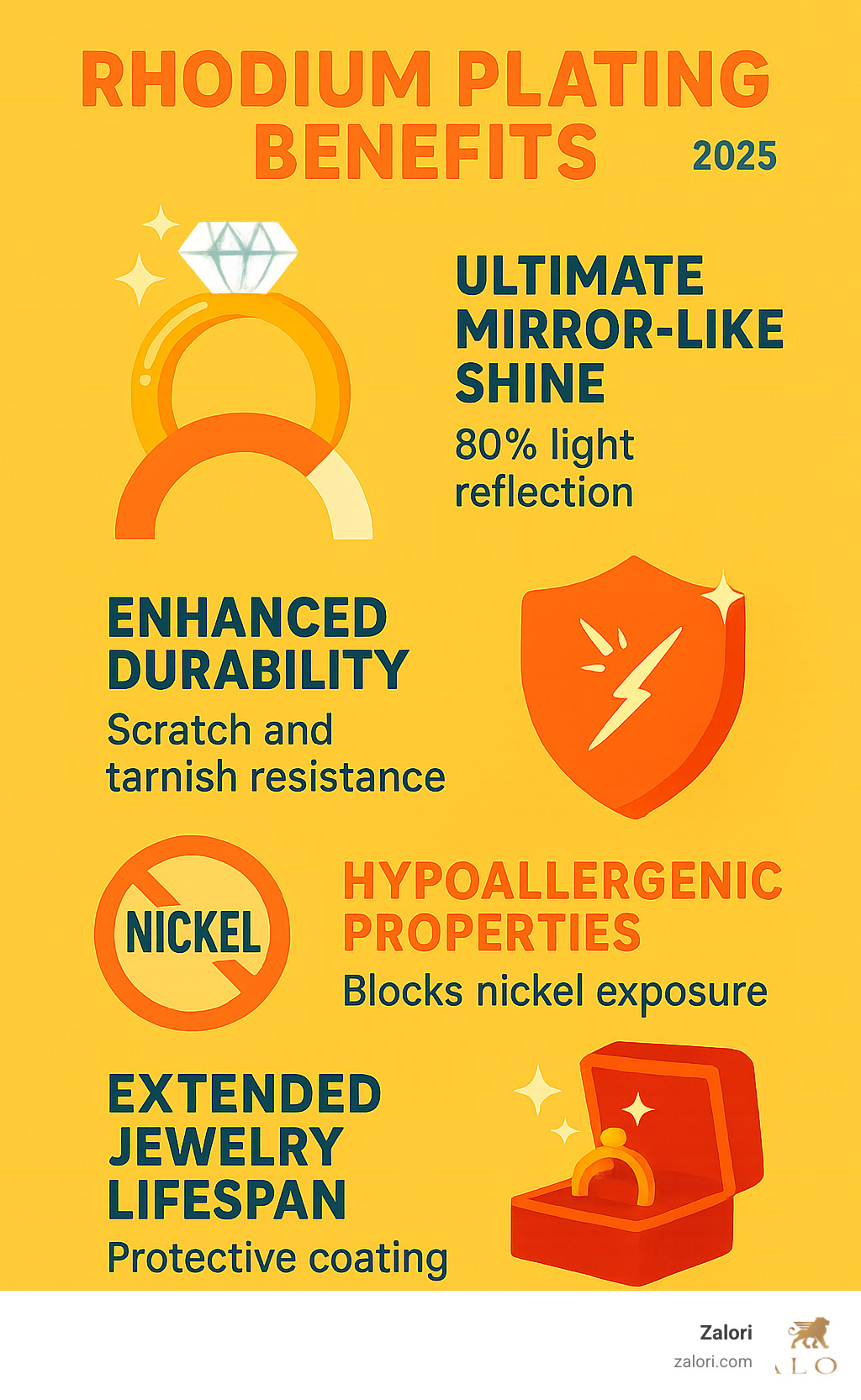
But here's where rhodium really steals the show: high reflectivity. This metal can reflect up to 80 percent of light, creating that mesmerizing mirror-like finish that makes people stop and stare. It's this property that transforms ordinary white gold into something truly spectacular.
The rarity and value of rhodium tell their own story. With global production of only about 30 tons yearly, rhodium is incredibly scarce. At approximately $5,365 per ounce, it's about 1.6 times more expensive than gold. You can explore more about its remarkable value at Rhodium: The Most Expensive Metal.
Here's the catch though – rhodium is quite brittle on its own. You can't make a solid rhodium ring because it would crack under normal wear. That's where the genius of plating comes in.
Why We Use Rhodium for Plating
At Zalori, we choose rhodium plating because it perfectly aligns with our commitment to exceptional craftsmanship and high-quality materials. The reasons go beyond just looks, though the aesthetic improvement is undeniable.
Improved appearance is the most obvious benefit. Natural white gold has a slight yellowish tint due to its alloy composition. Rhodium plating gives white gold that pure, bright white color most people expect, along with an incredible mirror-like finish that catches light beautifully.
Increased durability comes from rhodium's protective qualities. This hard layer acts as a shield, providing scratch resistance and creating a protective layer for the underlying gold. It's especially valuable for rings and other pieces that face daily contact.
Tarnish prevention is another game-changer, particularly for pieces that might otherwise dull over time. Rhodium creates an impenetrable barrier that keeps your jewelry looking fresh and bright.
The hypoallergenic barrier rhodium provides is often overlooked but incredibly important. It creates a nickel-free surface that's safe for sensitive skin, making beautiful jewelry accessible to everyone.
The Electroplating Process Explained
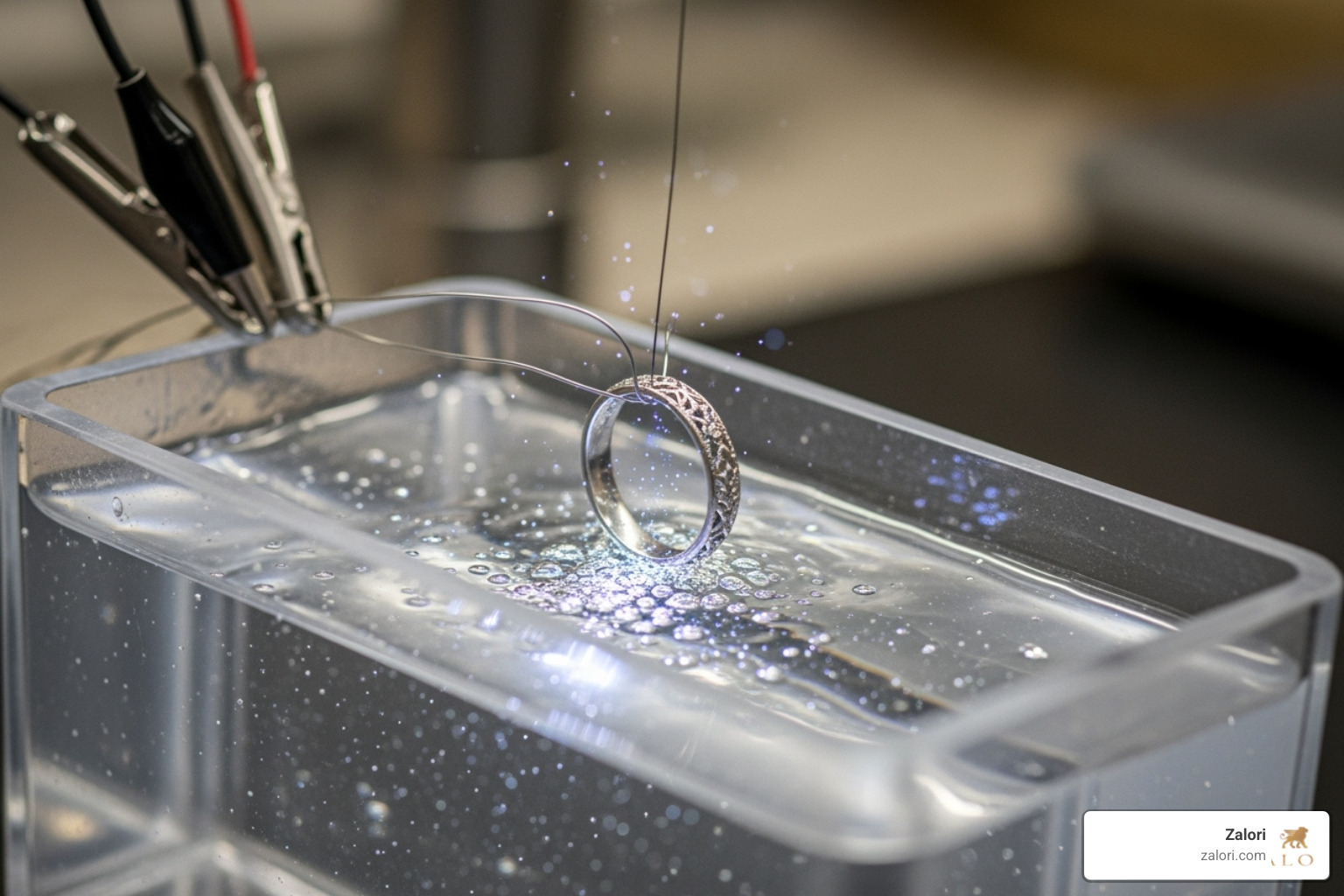
The magic happens through electroplating – a precise process that applies an ultra-thin layer of rhodium with scientific accuracy.
Cleaning and preparation comes first. Every trace of dirt, oils, or residue must be removed because even microscopic impurities can prevent proper adhesion. Sometimes jewelers use electrocleaning to prepare the surface at the molecular level.
The jewelry then enters a specialized rhodium bath containing rhodium sulfate and other carefully balanced chemicals. This isn't just any solution – it's formulated to ensure perfect electrical current flow and optimal plating conditions.
When electrical current flows through the solution, rhodium ions are attracted to the jewelry piece, which acts as a cathode. The process typically takes 30 to 60 seconds, with jewelers controlling the thickness to achieve that perfect 0.75 to 1.0 micron coating.
Adhesion to gold happens at the molecular level during this process. The rhodium bonds permanently with the base metal, creating a uniform, durable finish that transforms the piece completely.
The result? Your rhodium plated gold jewelry emerges with that incredible shine and protection that makes it truly special. It's a testament to how science and artistry combine to create something extraordinary.
The Pros and Cons of Rhodium Plated Gold Jewelry
Here's the honest truth about rhodium plated gold - it's absolutely stunning, but like that friend who always looks perfect, it requires a bit of maintenance to stay that way. Let me walk you through both sides of the story so you can decide if it's right for you.
The Dazzling Benefits
The moment you slip on a piece of rhodium plated gold jewelry, you'll understand why it's become the industry standard. The change is genuinely remarkable.
The mirror-like finish is probably what you'll notice first. Rhodium plating gives your jewelry that crisp, bright white appearance that makes white gold look absolutely radiant. If your white gold has ever looked a bit yellowish or dull, rhodium plating completely eliminates those undertones, creating that icy-white brilliance that catches light from every angle.
But the magic goes beyond just looks. The increased durability means your jewelry can handle daily life much better. Rhodium is significantly harder than gold, so it acts like a protective shield against the little bumps and scratches that would normally leave marks. This is especially valuable for rings, which face constant contact with everything from car keys to laptop keyboards.
For anyone who's ever dealt with tarnished silver jewelry, the tarnish prevention aspect is a game-changer. While silver naturally darkens and requires regular polishing, rhodium simply doesn't react with the elements that cause tarnishing. Your pieces stay bright and beautiful without that constant maintenance cycle.
Perhaps most importantly for many of our customers is the hypoallergenic barrier that rhodium provides. Since rhodium is naturally nickel-free, it creates a protective layer between your skin and any potentially irritating metals in the underlying alloy. This makes rhodium plated gold an excellent choice if you have sensitive skin or have experienced reactions to certain jewelry metals before. You can learn more about this in our guide to Best Jewelry Metal Options for Sensitive Skin.
The Practical Considerations
Now for the reality check - and I promise it's not as daunting as it might sound at first.
The most important thing to understand is that rhodium plating is a coating, not the metal itself. Think of it like a beautiful, protective finish rather than the permanent structure of your jewelry. This means it will naturally wear away over time, especially in areas that experience friction.
The wear pattern is predictable and gradual. You'll typically notice it first on the underside of ring bands or areas where jewelry rubs against other surfaces regularly. The plating doesn't just disappear overnight - it fades slowly, giving you plenty of time to plan for maintenance.
Periodic replating becomes part of owning rhodium-plated pieces, much like getting your car detailed or having your favorite leather bag conditioned. Most pieces need fresh plating every 6-18 months, depending on how often you wear them and your lifestyle.
The cost factor is straightforward - expect to invest $50-150 per piece for professional replating. While this represents an ongoing expense, many of our customers find it worthwhile for the brilliant appearance and protective benefits they receive.
Uneven wear can occur in high-contact areas, where you might see patches of the underlying gold showing through before others. This is completely normal and actually helps you identify when it's time for a refresh.
Understanding these realities upfront helps you make an informed decision and properly care for your rhodium plated gold jewelry. The key is viewing the maintenance as an investment in keeping your pieces looking their absolute best.
Longevity and Care: Making Your Plating Last
To keep your rhodium plated gold jewelry looking its best, it's important to understand its lifespan and proper care.
Signs of Wear
The brilliant mirror-like finish will gradually fade in shine, losing its intense reflectivity. If you notice a yellowish tint on your white gold piece, especially on high-friction areas, this is the underlying alloy showing through as the rhodium thins. This is a normal sign that it's time for a refresh. You might also see increased scratching as the softer gold becomes more exposed.
How Long Does Rhodium Plating Last?
Rhodium plating is not permanent; it's a protective shield that gradually wears away. Most rhodium plated gold pieces maintain their appearance for 6 to 18 months. Some carefully worn items can last up to three years.
Rings versus other jewelry show wear differently. Everyday rings, like engagement and wedding bands, face constant contact and typically need replating every 6 to 12 months. The shank (bottom of the ring) usually shows wear first.
Necklaces and earrings live easier lives and often maintain their plating for 18 months or longer.
Several factors influence wear. Friction is the biggest culprit. Frequency of use, your unique skin chemistry, and the plating thickness (typically 0.75 to 1.0 microns) also play significant roles.
How to Care for Your Rhodium Plated Gold
Caring for rhodium plated gold involves a few gentle habits.
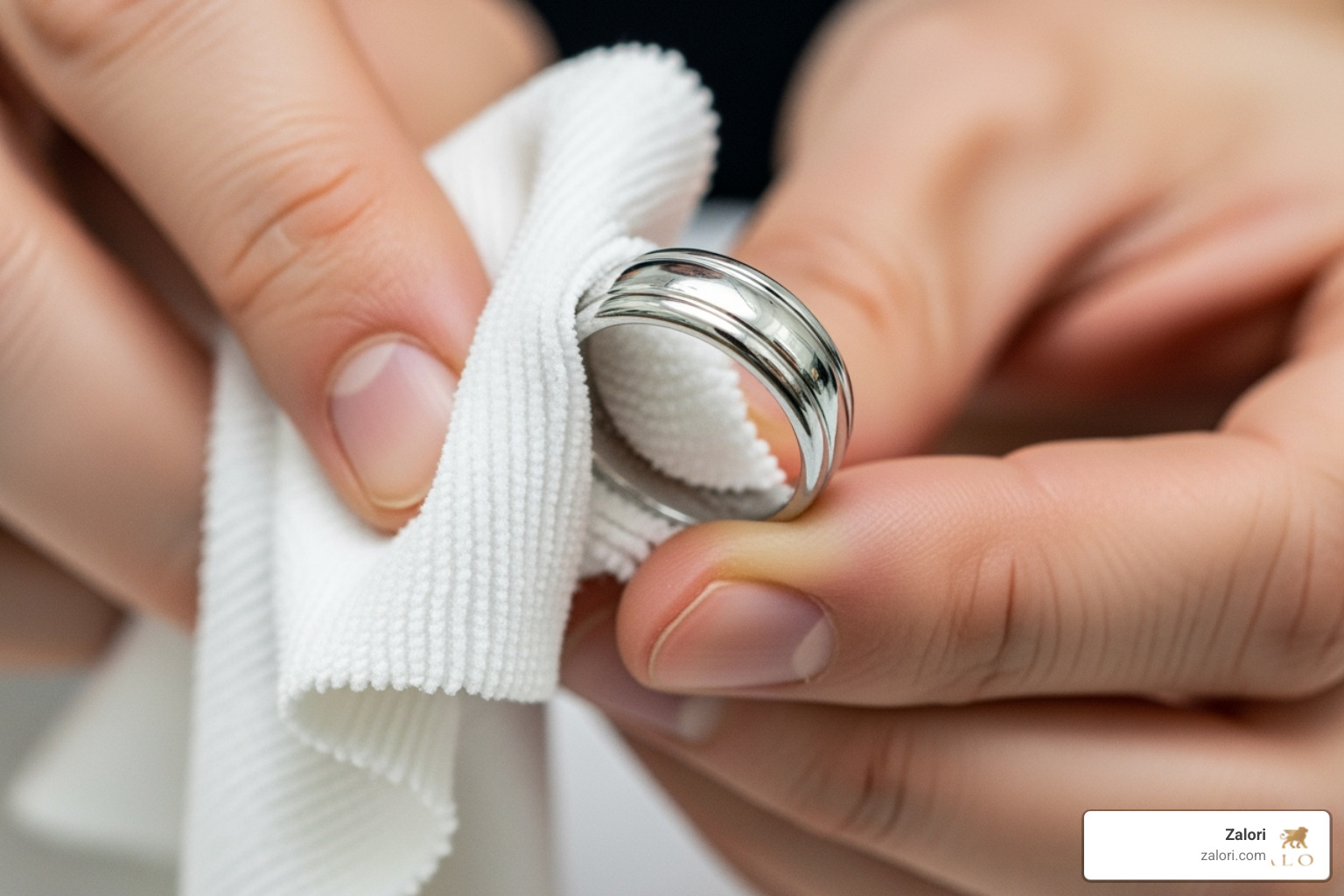
For cleaning, use mild soap and warm water with a soft cloth or microfiber towel. Use gentle pressure, then rinse thoroughly and dry immediately with a lint-free cloth before storing.
The key to longevity is avoiding harsh elements. Chlorine is especially damaging, so always remove your jewelry before swimming or using a hot tub.
Perfumes, hairspray, and cosmetics can dull the shine. Apply these products first, let them dry, and then put on your jewelry. This simple habit can extend your plating's life.
Proper storage is also crucial. Store pieces in soft pouches or lined jewelry boxes to prevent scratching against other items.
Remove your jewelry before gardening, exercising, showering, or doing dishes. These habits will help maintain that brilliant shine for longer.
For more comprehensive guidance on caring for all your precious pieces, our detailed Your Complete Jewelry Care Guide covers everything you need to know about maintaining your jewelry collection's beauty and value.
The Replating Process and Other Key Details
Even with the best care, your rhodium plated gold jewelry will eventually need some TLC. Think of it like getting a fresh coat of paint on your favorite room - it brings back that gorgeous, vibrant look you fell in love with originally.

Effect on Gemstones
One of the first questions we hear is, "Will replating hurt my diamonds or other stones?" The good news is that most gemstones handle the process beautifully.
Hard stones like diamonds, sapphires, and rubies are tough cookies. They can easily withstand the rhodium plating process without any worry. These durable gems actually benefit from the process since the fresh rhodium coating makes them appear even more brilliant.
Softer stones need a bit more attention. Gems like opals, pearls, emeralds, and certain types of topaz are more delicate. A skilled jeweler will carefully remove these stones before plating and reset them afterward. It's an extra step, but it keeps your precious gems safe and sound.
The Replating Journey: Process and Cost of Rhodium Plated Gold
When your rhodium plated gold starts looking a bit tired, replating works like magic to restore its original sparkle. Here's what happens when you take your jewelry to a professional.
The jeweler starts with a thorough inspection to see exactly what your piece needs. They'll look for any damage, check the wear pattern, and determine the best approach. Next comes a deep clean and polish to remove the old plating and any built-up residue. This step is crucial - think of it as preparing a wall before painting.
Then comes the main event: the electroplating bath. Your jewelry takes a quick dip in the rhodium solution while an electrical current works its magic. The whole plating process usually takes less than a minute, but the preparation beforehand is what makes all the difference.
Finally, there's a quality check to make sure everything looks perfect. The jeweler will inspect the finish, clean off any residue, and make sure your piece is ready to impress again.
As for cost, replating typically runs between $50 and $150 per piece. The price depends on the size of your jewelry, how thick you want the plating, and where you live. While rhodium itself is incredibly expensive, the tiny amount used in plating makes this service quite reasonable compared to buying new jewelry.
White vs. Black Rhodium: A Style Choice for Your Gold
Most people know about classic white rhodium, but there's also an edgier option that's gaining popularity: black rhodium. It's like choosing between a crisp white shirt and a sleek black one - both are stunning, just with completely different vibes.
White rhodium gives you that traditional, mirror-like brilliance we've been talking about throughout this guide. It's highly reflective, creates incredible sparkle, and gives diamonds that extra pop of fire. This classic choice never goes out of style and works beautifully with any outfit.
Black rhodium takes things in a completely different direction. It creates a dark, gunmetal finish that's modern and dramatic. The reflectivity is much lower, giving pieces a sophisticated matte or satin appearance. Black rhodium is actually regular rhodium that's been alloyed with other elements to achieve that rich, dark color.
The style difference is striking. White rhodium says timeless elegance, while black rhodium whispers edgy sophistication. Black rhodium can make vintage-inspired pieces look authentically aged or give contemporary designs a bold, alternative edge.
One thing to keep in mind: black rhodium can show wear more obviously than white rhodium because there's a greater contrast when the lighter underlying metal starts peeking through. But for many jewelry lovers, that dramatic look is worth the extra maintenance.
Frequently Asked Questions about Rhodium Plating
At Zalori, we often get questions about rhodium plated gold. Here are answers to the most common ones to help you feel confident in your choices.
Is all white gold rhodium plated?
Most commercial white gold jewelry is rhodium plated. This has become a standard industry practice.
The reason is simple. Pure gold is yellow. To create white gold, jewelers mix pure gold with white metals like palladium, silver, or nickel. However, this alloy still retains a slightly yellowish or grayish tint.
Rhodium plating gives white gold the crisp, brilliant white appearance most people expect, along with added durability, scratch resistance, and a mirror-like shine.
So when you're admiring a stunning white gold piece, you're likely seeing the magic of rhodium plating. For more insights into different gold options, check out our guide: 14k vs 18k Gold: How to Choose.
Can you plate yellow gold with rhodium?
Absolutely. This is a great option that opens up creative possibilities. You can apply rhodium plating to yellow gold for several reasons.
Some customers want to temporarily transform their yellow gold pieces to a white gold appearance. If you inherited a yellow gold ring but prefer a white gold look, rhodium plating can achieve this without permanent alteration.
Others love the dramatic two-tone effect from plating only certain sections of a yellow gold piece, creating a unique, custom look.
That as the rhodium plating wears off, the yellow gold underneath will show. Because of the strong color contrast, this wear might be more noticeable than on white gold, requiring more frequent touch-ups.
Is rhodium plating safe for my skin and gemstones?
This is an important question for those with sensitive skin or gemstone jewelry. The good news is that rhodium plating is very safe in most situations.
For your skin, rhodium is completely hypoallergenic and nickel-free, which is the culprit behind most skin reactions. We often recommend rhodium plated gold for customers with nickel allergies because the rhodium creates a protective barrier between your skin and the underlying gold alloy.
Rhodium is so non-reactive it's considered safe even for the most sensitive skin. For more information, you might find this helpful: Best Jewelry Metal Options for Sensitive Skin.
When it comes to gemstones, the answer is mostly yes. Hard gemstones like diamonds, sapphires, and rubies handle the rhodium plating process without any risk of damage.
However, we take special care with softer or more porous gemstones like opals, pearls, and emeralds. These can be sensitive to the chemicals used in plating. Our skilled jewelers will carefully remove these delicate gems before plating and reset them afterward, ensuring they remain safe.
At Zalori, we assess each piece individually and discuss any special considerations with you. Your jewelry's safety and beauty are our top priorities!
Conclusion: Is Rhodium Plated Gold Your Perfect Match?
After learning about rhodium plated gold, is it the right choice for you? The answer depends on your priorities.
Rhodium plated gold is stunning but requires extra care. The benefits are impressive: a mirror-like shine, scratch resistance that keeps pieces looking new, and hypoallergenic properties safe for sensitive skin.
The trade-off is that the plating is not permanent. It will wear off, typically within 6 to 18 months, depending on wear and care. You'll need to budget for replating every year or two, which costs about $50 to $150 per piece.
You're choosing between brilliant aesthetics with regular maintenance versus a more natural look that requires less upkeep. Neither choice is wrong; it's about matching your jewelry to your lifestyle.
If you love an icy-white sparkle, want maximum durability for frequently worn pieces, or have sensitive skin, rhodium plated gold could be your perfect match. You'll just need to accept the routine of gentle cleaning and occasional replating.
At Zalori, we believe in giving you all the information to make the best choice. Our uncompromising standards for exceptional craftsmanship and meticulous selection of high-quality, authentic materials mean that whether you choose rhodium plating or not, you're starting with a beautiful foundation built to last.
The bottom line: rhodium plated gold offers superior shine, durability, and comfort, but it requires simple care. When you see that brilliant sparkle, most people find the maintenance completely worth it.
Ready to find your next treasured piece? Explore our fine jewelry collections and find what speaks to you.
Related Articles
View all