Sourcing Sparkle: A Guide to Ethical Diamond Choices
Why Ethical Diamond Choices Matter More Than Ever
Ethically sourced diamonds represent a conscious choice that goes beyond beauty—they ensure your precious purchase doesn't contribute to human suffering or environmental destruction. When you choose ethical diamonds, you're selecting stones that meet strict standards for conflict-free origins, fair labor practices, environmental responsibility, and supply chain transparency.
Key characteristics of ethically sourced diamonds:
- Conflict-free certification through the Kimberley Process (minimum standard)
- Traceable supply chain with known mining location and journey
- Fair labor practices ensuring safe working conditions and fair wages
- Environmental responsibility with sustainable mining practices
- Community support contributing to local development initiatives
The diamond industry has historically faced serious challenges. As one forum user noted, "The illegal diamond trade was central to funding the civil war in Sierra Leone, resulting in social inequality, slavery, and human trafficking." Today's ethical sourcing standards aim to prevent such abuses while creating positive impact.
The statistics are sobering: less than 1% of the world's diamonds meet the most advanced ethical standards. This means most consumers unknowingly purchase stones with questionable origins.
The good news? Ethical alternatives exist at every price point. From responsibly mined natural diamonds to recycled stones with guaranteed provenance, you can find options that align with your values without compromising on quality or beauty.
I'm Eric Roach Zalori, a serial venture capitalist who has launched Summit Metals Holdings, LLC, focusing on providing precious metals and high-quality jewelry to the public. Through my work with ethically sourced diamonds and precious metals, I've seen how conscious sourcing transforms both communities and the luxury market. This guide will show you exactly how to make informed choices that reflect your values while securing a stunning piece you'll treasure forever.
The Hidden Cost: Understanding Issues in Traditional Diamond Mining
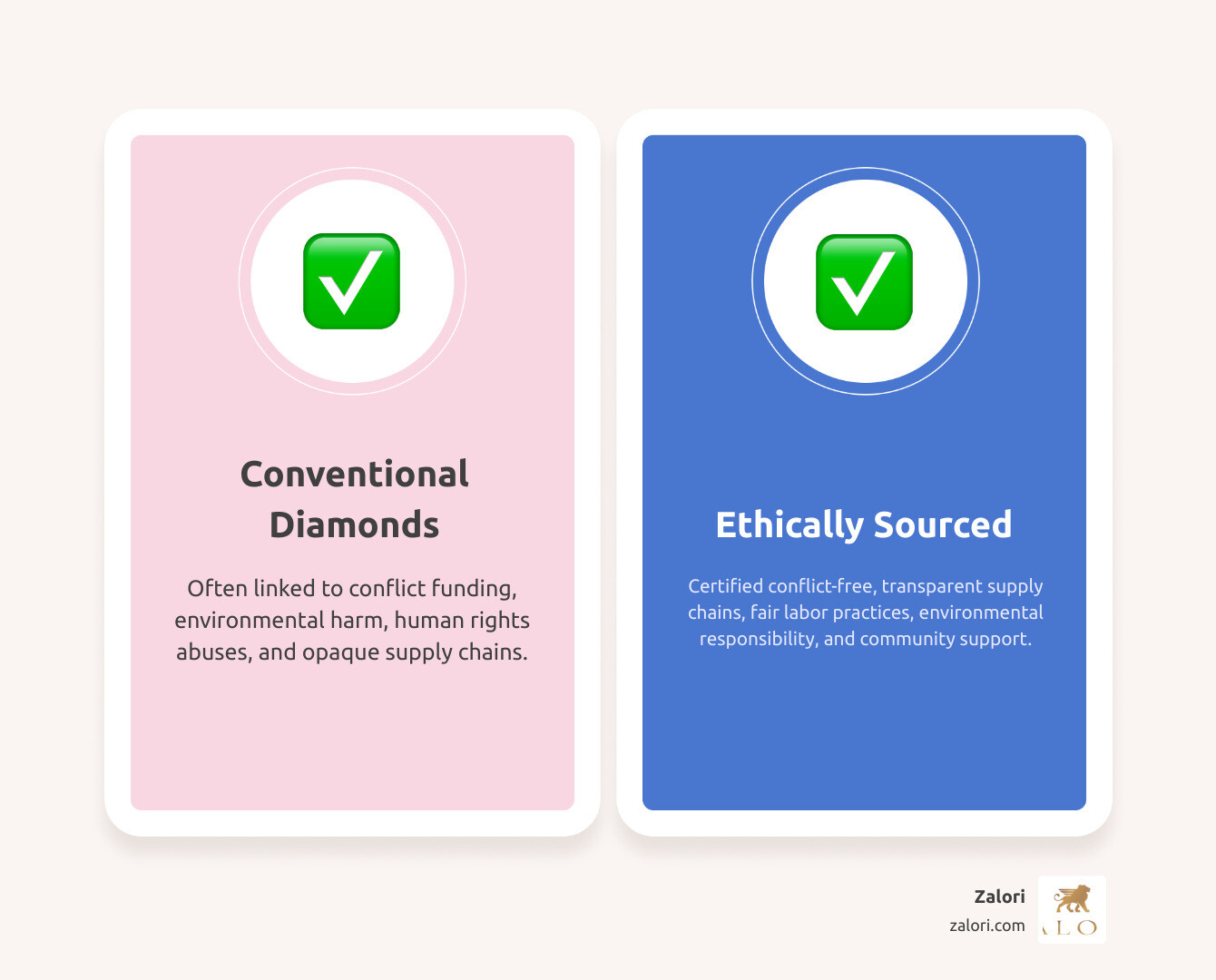
When you hold a brilliant diamond up to the light, it's hard to imagine the darker side of its story. Behind that stunning sparkle often lies a trail of human rights abuses, environmental destruction, and community displacement that the jewelry industry would rather keep hidden.
The most notorious problem is conflict diamonds—stones that fund wars and insurgencies. These "blood diamonds" have a devastating history. Take Sierra Leone's civil war, where diamond profits directly fueled a conflict that led to slavery, human trafficking, and unimaginable suffering. While the Kimberley Process was created to stop this trade, its narrow definition of "conflict-free" only covers stones that fund wars against legitimate governments. Many other serious abuses slip through the cracks.
The environmental damage from traditional mining is equally troubling. Massive open-pit mines scar entire landscapes, destroying forests and wildlife habitats in their wake. Water pollution from mining operations contaminates rivers and groundwater that communities depend on for generations. Some operations use millions of gallons of water daily, leaving local populations without access to clean drinking water.

Perhaps most heartbreaking are the unsafe labor conditions that miners face daily. Workers in small-scale operations often labor without proper safety equipment, fair wages, or basic protections. Child labor remains a tragic reality in some regions, with young people forced into dangerous work instead of attending school.
Community displacement adds another layer of injustice. Indigenous families who have lived on land for centuries are often forced to relocate when mining companies move in. Their cultural heritage, traditional ways of life, and ancestral connections to the land are swept aside for profit.
The Human Rights Watch report "Hidden Cost of Jewelry" documents these abuses in shocking detail, revealing how little accountability exists in traditional supply chains.
At Zalori, we believe luxury should lift people up, not tear them down. Understanding these hidden costs isn't meant to discourage you—it's meant to empower you to make choices that align with your values. When you choose ethically sourced diamonds, you're voting for a jewelry industry that respects both people and the planet.
What Makes a Diamond Ethical? A 4-Point Checklist
Finding truly ethically sourced diamonds doesn't have to feel overwhelming. After years in the jewelry industry, I've learned that ethical sourcing comes down to four key areas that every conscious consumer should understand. Let's walk through each one together.
1. Go Beyond "Conflict-Free" with the Kimberley Process
When most people think about ethical diamonds, "conflict-free" is usually the first term that comes to mind. This largely stems from the Kimberley Process Certification Scheme, established in 2003 to keep "blood diamonds" out of the mainstream market. It's been remarkably successful—preventing 99% of illegal diamonds from entering international commerce.
Here's the thing though: the Kimberley Process definition of "conflict-free" is surprisingly narrow. It only covers diamonds that fund rebel movements against legitimate governments. That means a diamond could still be labeled "conflict-free" even if it came from a mine with terrible working conditions, environmental destruction, or human rights violations.
Think about it this way—when Russia invaded Ukraine, many ethical jewelers immediately stopped selling Russian diamonds, even though they technically met Kimberley Process standards. They recognized that these stones were helping fund an invasion, which goes against everything ethical sourcing represents.
The Kimberley Process is absolutely a crucial starting point, but it's just that—a starting point. Look for jewelers who go beyond these basic requirements and actively vet their diamonds for broader ethical concerns.
2. Demand Supply Chain Transparency
True ethical sourcing means knowing your diamond's complete story. Where was it mined? Who handled it along the way? Were workers treated fairly? These aren't unreasonable questions—they're essential ones.
Blockchain verification is revolutionizing how we track diamonds from mine to market. This technology creates a permanent, tamper-proof digital record of each stone's journey. It's like having a detailed passport for your diamond, documenting every stop along the way.
A transparent chain of custody ensures that mining operations provide fair wages, maintain safe working conditions, and respect human rights. Even better, it often means supporting community development initiatives in mining regions. Botswana's diamond industry is a perfect example—diamond revenues have helped build schools, hospitals, and infrastructure throughout the country.
When you choose transparency, you're empowering miners and their communities. You're saying that the people who bring these beautiful stones to light deserve dignity, safety, and fair compensation for their work.
At Zalori, we believe you deserve to know the story behind your jewelry. Our commitment to transparency means you can feel confident about the journey your piece took to reach you. For more insights on making values-aligned choices, explore our Guide to Ethical Sourcing: How to Choose Jewelry That Aligns With Your Values.
3. Choose Sustainable Metals for Your Setting
While we often focus on the diamond, the metal setting plays an equally important role in your jewelry's ethical footprint. Traditional metal mining can be just as environmentally damaging as diamond extraction.
Recycled gold and recycled platinum offer neat solutions. These metals come from existing jewelry, industrial materials, or electronic waste. The beauty of precious metals is that they can be recycled infinitely without losing their quality or luster. It's like giving these materials a beautiful second life.
Choosing recycled metals dramatically reduces mining footprint by eliminating the need for new extraction. No new habitat destruction, no additional chemical pollution, no extra carbon emissions from mining operations. It's a win-win for you and the planet.
When shopping for your setting, look for responsible sourcing certifications or ask specifically about recycled metal options. At Zalori, our commitment to responsible sourcing extends to every component of your jewelry. We carefully select materials that meet our uncompromising standards for both quality and ethical integrity.
4. Consider the Alternatives: Recycled and Vintage-Inspired Gems
Sometimes the most ethical choice is a diamond that's already had a life. Recycled diamonds and vintage-inspired jewelry offer compelling alternatives that don't require any new mining whatsoever.
Recycled diamonds are natural, earth-mined stones from estate or vintage jewelry that are re-entering the market. They have the lowest carbon footprint of any diamond option since their initial extraction impact already occurred. Many can even be re-cut and re-polished to improve their brilliance, often surpassing newly mined stones in light performance.
Vintage-inspired jewelry celebrates timeless design while embracing sustainability. When you choose a genuinely antique piece, you're getting a ring with character and history—plus you're making one of the most environmentally friendly choices possible.
These alternatives don't mean compromising on beauty or quality. In fact, you often find unique pieces with stories to tell, all while making a powerful statement about your values. For more guidance on sustainable choices, check out our article on The Art of Selecting Sustainable Jewelry.
The guaranteed origin of recycled and vintage pieces means you know exactly where your diamond comes from—no guesswork, no concerns about hidden ethical issues. It's transparency at its finest.
How to Shop for Ethically Sourced Diamonds
Shopping for ethically sourced diamonds might seem overwhelming at first, but with the right approach, you can find a stunning stone that truly reflects your values. Think of it as an trip where you get to be both detective and conscious consumer.
| Feature | Responsibly Mined Diamonds | Recycled Diamonds |
|---|---|---|
| Origin Traceability | Can be highly traceable (mine-to-market), often from specific countries with strict regulations (e.g., Canada, Botswana). Requires verification of entire supply chain, including labor and environmental practices at the mine. | Origin is historical; the focus shifts to ethical handling of the stone through its re-entry into the market. No new mining required, inherently reducing ethical complexities of extraction. |
| Environmental Impact | Efforts to minimize impact through land reclamation, reduced water usage, renewable energy, and avoiding toxic chemicals. Still involves significant ecological disruption compared to alternatives. | Smallest environmental footprint as no new mining or energy-intensive lab creation is needed. Reuses existing resources. |
| Social Impact | Supports fair wages, safe working conditions, and community development in mining regions. Requires diligent oversight to ensure human rights are upheld beyond basic "conflict-free" definitions. | Supports a circular economy and gives new life to existing resources. Does not directly contribute to the social issues of current mining, but relies on past mining. Can support local economies through skilled recutting and setting. |
| Typical Cost | Can be slightly more expensive due to higher operational costs associated with ethical practices (fair wages, environmental protections). Prices vary widely based on 4 Cs and specific origin. | Can be more affordable than newly mined diamonds of comparable quality, especially if they are older cuts. Value is often excellent, particularly after professional re-cutting. |
Key questions to ask your jeweler
Your jeweler should be your trusted guide in this journey. A great jeweler won't mind your questions—in fact, they'll welcome them because they're proud of their sourcing practices.
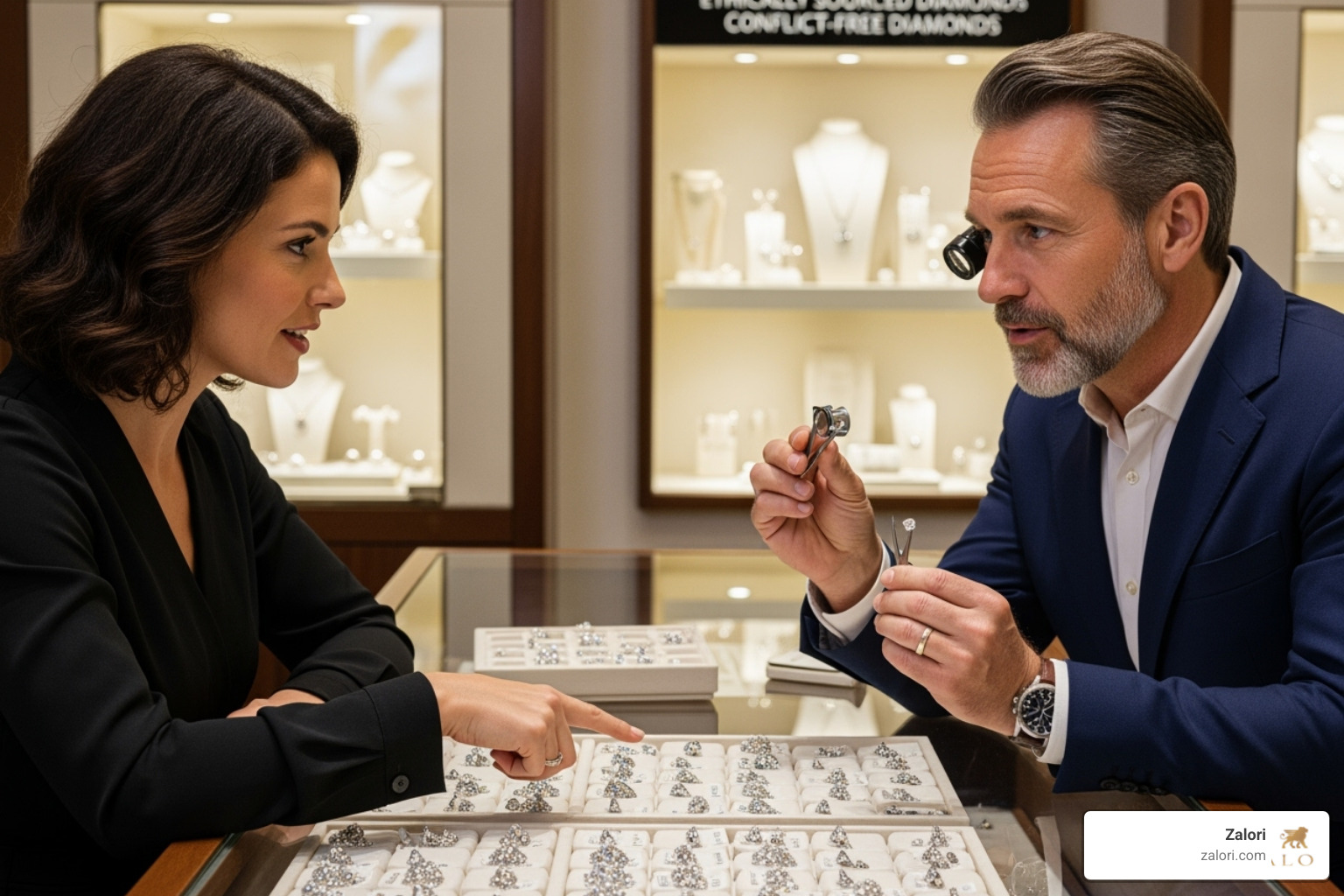
Start with diamond provenance—ask where exactly your stone comes from. Don't accept vague answers like "Africa" or "conflict-free." You want specifics: which country, ideally which mine. Canadian diamonds, for example, often come with a maple leaf inscription and are known for their strict mining standards.
Next, dig into their sourcing policies. Ask about their brand's commitment to fair labor practices and environmental protection. How do they ensure workers are paid fairly and work in safe conditions? What steps do they take to minimize environmental damage?
Request to see certification proof beyond just the Kimberley Process. While that's a starting point, look for additional certifications from organizations like the Responsible Jewellery Council. Some diamonds even come with blockchain verification—a digital fingerprint that tracks the stone's entire journey.
Don't forget to ask about labor conditions throughout their supply chain and what environmental practices they follow. A jeweler who can provide clear, detailed answers with supporting documentation is someone you can trust.
Understanding price and verifying claims
Here's a secret that might surprise you: ethically sourced diamonds aren't always more expensive. While responsible mining practices can sometimes add costs, it's not a universal rule. Recycled diamonds, for instance, often cost less than newly mined stones of similar quality.
The key is understanding what you're paying for. When you choose ethical sourcing, you're investing in fair labor premium and environmental responsibility. But you're also getting incredible recycled diamond value—these stones are often older cuts that can be more affordable while still being absolutely stunning.
Price differences depend on many factors beyond ethics. The traditional 4 Cs still matter, as does the specific origin and any special certifications. What changes is your value perception—you're not just buying rarity, you're buying integrity.
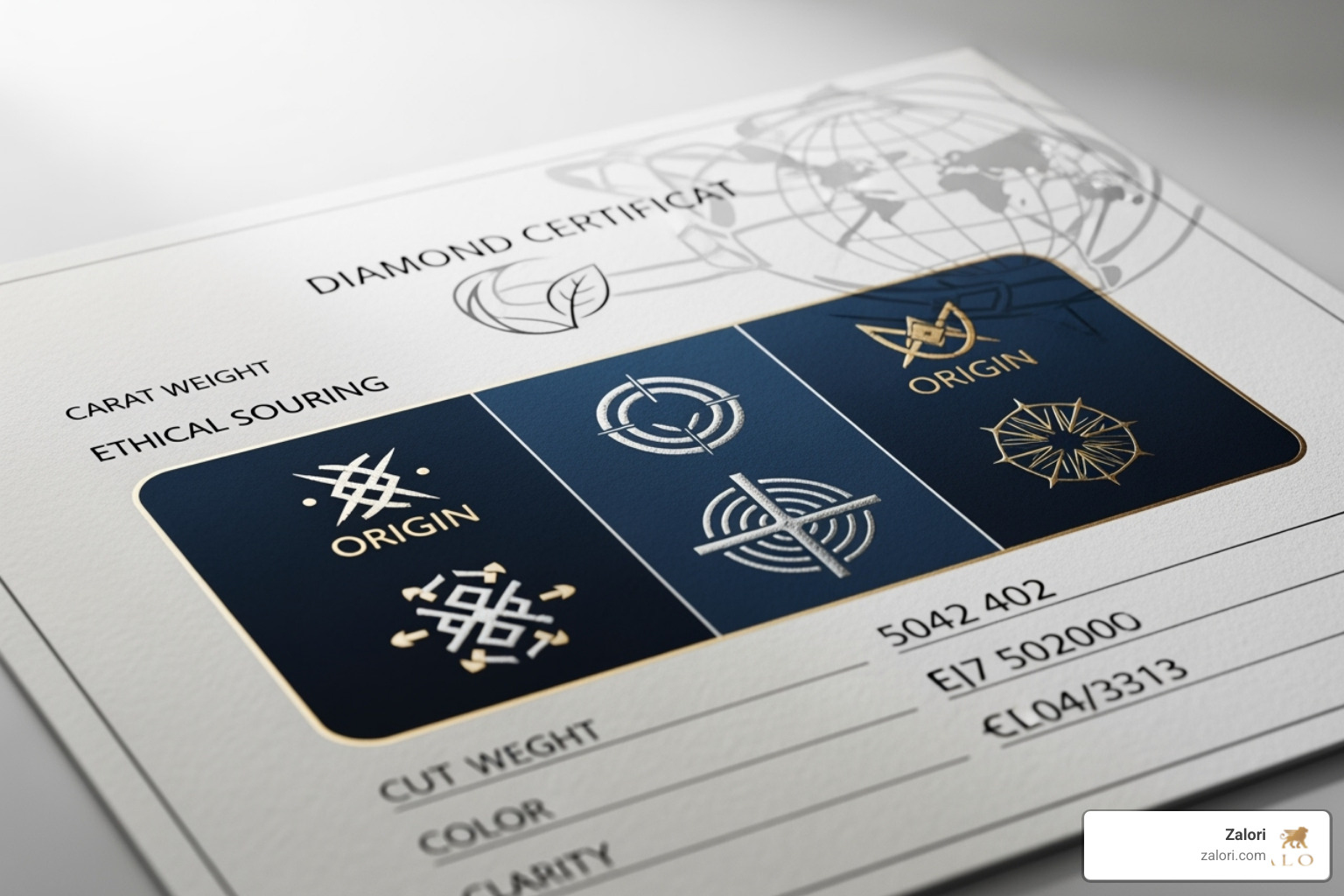
To verify claims, look for GIA reports with origin information. The Gemological Institute of America now includes country of origin on some reports, which adds valuable transparency. Check for specific certifications from reputable organizations, and don't hesitate to ask for detailed documentation.
Many ethical brands publish transparency reports on their websites, showing exactly how they source their materials and the impact they're making. This level of openness is a strong sign of genuine commitment to ethical practices.
For deeper insights into what makes jewelry truly high-quality and ethically sound, explore The Material World: Uncovering the Secrets of True Quality.
Choosing a stone for your engagement ring
An engagement ring carries profound symbolism—it represents love, commitment, and the future you're building together. When you choose an ethically sourced stone, you're adding another beautiful layer to that meaning.
Your ring becomes a reflection of your personal values as a couple. It says that your love story doesn't come at the expense of others' suffering or environmental destruction. That's pretty powerful symbolism for something you'll wear every day for the rest of your life.
Making an informed decision means taking time to research and ask questions. Whether you choose a responsibly mined diamond with full traceability, a recycled diamond with its own fascinating history, or even a lab-grown stone created with renewable energy, what matters most is that your choice feels right for you.
The beauty of having options is that you can find a stone that matches both your aesthetic dreams and your ethical standards. Your engagement ring should make you smile every time you look at it—not just because it's gorgeous, but because you know its story is as beautiful as its sparkle.
To help guide you through all the wonderful options available, check out our comprehensive Engagement Ring Gemstone Guide: How to Choose the Perfect Stone. It's designed to help you find the perfect match for both your style and your values.
Frequently Asked Questions about Ethical Diamonds
When it comes to ethically sourced diamonds, I hear the same thoughtful questions from customers time and again. Let me share the honest answers that will help you make the best choice for your values and budget.
Are ethically sourced diamonds more expensive?
Here's the truth: it depends on which ethical path you choose, but higher prices aren't always the rule.
When diamonds are sourced with fair labor practices and strict environmental standards, mining companies do face higher operational costs. They're paying fair wages, ensuring safer working conditions, and implementing environmental protection measures that cost money. Sometimes these costs get passed along to you as the buyer.
But here's where it gets interesting. Recycled diamonds often cost less than newly mined stones of comparable quality. Since there's no extraction cost involved, you're getting exceptional value for a choice that's incredibly ethical. It's like finding a designer dress at a consignment shop—same quality, better price, and you're doing something good for the world.
The reality is that ethical options exist across every price range. You don't need to break the bank to align your purchase with your values. The key is understanding what type of ethical sourcing matters most to you and shopping accordingly.
Are recycled diamonds considered "real" diamonds?
This question always makes me smile because the answer is so definitively yes!
Recycled diamonds are absolutely, unquestionably real diamonds. They're natural stones that formed deep in the earth over millions of years, just like any diamond you'd find in a traditional jewelry store. The only difference? They've had a previous owner and are now getting a beautiful second chapter.
These diamonds have identical properties to any other natural diamond—the same physical composition, chemical structure, and optical characteristics that make diamonds so captivating. They sparkle with the same brilliance, they're just as durable, and they carry all the romance of a stone with actual history.
Think of it this way: when you buy a vintage car, it's still a "real" car, right? Same principle applies here. You're choosing a natural diamond that happens to have a story, and that story makes it even more special in my opinion.
For more insights into different stone options and their unique qualities, check out our guide: Moissanite vs. Diamond: Which Stone Is Right for You?.
Is a "conflict-free" diamond automatically ethical?
This is perhaps the most important question you can ask, and I wish more people understood the answer: no, conflict-free doesn't automatically mean ethical.
The Kimberley Process was groundbreaking when it launched, and it successfully prevents diamonds from funding wars against legitimate governments. That's crucial progress. But its scope is surprisingly narrow, and many serious issues fall outside its definition.
A diamond can carry a "conflict-free" label while still coming from operations that cause environmental degradation, like deforestation or water pollution. It might involve unfair wages, unsafe working conditions, or even child labor—none of which disqualifies it from being called "conflict-free" under current standards.
The broader ethical concerns that the Kimberley Process doesn't address include worker exploitation, community displacement, and environmental destruction. It's like saying a restaurant is "vegetarian-friendly" because they have one salad on the menu—technically true, but missing the bigger picture.
When you're shopping for ethically sourced diamonds, look for brands that go beyond the basic "conflict-free" certification. Ask about labor rights, environmental practices, and supply chain transparency. These details matter just as much as avoiding conflict funding, and they're what truly make a diamond ethical in the fullest sense of the word.
Conclusion: Wear Your Values
When you slip on a piece of jewelry featuring ethically sourced diamonds, you're doing something remarkable—you're wearing your values on your sleeve, quite literally. This isn't just about following the latest trend; it's about making a conscious choice that ripples outward, creating positive change in the world.
Think about it: every diamond has a story. The question is, what kind of story do you want yours to tell? When you choose ethical diamonds, you're selecting a narrative of human dignity, environmental stewardship, and responsible luxury. Your beautiful piece becomes more than an accessory—it becomes a symbol of integrity that sparkles with purpose.
This is especially meaningful when we're talking about life's most significant moments. An engagement ring isn't just a piece of jewelry; it's a promise, a commitment, a symbol of enduring love. When that symbol also represents your shared commitment to making the world a better place, its meaning deepens immeasurably. You're not just saying "I love you"—you're saying "I love you, and together we'll make choices that honor our values."
The future of luxury is conscious luxury. It's about understanding that true elegance comes not just from flawless cuts and brilliant sparkle, but from the peace of mind that comes with knowing your purchase supports fair wages for miners, protects fragile ecosystems, and contributes to thriving communities rather than exploitation.
At Zalori, we've built our entire philosophy around this principle. Our uncompromising standards for exceptional craftsmanship extend far beyond the workshop—they encompass every step of our sourcing process. We believe that the meticulous selection of high-quality, authentic materials must include a rigorous evaluation of their ethical journey. When you choose Zalori, you're choosing jewelry that reflects both timeless beauty and unwavering integrity.
The path forward is clear, and it's exciting. As more conscious consumers like you demand transparency and responsibility, the entire jewelry industry is changing. Your choices today are shaping tomorrow's standards, creating a world where luxury and ethics walk hand in hand.
Ready to find a piece that truly reflects who you are and what you stand for? Explore our collections of fine jewelry, where every piece tells a story of responsible sourcing and exceptional quality. Or perhaps you have a vision for something uniquely yours—something that captures your personal style and values perfectly. Craft your own unique, ethically-inspired piece with our custom design process, and let us help you bring that vision to life.
Because at the end of the day, the most beautiful jewelry isn't just what catches the light—it's what catches the heart.
Related Articles
View all