Sacred Keepsakes: Discover 10kt White Gold Mourning Dove Pendants
Understanding the Sacred Tradition of Mourning Lockets with Dove Symbolism
A 10kt white gold mourning locket pendant with religious dove combines centuries-old memorial traditions with enduring spiritual symbolism. These sacred keepsakes serve as tangible connections to departed loved ones, featuring the dove—a powerful Christian symbol representing peace, the Holy Spirit, and the soul's journey to heaven.
Key Features of Mourning Lockets with Religious Doves:
- Material: 10kt white gold offers durability and a cool, modern aesthetic at an accessible price point
- Function: Designed to hold photographs, locks of hair, or small mementos of the deceased
- Symbolism: The dove represents eternal peace, spiritual comfort, and hope in Christian tradition
- Design Elements: Often feature black enamel, seed pearls, engraved inscriptions like "In Memory Of" (IMO), or intricate Victorian detailing
- Era Styles: Victorian pieces (1837-1901) tend toward ornate grandeur, while Edwardian designs (1901-1910) showcase lighter, more delicate aesthetics
- Value Factors: Age, condition, craftsmanship, provenance, and rarity all influence market price, typically ranging from hundreds to several thousand dollars
These lockets originated during the Victorian era when Queen Victoria popularized elaborate mourning jewelry following Prince Albert's death in 1861. The tradition held that wearing a locket containing a memento—whether a photograph, a curl of hair, or even a small portion of cremated remains—kept the memory of the departed close to one's heart. The dove motif specifically references biblical passages like Mark 1:10, where the Holy Spirit descends "like a dove," offering spiritual reassurance to those grieving.
I'm Eric Roach Zalori, and through my work establishing Summit Metals Holdings and Zalori, I've dedicated myself to providing authentic, high-quality precious metal jewelry that honors lasting traditions—including the sacred craftsmanship behind a 10kt white gold mourning locket pendant with religious dove. My experience as a serial entrepreneur in precious metals has taught me that true keepsakes must combine genuine materials with meaningful artistry.
The Deep Symbolism of Mourning Lockets and Doves
When you hold a 10kt white gold mourning locket pendant with religious dove, you're not just touching a piece of jewelry—you're cradling a sacred vessel of memory and faith. These extraordinary pieces bridge the gap between earthly remembrance and spiritual hope, offering comfort through the darkest days of grief.
What sets mourning lockets apart from everyday jewelry is their profound purpose. While a regular locket might hold a sweetheart's photo or a child's first curl, a mourning locket exists specifically to commemorate someone who has passed. Inside its hinged compartment, you might find a photograph of the departed, a carefully preserved lock of hair, or even a small portion of cremated remains. This isn't just sentimentality—it's a tangible link to the deceased, a way to keep them literally close to your heart.
When a dove motif graces the surface of such a locket, something remarkable happens. The piece transcends its role as a memento and becomes a guide of spiritual comfort. The dove doesn't just decorate—it speaks a language of faith that has resonated for millennia.

The Locket as a Vessel of Memory
The tradition of wearing lockets as keepsakes reaches back centuries, but it truly flourished during the Victorian era. When Queen Victoria lost her beloved Prince Albert in 1861, she entered a period of mourning that would last the rest of her life. Her devotion to memorial jewelry sparked a cultural movement, making it not just acceptable but expected to wear tokens of remembrance.
Victorian mourning lockets served as intimate personal connections to the departed. A delicate lock of hair might be woven into intricate patterns, or a tiny photograph carefully placed behind glass. These weren't morbid obsessions—they were lifelines for the grieving, offering comfort through touch and sight.
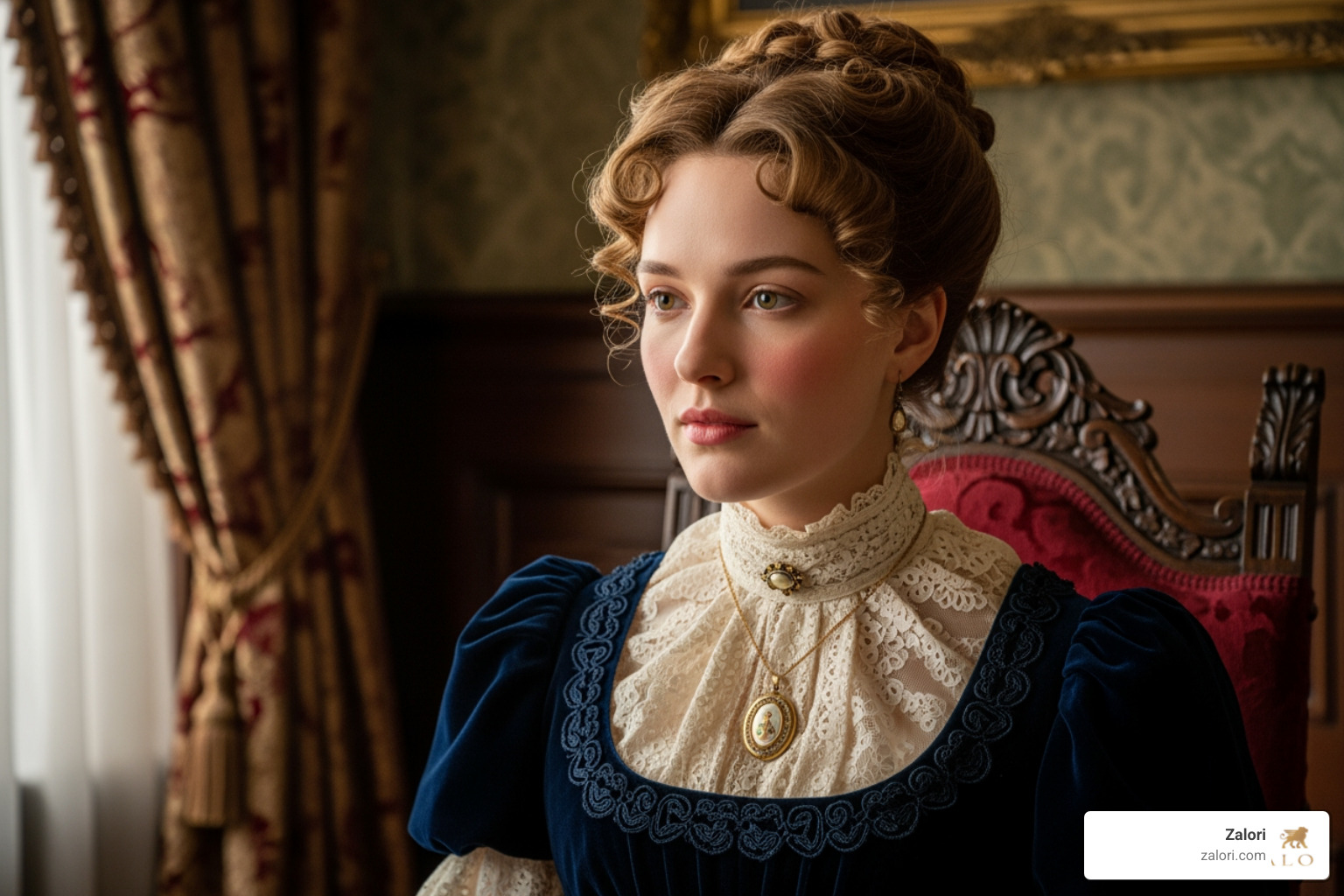
Picture a Victorian lady, dressed in her black crepe and jet beads, her hand instinctively reaching for the locket at her throat. Inside might rest a curl from her late husband's hair, carefully braided on the day of his funeral. Or perhaps a miniature portrait of a child taken too soon, their face forever young in sepia tones. Each time she opened that locket, she maintained a tangible link to the deceased—a private moment of connection in a world that demanded she move forward.
The Dove: A Symbol of Peace and Faith in Mourning
The dove carries weight far beyond its delicate appearance. In Christian symbolism, this gentle bird appears at pivotal moments in biblical history, each time bringing messages of hope and divine presence. For broader context on the imagery, see Dove (symbolism)).
Think of Noah's Ark, where a dove returned carrying an olive branch—proof that the floodwaters had receded and new life awaited. Or the Baptism of Jesus, when the Holy Spirit descended "like a dove," marking a moment of profound spiritual significance. These aren't just ancient stories—they're the foundation for why a dove on a mourning locket carries such power.
When you see a dove gracing a 10kt white gold mourning locket pendant with religious dove, you're looking at multiple layers of meaning woven together. The dove represents peace—the eternal rest your loved one has found. It symbolizes purity, honoring the sanctity of their memory. Most importantly, it embodies hope, suggesting that the soul has been guided to heaven by divine grace.
For those left behind, this imagery offers spiritual comfort during the hardest moments. The dove whispers that death isn't an ending but a transition, that your loved one's journey continues in God's care. It's a reminder of enduring love that transcends physical boundaries—love that death cannot diminish or destroy.
This is why mourning jewelry with dove motifs remains so treasured. It transforms grief into something bearable, channeling sorrow into faith and remembrance into hope.
The Significance of 10kt White Gold in a Mourning Locket Pendant with Religious Dove
When you're choosing a piece as personal and meaningful as a 10kt white gold mourning locket pendant with religious dove, the material matters just as much as the symbolism. While our ancestors favored yellow gold for their mourning jewelry, white gold brings something different to the table—a cool, modern elegance paired with genuine value and lasting strength.
Let's talk about what 10kt gold actually means. The "10kt" tells you that 41.7% of the metal is pure gold, with the rest made up of alloy metals. For white gold specifically, jewelers blend in metals like nickel, palladium, or a mix of silver and zinc. These alloys do two important things: they lighten gold's natural yellow color and make the final piece much stronger. Then comes the finishing touch—a thin layer of rhodium plating that gives white gold its signature bright, silvery shine. This plating isn't just about looks; it also protects against tarnish and everyday wear.
The beauty of 10kt white gold for a mourning locket lies in how it balances everything you need. It's durable enough to withstand daily wear, affordable enough to make genuine precious metal jewelry accessible, and neat enough to honor the memory of someone irreplaceable.
Why Choose 10kt White Gold?
There's a reason 10kt white gold has become such a popular choice for meaningful jewelry like mourning lockets. It's not just one quality—it's how everything comes together.
First, there's the strength factor. Because 10kt gold contains more alloy metals than 14k or 18k options, it's naturally harder and more resistant to scratches and dents. If you're planning to wear your locket regularly or pass it down as a family heirloom, this durability becomes invaluable. Antique lockets are beautiful, but they can be fragile—10kt white gold gives you that vintage aesthetic with modern resilience.
Then there's the value proposition. Genuine precious metal jewelry doesn't have to drain your savings. 10kt gold offers a more accessible price point while still giving you real gold, not plated or filled alternatives. You're getting authentic quality at a price that respects your budget.
The aesthetic appeal shouldn't be overlooked either. That cool, silvery hue brings a subtle elegance that works beautifully with the somber nature of mourning jewelry. It complements black enamel work, makes diamonds sparkle brighter, and provides a sophisticated backdrop for religious symbols like doves. Unlike yellow gold's warm tones, white gold offers a more contemporary, understated beauty that many find perfect for such a personal piece.
One practical note: traditional white gold alloys sometimes include nickel, which can cause skin reactions for sensitive individuals. Modern formulations increasingly use palladium instead. At Zalori, we're committed to helping you understand exactly what you're getting, so you can wear your locket comfortably. For more detailed information about precious metals and their properties, visit our guide on The Material World: Uncovering the Secrets of True Quality.
The Evolution of White Gold in Jewelry
White gold's story is surprisingly recent. While yellow gold has adorned humanity for thousands of years, white gold only emerged in the early 20th century—and it was born out of necessity and desire.
During the Edwardian era, platinum became the darling of high society. This naturally white, incredibly durable metal perfectly suited the delicate, lacy designs popular at the time. There was just one problem: platinum's rarity made it prohibitively expensive for most people. Jewelers needed an alternative that could deliver that same sophisticated, silvery appearance without the platinum price tag.
The solution was ingenious. By alloying yellow gold with white metals like nickel or palladium, then finishing with rhodium plating, jewelers created a lustrous white metal that beautifully mimicked platinum's appearance. The innovation was an immediate success.
White gold truly hit its stride during the Art Deco era of the 1920s and 1930s. Its sleek, modern aesthetic perfectly complemented the geometric patterns and streamlined designs that defined the period. Women loved how it made their diamonds appear brighter and more brilliant. Men appreciated its contemporary, masculine appeal.
Over the following decades, white gold transitioned from being "the affordable platinum alternative" to becoming a beloved choice in its own right. Today, it's often the first choice for engagement rings, wedding bands, and sentimental pieces like mourning lockets. That cool tone and versatile elegance have proven timeless, making a 10kt white gold mourning locket pendant with religious dove feel both historically grounded and beautifully modern.
If you're curious about how different gold karats compare and which might be right for your needs, our guide 14k vs. 18k vs. 24k Gold: The No Regrets Buying Guide for Everyday Jewelry offers deeper insights into making the perfect choice.
Historical Styles: From Victorian Grandeur to Edwardian Grace
The design and emotional resonance of a 10kt white gold mourning locket pendant with religious dove can't be fully understood without exploring the rich historical mix of the Victorian and Edwardian eras. These periods shaped not just how we wear mourning jewelry, but why it holds such lasting power in our hearts.

The Victorian era (1837-1901) was defined by Queen Victoria's profound grief following Prince Albert's death in 1861. Her mourning wasn't private—it became a cultural phenomenon that shaped an entire generation's approach to loss. Suddenly, mourning had rules, stages, and an elaborate visual language expressed through clothing and jewelry.
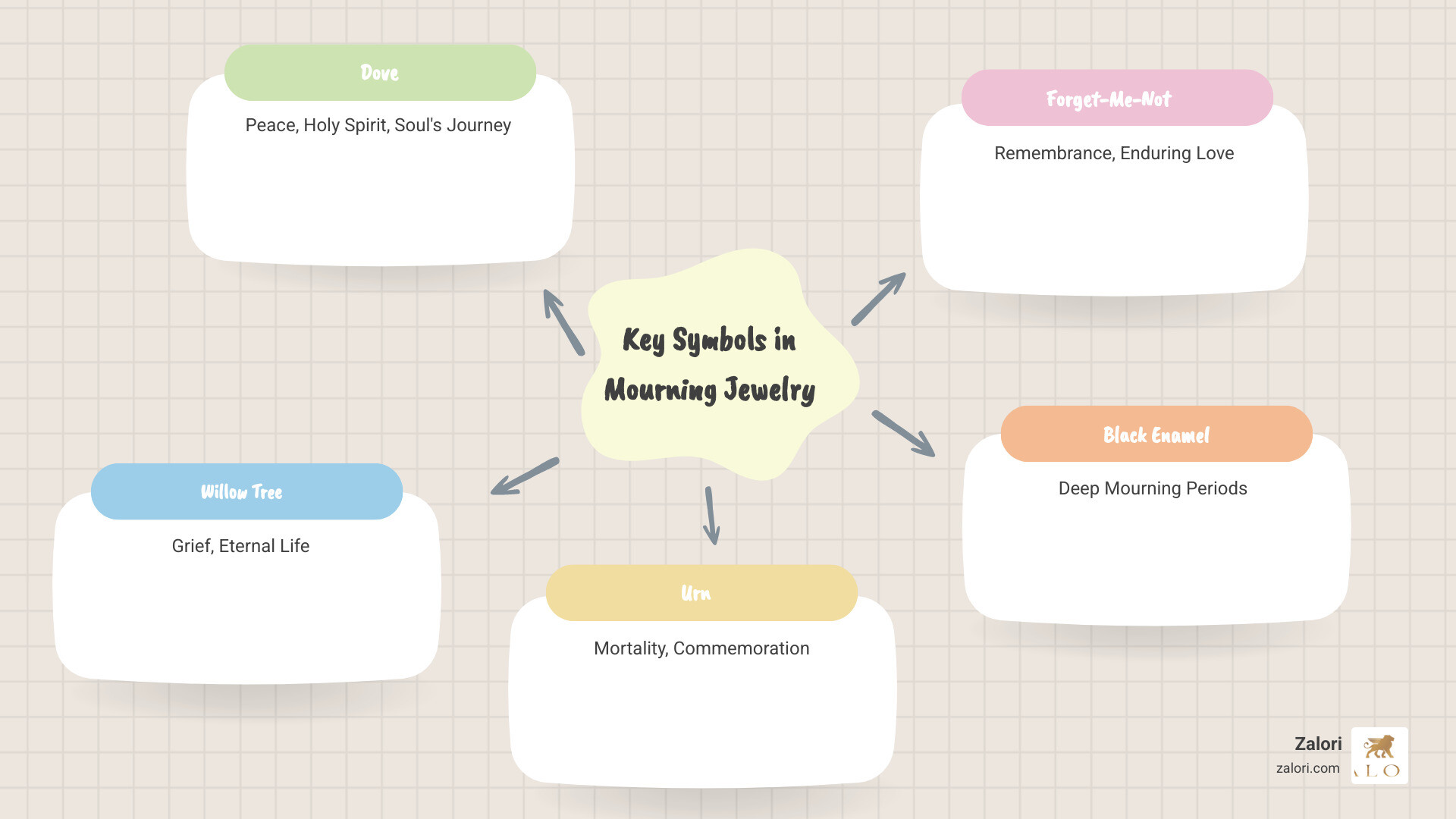
Victorian mourning jewelry was anything but subtle. These pieces acceptd the weight of grief with somber materials and intricate craftsmanship. Black enamel became the hallmark of deep mourning, creating stark, dramatic contrasts on gold surfaces. Jet, a fossilized coal that could be carved and polished to a deep black shine, was highly prized. Onyx, gutta-percha (a natural rubber), and vulcanite (hardened rubber) also served as dark, affordable alternatives.
But not everything was black. Seed pearls often dotted these pieces, symbolizing tears or the innocence of the departed. And perhaps most intimately, hair work—braided locks of the deceased woven into intricate patterns or carefully preserved inside lockets—created a tangible, physical connection to lost loved ones.
The Edwardian era (1901-1910) brought a breath of fresh air, quite literally. While the sentiment behind mourning jewelry remained, society was ready for a lighter touch. This shift coincided beautifully with advances in metalwork, particularly the growing use of platinum and the introduction of white gold as a more accessible alternative.
Victorian Design Elements and Dove Motifs
If you've ever held a true Victorian mourning locket, you know immediately that these weren't simple keepsakes—they were works of art. Victorian jewelers poured extraordinary skill into each piece, using techniques like engraving (cutting designs into the metal surface), chasing (creating texture and detail with specialized tools), and repoussé (hammering designs from the reverse side to create raised patterns on the front).
The visual vocabulary was rich with meaning. Ivy wound its way across locket surfaces, symbolizing eternal life and faithful remembrance. Ferns, forget-me-nots, lilies, and roses each carried their own messages. Some lockets even featured miniature architectural elements or pastoral scenes, creating tiny worlds of memory.
Doves, while not as ubiquitous as black enamel or hair compartments, held special significance when they appeared. A 10kt white gold mourning locket pendant with religious dove designed in the Victorian style might feature an engraved dove carrying an olive branch—Noah's messenger bringing hope after the flood. Sometimes the dove appeared more stylized, a simple but neat silhouette.
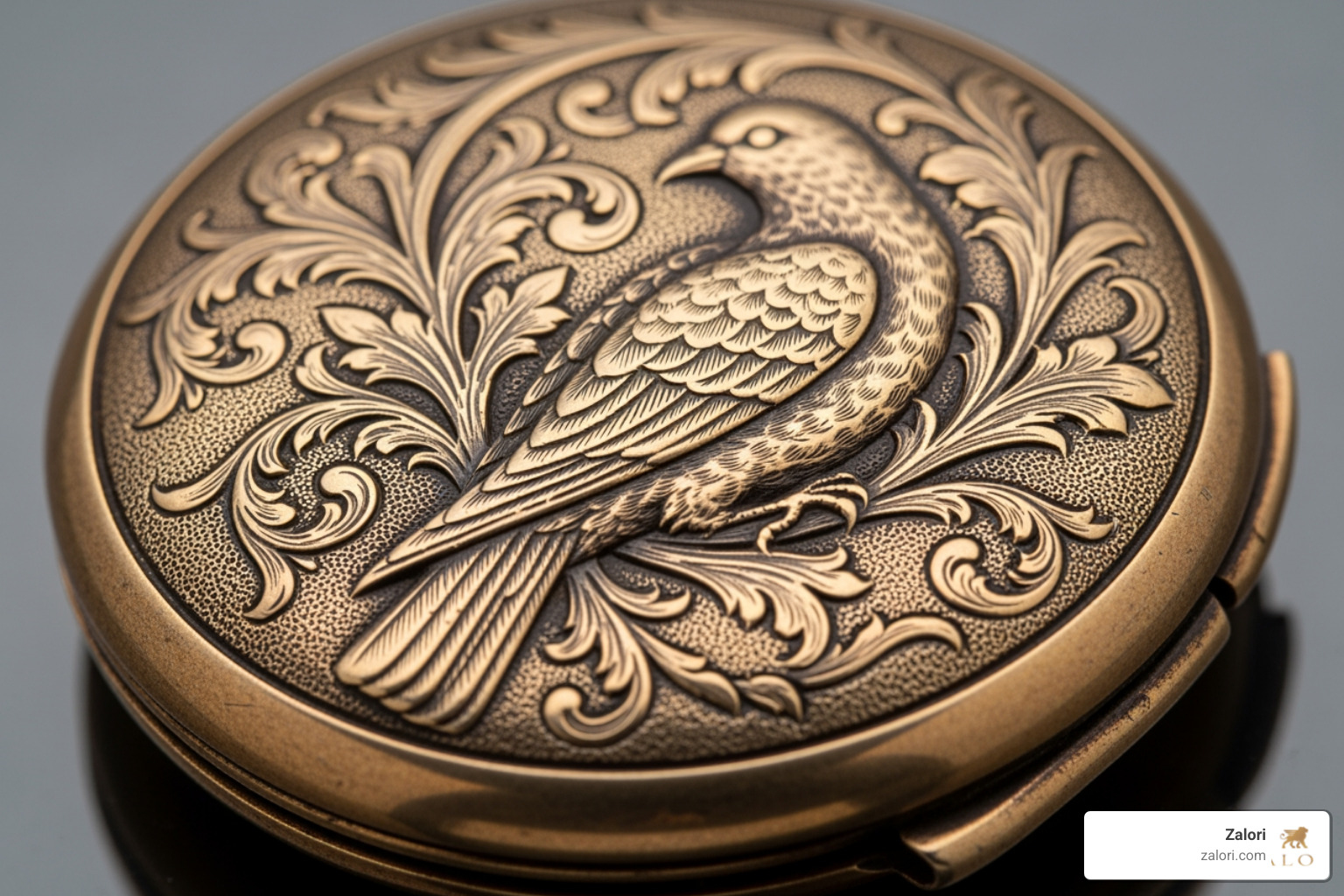
Inscriptions added another layer of intimacy. "IMO" (In Memory Of) was frequently etched onto locket fronts, sometimes accompanied by the dove motif or woven into decorative banners. Historical examples reveal the deeply personal nature of these pieces—one gold hair locket bore black enameled "IMO" on its front, with an inscription inside reading "Hannah Taylor, born June 23, 1872 died July 30, 1876, Rest in Jesus," alongside the child's hair curls. These weren't just jewelry; they were portable memorials, carried close to grieving hearts.
Edwardian Delicacy and Lighter Aesthetics
The turn of the century brought more than just a new era—it brought a new sensibility. Edwardian jewelry acceptd what we might call "refined restraint." The heavy, ornate Victorian pieces gave way to designs that felt almost weightless, like frozen lace.
The garland style became the defining look of Edwardian jewelry. Think delicate bows, flowing ribbons, wreaths, and intricate openwork that resembled fine lace. Milgrain detailing—those tiny beaded edges that catch the light—added texture without heaviness. Every element felt considered, neat, and graceful.
This aesthetic shift aligned perfectly with the emergence of platinum and white gold. These cool-toned metals provided the ideal canvas for Edwardian designs, their silvery brightness enhancing the airy, delicate nature of the work. For mourning jewelry, this meant a move away from the stark drama of heavy black enamel toward more subtle expressions of remembrance.
A 10kt white gold mourning locket pendant with religious dove crafted in the Edwardian style would embody this evolution beautifully. The dove might appear as a delicate engraving, its form simplified and refined, or perhaps rendered in subtle relief. Rather than declaring grief, it would whisper peace. The religious symbolism remained powerful, but the presentation became gentler—the dove as a symbol of the soul at rest rather than sorrow overwhelming.
The white gold itself perfectly complemented this new direction. Its bright, clean appearance matched the Edwardian preference for understated sophistication. These pieces proved that commemorative jewelry could honor the departed while still embracing beauty and hope. They represented a cultural shift toward seeing mourning not just as an expression of loss, but as a celebration of enduring love and spiritual peace.
At Zalori, we understand this historical legacy. When we craft pieces that honor these traditions, we're not just making jewelry—we're continuing a conversation that spans generations about love, loss, and the precious memories that connect us across time.
A Buyer's Guide: Identifying and Valuing Your Locket
When you're considering a 10kt white gold mourning locket pendant with religious dove, whether it's an antique treasure, a vintage find, or a contemporary piece, knowing how to evaluate its authenticity and worth becomes essential. These aren't just beautiful objects—they carry deep sentimental and historical significance that deserves careful consideration.
The market for mourning lockets varies considerably based on age and origin. Antique lockets—those over 100 years old—typically command premium prices because of their historical context, exceptional craftsmanship, and relative scarcity. Vintage pieces from 20 to 100 years ago also attract collectors and those seeking authentic period designs. Modern lockets offer their own appeal, particularly if you're drawn to contemporary aesthetics or want the option to customize a piece that honors your specific needs.
Prices reflect this range. Antique mourning lockets can start around $316 and climb to $8,618 or more, with most pieces averaging around $1,415. The variation depends on factors we'll explore below—from the intricacy of the dove motif to whether the locket still contains its original photograph or lock of hair.
How to Authenticate a 10kt white gold mourning locket pendant with religious dove
Authenticating your 10kt white gold mourning locket pendant with religious dove requires a thoughtful approach, combining detective work with knowledge of jewelry construction. Here's what to look for:
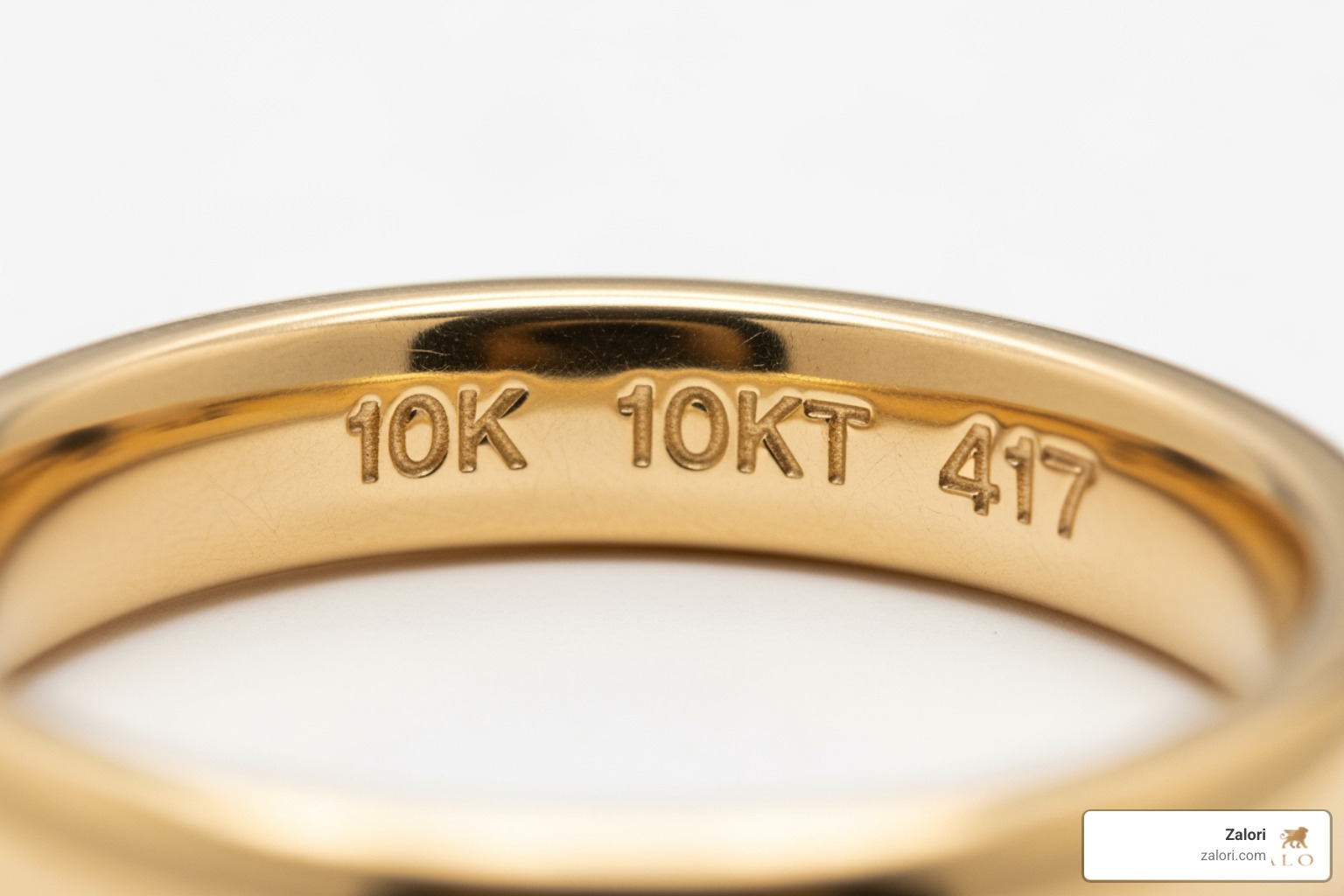
Start with the hallmarks. These tiny stamps are your first clue to authenticity. For 10kt gold, you'll typically find "10K", "10KT", or "417" (representing 41.7% pure gold) stamped somewhere on the piece. Check inside the locket itself, on the bail where the pendant connects to a chain, or occasionally on the clasp. While some genuinely antique pieces may have worn or absent marks due to age and use, finding these stamps provides strong confirmation of metal purity. For a deeper understanding of what these markings mean, our guide on Jewelry Hallmarks: Metal Stamps Decoded for 2025 (925, 585, 750, Vermeil, GF, and Rhodium-Plated) can help you steer precious metal markings.
Look for maker's marks and origin stamps. Beyond the gold content, you might find a maker's mark or an assay office stamp that indicates where the piece was tested and marked. British pieces often carry Birmingham or London hallmarks, which can help you date and trace the locket's provenance. These marks tell a story about the locket's journey through time.
Examine the construction quality. High-quality mourning lockets feature sturdy hinges that still function smoothly, secure clasps that close with a satisfying click, and interiors finished with care. Run your fingers along the edges—antique pieces often show hand-engraving rather than machine stamping, a telltale sign of period craftsmanship. The weight should feel substantial in your hand, befitting genuine gold rather than plated base metal.
Consider the wear patterns. Authentic antique and vintage pieces carry the gentle patina of time. You might notice shallow scratches on the back, slight wear on high points, or minor fading of enamel work—all consistent with a piece that's been cherished and worn. A locket in suspiciously perfect condition warrants closer scrutiny unless it comes with documentation explaining its preservation.
When in doubt, seek professional expertise. For pieces with significant monetary or sentimental value, a professional appraisal from a reputable jeweler or antique specialist provides peace of mind. They can confirm authenticity, assess condition, and provide documentation for insurance purposes.
Understanding the Value of a 10kt white gold mourning locket pendant with religious dove
The value of a 10kt white gold mourning locket pendant with religious dove reflects a beautiful complexity—each piece tells its own story, and that story influences its worth in the marketplace.
Condition matters profoundly. A locket in excellent condition, with minimal wear, functioning hinges, intact enamel, and clear engravings, will command higher prices than one showing significant damage or repair. Minor wear consistent with age actually adds character without diminishing value, but broken clasps, missing enamel, or damaged dove motifs can reduce worth considerably.
The era and style influence desirability. Victorian pieces with their elaborate black enamel and ornate engraving often attract collectors willing to pay premium prices. Edwardian lockets, with their delicate garland styling and lighter aesthetic, appeal to those who prefer understated elegance. Modern pieces offer affordability and the chance to create something personal, though they lack the historical premium.
Craftsmanship complexity adds value. A locket featuring intricate hand-engraving, detailed repoussé work depicting the dove with fine feather details, or elaborate enamel work represents hours of skilled labor. The more sophisticated the dove motif—perhaps showing the bird mid-flight with an olive branch, or rendered in three-dimensional relief—the more valuable the piece becomes.
Materials and embellishments increase worth. While we're discussing 10kt white gold as the base metal, additional elements like seed pearls, diamonds, sapphires, or extensive black enamel work all improve value. The presence of rhodium plating in good condition on white gold pieces also matters, as it preserves the bright silvery appearance.
Provenance and rarity create premiums. A locket with documented history—perhaps accompanied by photographs of the original owner, or with an inscription that can be traced—carries additional value. The dove motif itself, while meaningful, is less common than some other mourning symbols, which can make these pieces more sought-after among collectors.
Original contents add sentimental and monetary value. A locket still containing its original photograph, lock of hair, or even a handwritten note represents a complete memorial piece. These elements transform the locket from beautiful object to time capsule, significantly increasing both emotional resonance and market value.
The price range for a 10kt white gold mourning locket pendant with religious dove can span from a few hundred dollars for simpler modern pieces to several thousand for exceptional antique examples with provenance and pristine condition. At Zalori, we understand that value extends beyond market price—it encompasses the meaning you attach to a piece, the quality of craftsmanship, and the authenticity of materials. That's why we maintain uncompromising standards in everything we create, ensuring that each piece we craft becomes a genuine heirloom worthy of the memories it holds.
Related Articles
View all