Find Your Perfect Pair of Genuine Diamond Studs
Why Genuine Diamond Studs Remain a Timeless Investment
Genuine diamond studs are versatile jewelry staples, offering everyday luxury for both men and women. Understanding what makes them genuinely high-quality is key to making a worthy investment, whether you're starting a collection or adding to one.
What Makes Diamond Studs "Genuine":
- Real diamonds - either natural (earth-mined) or lab-grown, both with identical chemical composition
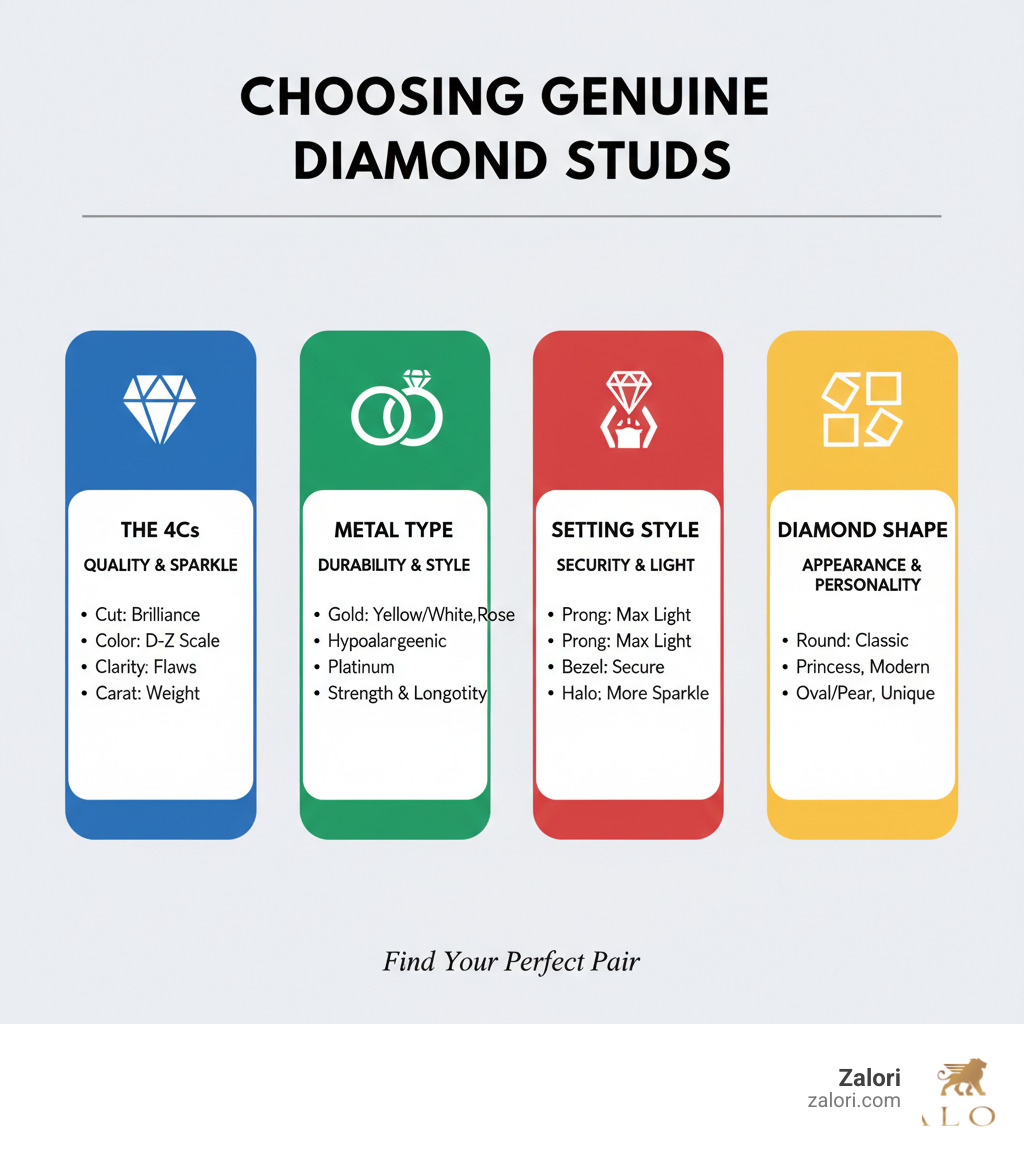
- The 4Cs - Cut, Color, Clarity, and Carat Weight determine quality and value
- Certification - Look for GIA, IGI, or AGS documentation
- Quality settings - Secure metal types like 14k/18k gold or platinum
- Authentic craftsmanship - Not mass-produced or drop-shipped imitations
Diamond stud earrings are essential accessories across generations. As one jeweler notes, "Our most popular style is always our diamond stud earrings. They're easy to wear, versatile, and can be worn every day." Prices can range from under two hundred dollars to thousands, but identifying genuine quality is what separates a lasting investment from a disappointing purchase.
The key difference? Genuine diamonds—whether natural or lab-grown—possess the same hardness, brilliance, and carbon structure that makes them diamonds. Simulants like cubic zirconia or moissanite may look similar initially, but they lack the durability and lasting sparkle of real diamonds.
My work with Zalori.com focuses on authentic precious metal jewelry—not drop-shipped alternatives. Genuine diamond studs represent the lasting, quality pieces that discerning buyers deserve.
What Defines Genuine Diamond Studs?
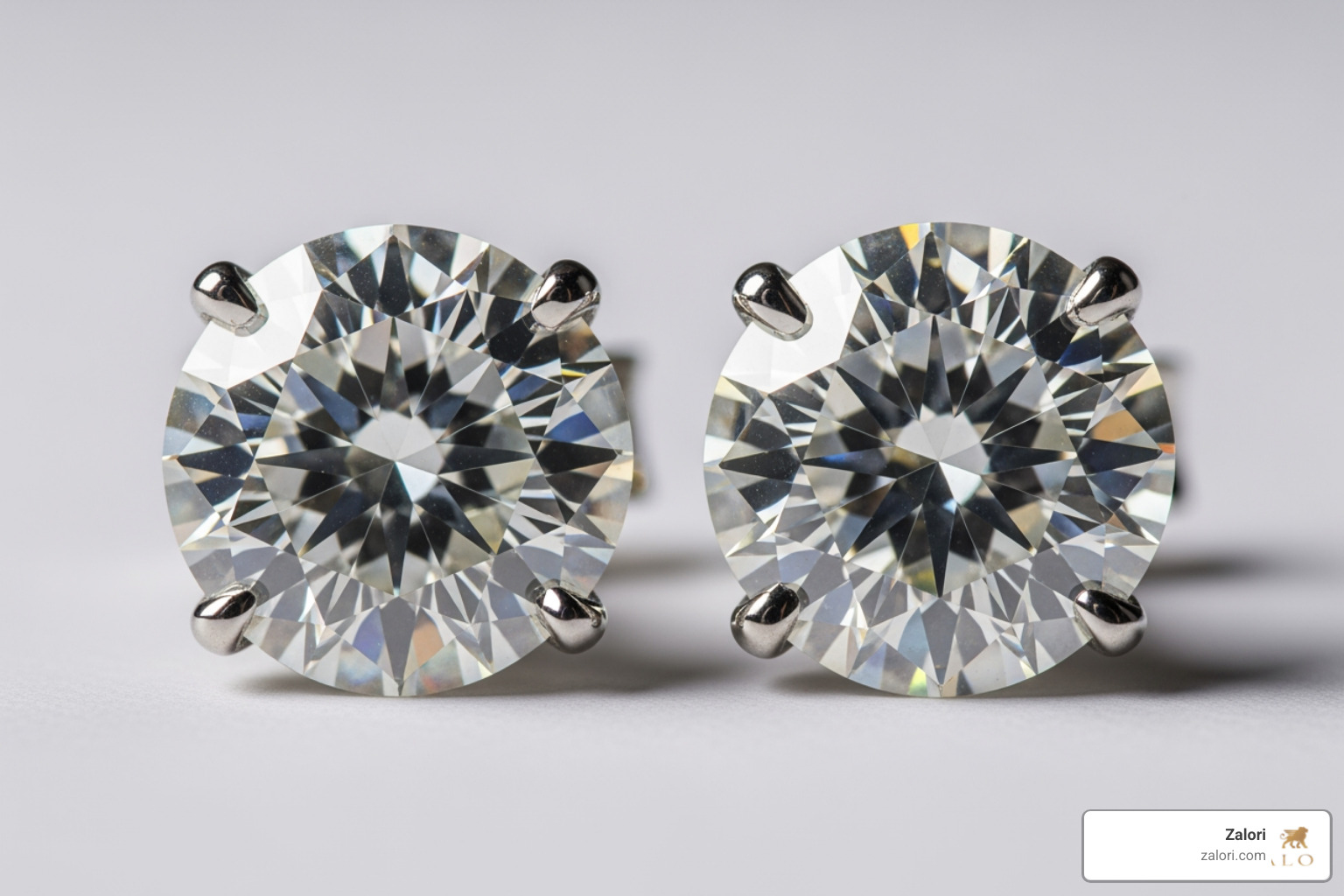
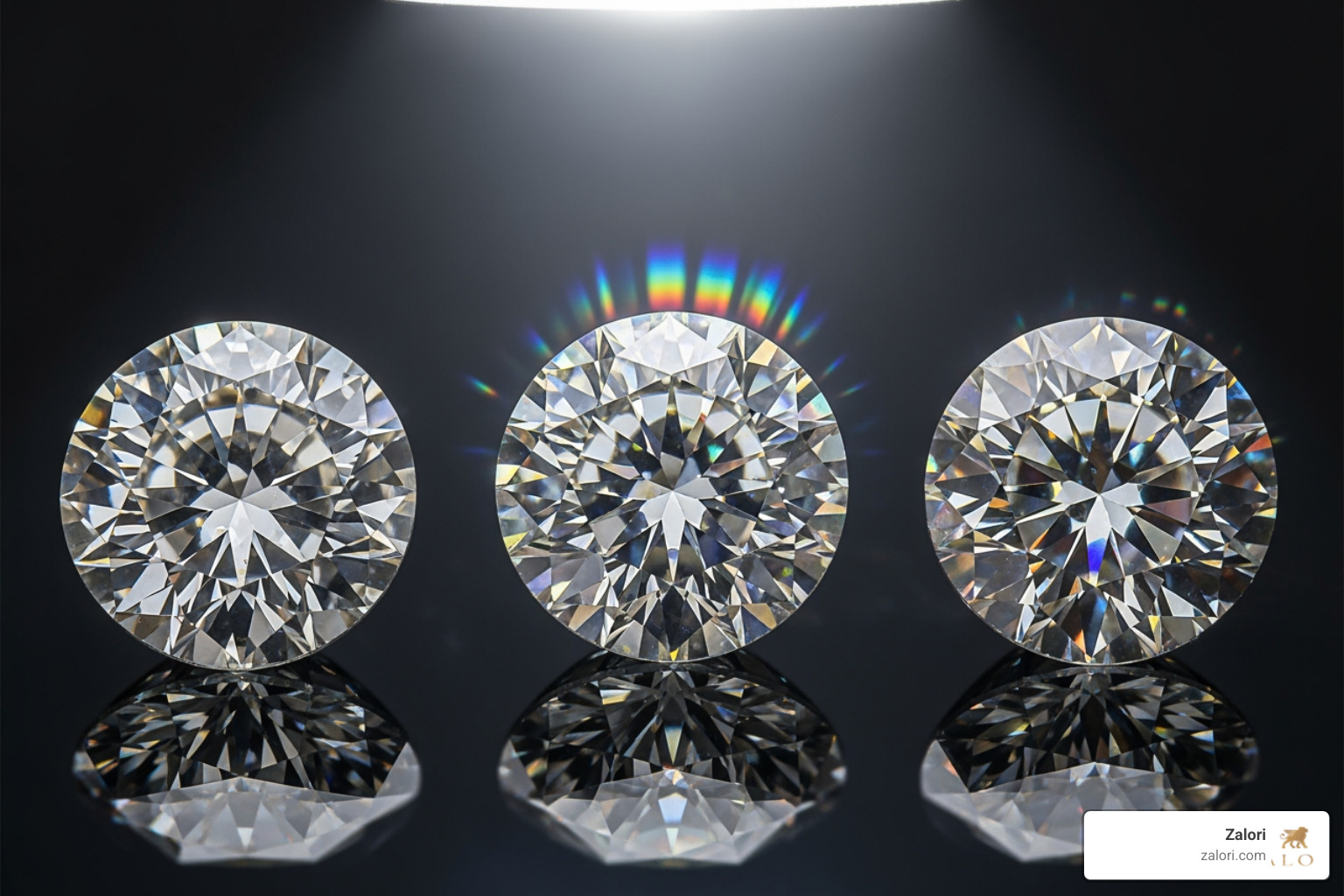
The term "genuine" is crucial when shopping for diamond studs. It signifies that a diamond is real—composed entirely of carbon atoms in a tight crystal structure. This structure makes diamond the hardest natural material, giving it lasting durability and the ability to be cut for maximum brilliance. A diamond's high refractive index creates its signature sparkle ("scintillation") and rainbow flashes ("fire"). Understanding these properties helps you recognize why genuine diamonds are the pinnacle of fine jewelry.
Natural vs. Lab-Grown: The Two Types of Genuine Diamonds
There are two types of genuine diamonds, and both are equally real.
Natural diamonds formed over billions of years deep within the Earth under extreme heat and pressure. Volcanic activity eventually brought these geological wonders to the surface where they could be mined.
Lab-grown diamonds are created by replicating these conditions in a lab using advanced processes like High-Pressure/High-Temperature (HPHT) or Chemical Vapor Deposition (CVD). The result is a diamond that is chemically, physically, and optically identical to a natural one. They share the same carbon structure, hardness, and brilliance.
The primary differences are origin and price. Lab-grown diamonds often cost significantly less than natural diamonds of comparable quality, making larger or higher-quality stones more accessible. They also offer a traceable origin with a reduced environmental impact compared to traditional mining. Both are real, lasting diamonds. The choice is a personal one based on budget and values. For a detailed comparison, see our guide: Lab-Grown vs. Natural Diamonds in 2025: Price, Sustainability, and Certification Explained.
How to Identify Your Genuine Diamond Studs
While professional certification from labs like the GIA (Gemological Institute of America), AGS (American Gemological Society), or IGI (International Gemological Institute) is the only way to guarantee authenticity, you can perform simple at-home tests for a preliminary check.
- The Fog Test: Breathe on the diamond. Fog on a real diamond dissipates almost instantly because it disperses heat quickly. If the fog lingers, it may be an imitation.
- The Water Test: Drop the stone into a glass of water. A real diamond's high density will cause it to sink straight to the bottom. Most simulants are lighter and may float or hover.
- The Loupe Inspection: Using a 10x jeweler's loupe, look for small internal imperfections called inclusions. Most natural and lab-grown diamonds have these "fingerprints." A stone that appears perfectly flawless is extremely rare and warrants suspicion.
- The Black Light Test: Under a black light, many genuine diamonds will emit a blue fluorescence, though not all do. This is a helpful clue but not a definitive test on its own.
These tests are not foolproof. For absolute certainty, a professional appraisal is essential. For more details, explore How to Tell If Diamond Earrings Are Real: 5 Simple Tests or our own guide on Finding Your Authentic Stone Jewelry Online.
Understanding Diamond Alternatives
It's important to distinguish genuine diamonds from alternatives like moissanite, cubic zirconia (CZ), and white topaz. These simulants may look similar initially but are chemically and physically different.
- Moissanite: A lab-created gemstone that is nearly as hard as a diamond but has more colorful fire due to double refraction.
- Cubic Zirconia (CZ): An inexpensive, man-made material that is much softer than a diamond. It can become cloudy and lose its sparkle over time.
- White Topaz: A natural gemstone that is significantly softer and lacks the brilliance and fire of a diamond.
While alternatives can be budget-friendly, only genuine diamonds—natural or lab-grown—offer the best durability and lasting sparkle that defines fine jewelry and holds long-term value.
The 4 Cs: Decoding the Value of Your Diamond Studs
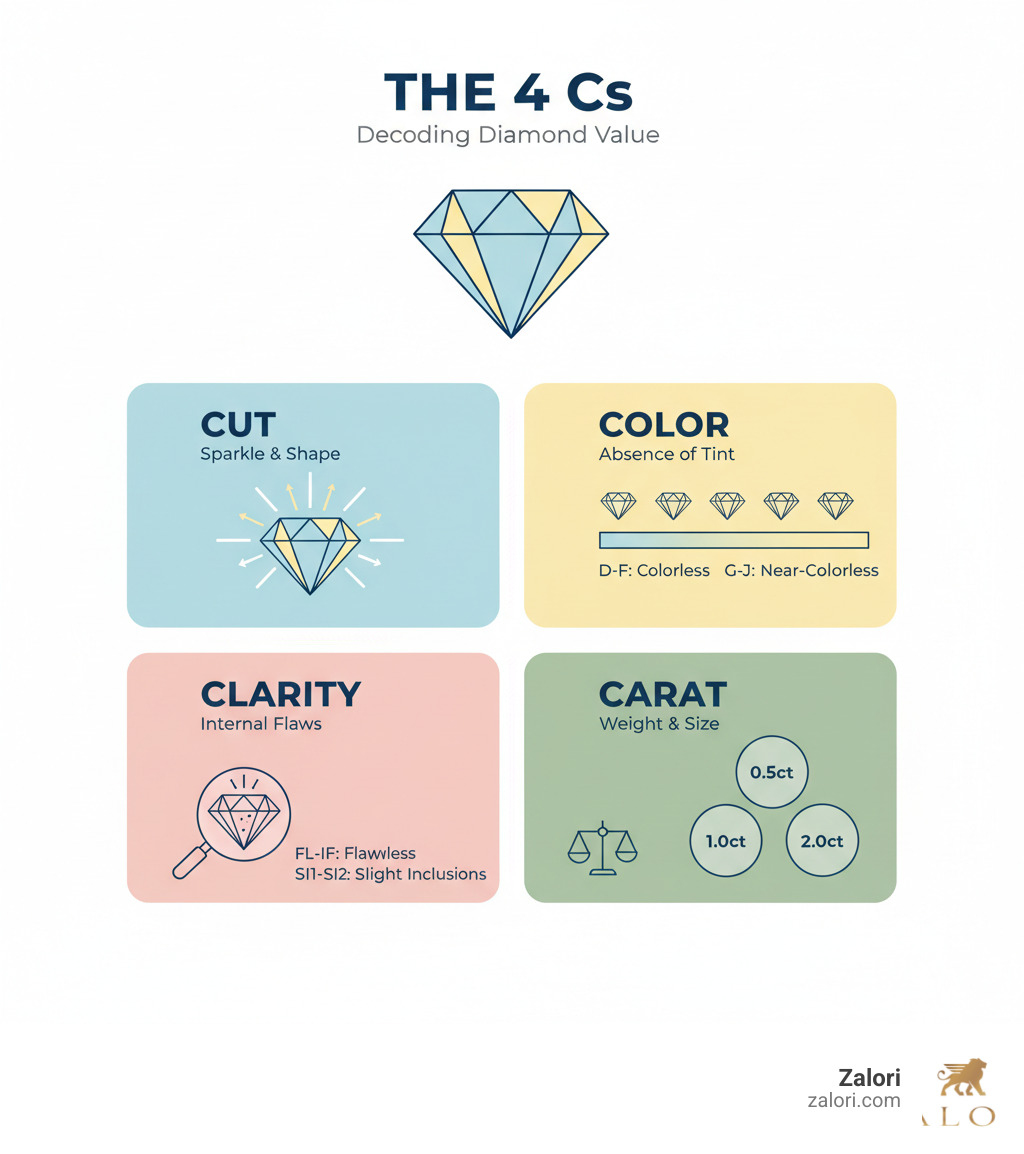
When you're shopping for genuine diamond studs, the 4 Cs—Cut, Color, Clarity, and Carat Weight—are the universal standard developed by the GIA to evaluate diamond quality. These factors determine a diamond's beauty, performance, and price. For studs, it's also crucial that both diamonds are well-matched across the 4 Cs to ensure they sparkle in harmony.
At Zalori, we carefully evaluate every diamond against these standards to ensure you're getting exceptional quality and value. Let's break down each of the 4 Cs so you can shop with confidence.
Cut: The Source of Sparkle
Cut is arguably the most important C, as it determines a diamond's sparkle. It refers not to the shape, but to how well a diamond's facets interact with light. A high-quality cut is defined by its proportions, symmetry, and polish, which work together to create:
- Brilliance: The return of white light.
- Fire: Flashes of rainbow color.
- Scintillation: The pattern of light and dark areas that sparkle as the diamond moves.
An ideal cut maximizes light return. The Round Brilliant cut is the most popular for studs because its 58 facets are engineered for maximum sparkle. The square Princess Cut is a contemporary alternative with impressive brilliance. Cut quality directly impacts how much your diamonds will sparkle, which is why many experts consider it the most important of the 4 Cs. For more insights, explore our guide: Find Your Shine: Certified Loose Diamonds and Tennis Bracelets.
Color: The Absence of Hue
Diamond color is graded on a scale from D (colorless) to Z (light yellow or brown). The less color a diamond has, the higher its value.
- D-F Range: Colorless. These are the rarest and most expensive.
- G-J Range: Near-colorless. The slight tint is usually undetectable once set, offering exceptional value. Many of our clients choose G-H color grades for this reason.
- K-Z Range: Faint to light yellow or brown tint.
For genuine diamond studs, matching the color grade of both diamonds is critical, as even a one-grade difference can be noticeable when the earrings are worn together.
Clarity: A Diamond's Unique Fingerprint
Clarity refers to the absence of internal features (inclusions) and external marks (blemishes). The GIA clarity scale ranges from FL (Flawless) to I3 (Included).
- FL/IF: Flawless or Internally Flawless; extremely rare.
- VVS1/VVS2: Very, Very Slightly Included; inclusions are difficult to see even under 10x magnification.
- VS1/VS2: Very Slightly Included; minor inclusions are still hard to spot with magnification.
- SI1/SI2: Slightly Included; inclusions may be visible under magnification, but many stones in this range are still "eye-clean" (no flaws visible to the naked eye). This range offers excellent value.
- I1-I3: Included; inclusions are obvious and can affect appearance and durability.
For genuine diamond studs, we focus on eye-clean diamonds, typically in the VS2 to SI1 range. This provides stunning sparkle without the premium price of flawless grades.
Carat: Understanding Weight and Size
Carat is a measure of a diamond's weight, not its size (one carat = 200 milligrams). For earrings, we refer to Total Carat Weight (CTW), which is the combined weight of both diamonds. A pair of 1.00 CTW studs contains two 0.50 carat diamonds.
Popular sizes for everyday wear range from 0.50 CTW (0.25 ct each) for a subtle look to our bestseller, 1.00 CTW (0.50 ct each), which offers a perfect balance of presence and practicality. A well-cut diamond can also appear larger than a poorly cut one of the same weight, which is another reason cut quality is so important. The right size is ultimately a matter of personal preference.
Choosing the Perfect Setting and Style
The setting and metal are crucial choices that affect your diamond's security, sparkle, and overall style. Practical considerations like skin sensitivity and lifestyle also play a role in finding the perfect combination for your genuine diamond studs.
Popular Metal Types
Gold and platinum are the top choices for their beauty and durability.
-
Gold: Available in 14k (58.3% pure) for durability and 18k (75% pure) for a richer feel.
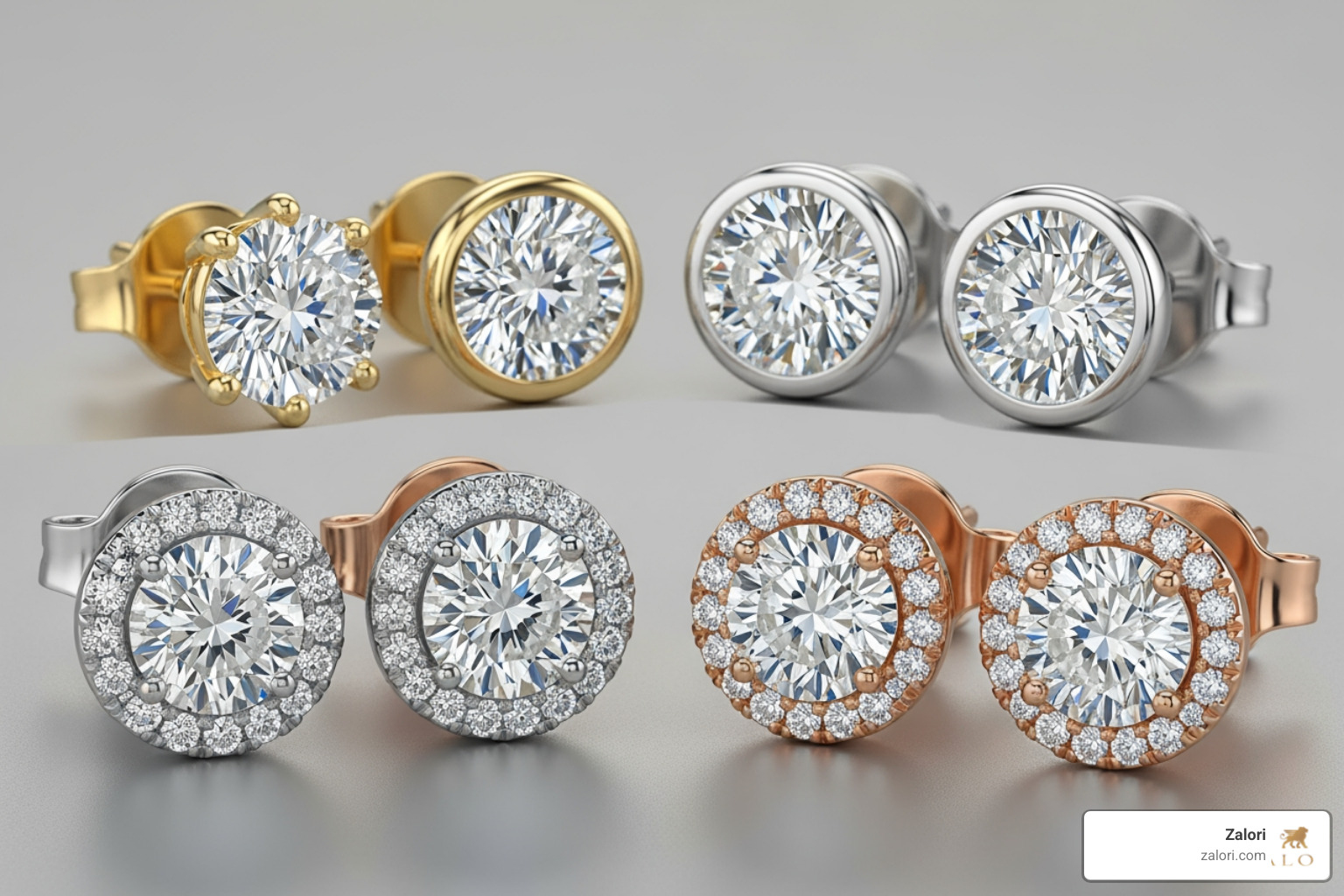
- White Gold: A modern, sleek choice made from yellow gold mixed with white metals and plated with rhodium.
- Yellow Gold: The classic, warm, and traditional option.
- Rose Gold: A contemporary choice with a romantic, pinkish hue from its copper alloy.
- Platinum: A premium, naturally white, and hypoallergenic metal. It's denser and more durable than gold, making it an excellent long-term investment.
For sensitive skin, platinum and higher-karat gold are the safest options. Learn more in our Ultimate Guide to Buying Fine Gold and Luxury Jewelry Online.
Secure and Stylish Settings
The setting holds your diamond, affecting its security and how it catches the light.
- Prong Setting: The most popular style, using three, four, or six claws to hold the diamond. The four-prong basket setting is a classic, offering a great balance of security and light exposure for maximum sparkle.
- Bezel Setting: A metal rim encircles the diamond, offering superior protection and a modern look. It can also make the diamond appear larger.
- Halo Setting: A ring of smaller diamonds surrounds the center stone, adding sparkle and creating the illusion of a larger diamond.
- Martini Setting: A three-prong, cone-shaped setting that allows the diamond to sit closer to the earlobe for a streamlined profile.
Each setting offers its own personality. For more on settings, our guide on Choosing the Right Engagement Ring Setting explores these concepts in depth.
Classic Diamond Shapes
While the round brilliant is the most popular shape for its best sparkle, other classic shapes allow for more personal expression.
- Princess Cut: A modern square shape with sharp corners and excellent fire.
- Cushion Cut: A square or rectangular shape with rounded corners for a soft, romantic sparkle.
- Oval Cut: An elongated shape that offers brilliant sparkle with a unique silhouette.
- Emerald Cut: A sophisticated rectangular step-cut that creates a "hall of mirrors" effect instead of intense sparkle.
- Pear Shape: A distinctive teardrop silhouette that is graceful and eye-catching.
The shape you choose is a key part of your signature style.
How to Care For and Maintain Your Diamond Studs
Genuine diamond studs are designed for daily wear, but regular care is needed to maintain their brilliance. Diamonds are the hardest natural material, but the settings and the stones themselves can accumulate oils and grime that dull their sparkle. Fortunately, keeping your diamonds looking their best is simple and can be done at home.
Cleaning Your Diamond Earrings at Home
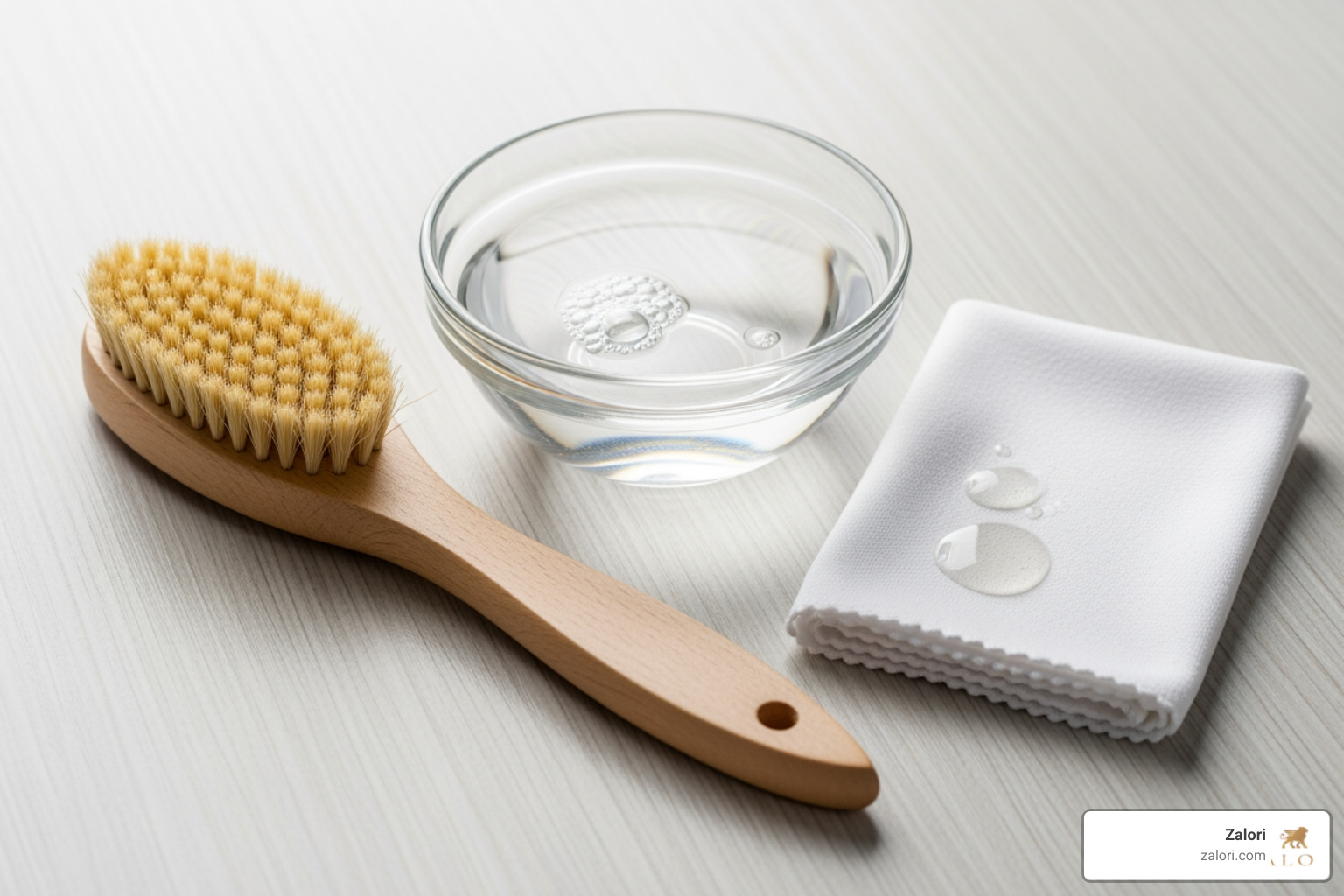
To clean your studs, soak them for 20-40 minutes in a bowl of warm water with a few drops of mild dish soap. This will loosen any accumulated buildup. After soaking, gently scrub the diamonds and settings with a soft-bristled brush, like a baby toothbrush, paying attention to crevices. Rinse them thoroughly under warm running water (be sure to close the drain first!) and pat dry with a lint-free cloth. For daily wearers, cleaning every two weeks is ideal. Avoid harsh chemicals like bleach or ammonia, which can damage the metal.
When to Take Them Off
While studs are easy to wear, it's wise to remove them in certain situations to prevent damage or loss:
- Sleeping: Earrings can snag on bedding, potentially bending posts or loosening settings.
- Showering: Soaps and conditioners create a dulling residue.
- Swimming: Chlorine in pools and saltwater can damage metals, and cold water increases the risk of an earring slipping out.
- Strenuous Activities & Chores: Avoid impacts and exposure to harsh cleaning chemicals.
A few seconds of prevention can save you from the heartbreak of a lost or damaged earring.
Professional Servicing and Ethical Sourcing
We recommend an annual check-up with a professional jeweler. They can inspect for loose prongs, perform a deep ultrasonic cleaning, and make minor repairs to prevent the loss of a diamond.
At Zalori, we also believe true luxury includes knowing where your jewelry comes from. We are committed to ethical sourcing, using authentic materials from responsible suppliers. Whether you choose a natural diamond with a traceable origin or a lab-grown one, understanding its journey adds meaning. Learn more in our Guide to Ethical Diamond Choices. Proper care and responsible sourcing honor the craftsmanship and value of your genuine diamond studs.
Frequently Asked Questions about Diamond Studs
Investing in genuine diamond studs is a significant decision, and it's natural to have questions. Here are answers to the most common ones we hear from our clients.
Are lab-grown diamond studs considered "real" or "genuine"?
Yes, absolutely. Lab-grown diamonds are real diamonds. They have the exact same chemical composition, crystal structure, and optical properties as natural diamonds. They are not imitations or simulants. The only differences are their origin (lab vs. earth) and their price, with lab-grown diamonds typically costing significantly less. Both are genuine, and the choice is a matter of personal preference. For a deeper dive, read our guide: Lab-Grown vs. Natural Diamonds in 2025: Price, Sustainability, and Certification Explained.
What is the best carat weight for everyday diamond studs?
There's no single "best" size, as it depends on your personal style and comfort. However, the most popular range for everyday genuine diamond studs is between 0.50 and 1.00 CTW (total carat weight). This size offers noticeable sparkle without feeling impractical for daily activities. Our bestselling style is 1.00 CTW (0.50 carats per ear), but smaller sizes offer a subtle shimmer, while larger sizes make a bold statement. The right choice is the one that makes you feel confident.
How do I know I'm buying from a reputable source?
This is a critical question. To ensure you're buying authentic quality, look for these hallmarks of a reputable seller:
- Independent Certification: The seller should provide reports from respected labs like GIA, IGI, or AGS that verify the diamond's 4 Cs.
- Transparency: Look for clear, detailed product information, along with accessible return policies and warranties. A trustworthy jeweler has nothing to hide.
- Expert Guidance: A reputable source provides knowledgeable, pressure-free support to answer your questions, whether online or in-store at one of our locations in Salt Lake City, New York City, or beyond.
- Reputation and Reviews: Check what other customers are saying. Positive feedback is a strong indicator of quality and service.
At Zalori, we uphold these standards, ensuring you receive not just genuine diamond studs, but also the confidence that comes with a transparent and trustworthy purchase.
Conclusion
Genuine diamond studs are a timeless investment in elegance, a versatile accessory for any occasion. Understanding that both natural and lab-grown diamonds are genuine opens up a world of possibilities. By learning the 4 Cs and choosing a metal and setting that reflects your personal style, you can find the perfect pair.
At Zalori, we've built our reputation on one simple principle: no compromises. Every pair of genuine diamond studs we create reflects our commitment to exceptional craftsmanship and authentic, ethically sourced materials. This is jewelry meant to be worn and loved for generations—a part of your story.
We'd be honored to help you find your perfect pair. Whether you're treating yourself to your first diamond studs or adding to a cherished collection, we're here to guide you.
Related Articles
View all