Unlock the Truth: Why Certified Gemstone Jewelry is Your Best Bet
The Mark of Authenticity in a Sparkling World
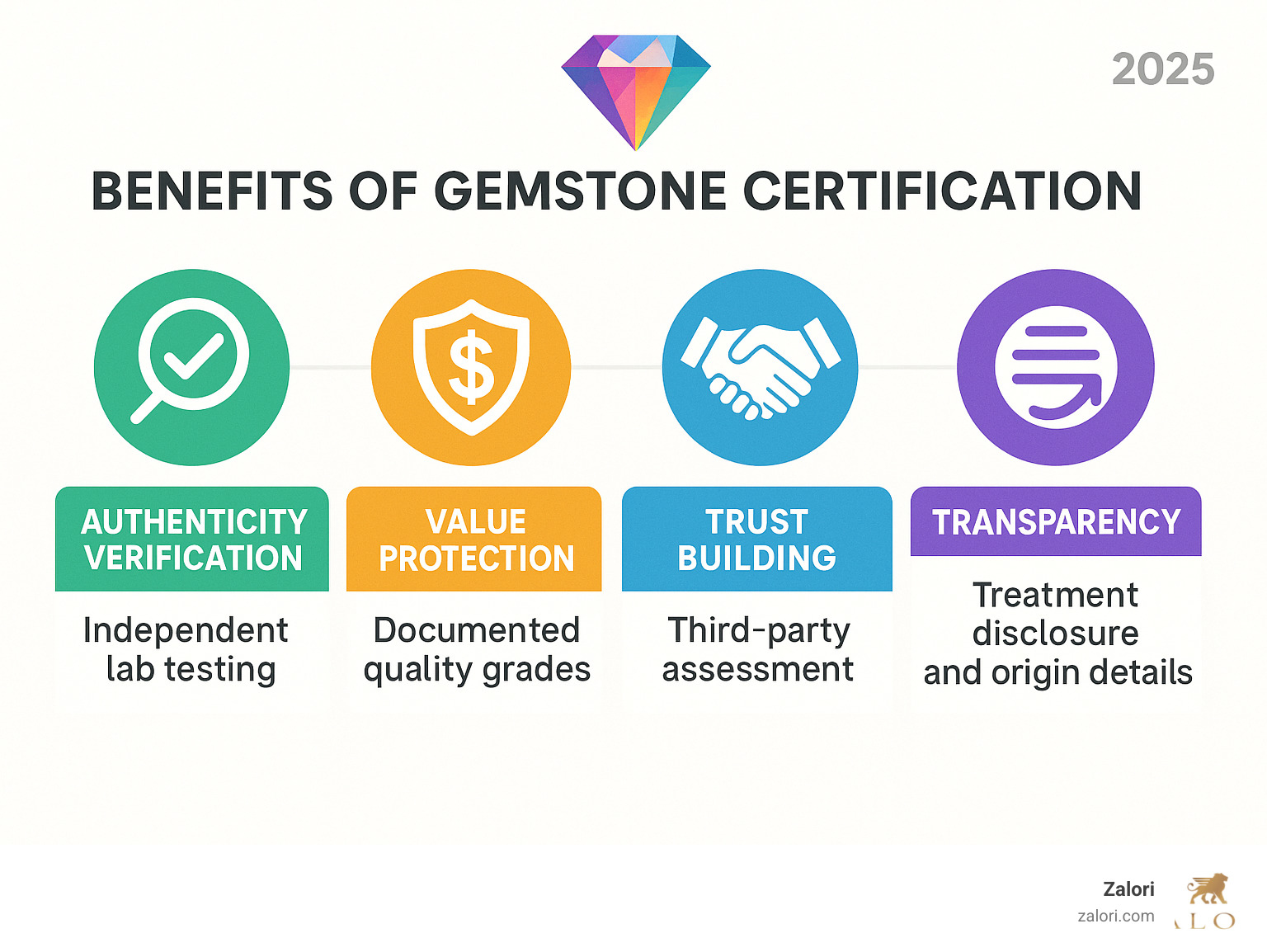
Certified gemstone jewelry represents the gold standard of authenticity and quality assurance in the luxury jewelry market. When you purchase certified pieces, you receive independent laboratory verification of your gemstone's identity, quality characteristics, and any treatments—providing complete transparency and peace of mind for your investment.
What certified gemstone jewelry offers:
- Independent verification from reputable gemological laboratories
- Detailed quality assessment including the 4Cs (Cut, Color, Clarity, Carat)
- Treatment disclosure revealing any improvements or modifications
- Authenticity guarantee protecting against synthetic or imitation stones
- Investment protection with documented proof of quality and value
The global gemstone market is projected to reach $114.5 billion by 2030, but it faces a critical challenge: a flood of synthetic and imitation stones. This makes certification essential for discerning buyers.
This environment makes trust paramount. Without proper certification, distinguishing between natural, treated, and synthetic stones is difficult, even for experts. Growing consumer awareness about quality and ethical sourcing has increased the demand for certified gemstones.
As Eric Roach Zalori, a venture capitalist with experience in luxury goods, I've witnessed how certified gemstone jewelry protects investors from costly mistakes. At Zalori, we know the peace of mind that comes from having an investment backed by scientific verification and independent assessment.
What is Certified Gemstone Jewelry? Explaining the Grade
What does "certified" mean? It means the main gemstone in your jewelry has been evaluated by an independent, third-party gemological laboratory. This isn't an opinion; it's a scientific assessment that provides a detailed report on the stone's identity and characteristics.
A gemological lab examines the stone to determine its identity (e.g., natural sapphire vs. lab-grown), grades its quality, and discloses any treatments. Many gemstones are treated (like heat-treating sapphires), and transparency about this is crucial for understanding a stone's true value.
A certification is not an appraisal. An appraisal assigns a monetary value for insurance purposes. A certification is a scientific report on the gemstone's identity and quality, without a price tag. Think of it as your gem's birth certificate. Choosing certified gemstone jewelry means you're making an informed decision.
For anyone dreaming of an engagement ring, understanding these details is especially helpful. You can dive deeper into choosing the perfect stone with our Engagement Ring Gemstone Guide: How to Choose the Perfect Stone.
Decoding the Gemstone Certificate: Your Stone's Official ID
A gemstone certificate is your stone's official ID. It includes a unique report number that lets you verify the report online, acting as the stone's unique fingerprint.
Here's what you'll typically find detailed in a good gemstone certification report:
- Report Number: The unique code to verify your report online.
- Gemstone Type: Identifies the stone, e.g., "Natural Ruby" or "Natural Blue Sapphire."
- Carat Weight: The exact weight of your gemstone, measured in carats.
- Color Grade: Describes the gemstone's color. For diamonds, this is a D-to-Z scale. For colored stones, it describes hue, tone, and saturation.
- Clarity Grade: Assesses internal marks (inclusions) and external blemishes. For diamonds, FL (Flawless) is the top grade.
- Cut Grade (for faceted stones): Evaluates how well the stone is shaped and polished, which affects its sparkle. Crucial for diamonds.
- Measurements: The precise physical dimensions of the stone.
- Gemstone Origin (if determined): Knowing a colored stone's origin can affect its value (e.g., a Kashmir sapphire). Some labs specialize in this.
- Treatment Disclosure: Crucial for transparency, this section lists any treatments like heat or fracture filling, which can impact value and durability.
Are All Certifications Created Equal?
No, not all certifications are equal. Grading standards and rigor vary between labs. The reputation of the gemological laboratory is critical. A certificate from a top-tier lab like GIA or AGL carries more weight and trust than one from a lesser-known institution.
Labs also offer different report types. For diamonds, a "full report" is comprehensive, while a "dossier" is more concise. For colored stones, reports can range from simple identification to detailed analyses of origin and color. When we talk about certified gemstone jewelry at Zalori, we mean the certification comes from a lab with uncompromising standards, ensuring the information you receive is accurate and reliable.
The Pillars of Trust: Why Certification is Non-Negotiable
When making a significant jewelry investment, certification isn't just nice to have—it's essential. A certificate is your gemstone's passport, providing crucial documentation in a market where looks can be deceiving.
Certification provides several key benefits. First, it guarantees authenticity, protecting you from paying a premium for a synthetic or imitation stone. It provides an objective quality assessment from an unbiased third party, removing seller bias and giving you factual data on your stone's value. It also offers transparency on treatments. Many gems are treated to improve their beauty, and a certificate discloses these modifications, which can affect value and care.
For investment protection and resale value, the certificate is invaluable proof of quality and authenticity should you ever sell or insure your certified gemstone jewelry. Certification provides consumer confidence. You can wear your jewelry with pride, knowing every detail has been verified by experts.
At Zalori, we believe trust is the foundation of every jewelry purchase. Our commitment to transparency aligns with our selection of high-quality, authentic materials. Our guide, Beyond the Bling: Finding Your Authentic Stone Jewelry Online, can help you steer this journey with confidence.
Your Guide to the World's Most Reputable Gem Labs
When it comes to certified gemstone jewelry, the lab's reputation is everything. A certificate is only as credible as the institution that issued it. Choosing a globally recognized lab is paramount, as different labs may have different specialties, such as diamond grading versus colored stone analysis.
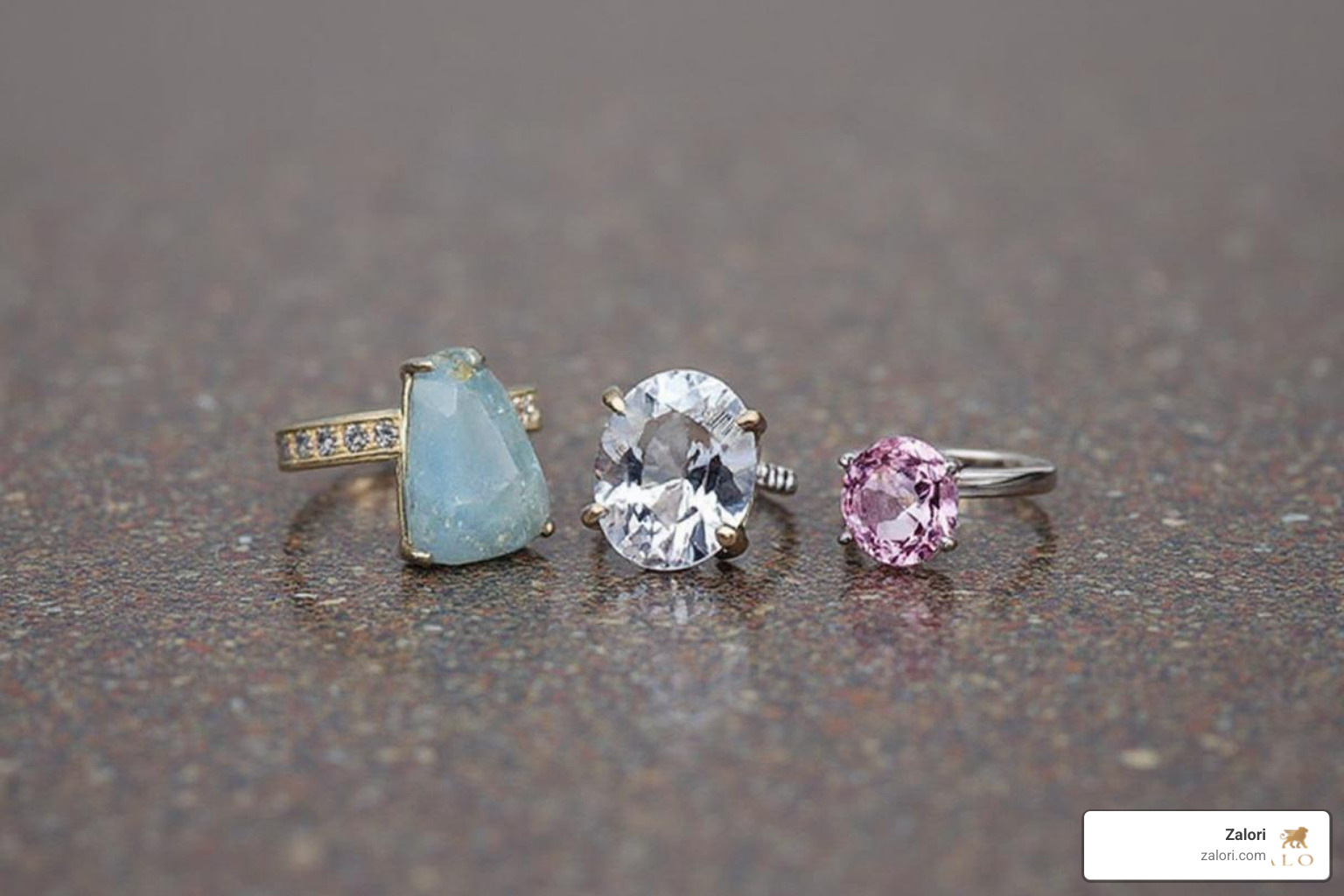
Different labs might excel in specific areas. Some are renowned for diamond grading, while others specialize in colored gemstones, origin determination, or identifying exotic treatments. Understanding which labs are most reputable for the type of stone you're interested in is a smart move.
The Gold Standard: GIA (Gemological Institute of America)
Without a doubt, the Gemological Institute of America (GIA) stands as the undisputed gold standard in gemstone grading and certification. Established as a non-profit organization, GIA is recognized worldwide for its unwavering commitment to research, education, and objective grading. They are, in fact, the creators of the now universally accepted "4Cs" (Cut, Color, Clarity, Carat) grading system for diamonds, which has become the industry benchmark.
A GIA report instills immense confidence in buyers. Their rigorous methodology and stringent standards mean that a GIA grade is consistently reliable, making them a leading authority in the field. GIA embodies the principles of uncompromising standards and meticulous selection that we value at Zalori.
Other Top-Tier Laboratories to Know
While GIA is a leader, several other highly respected labs provide invaluable services, especially for colored gemstones. These labs are vital players in ensuring the authenticity and quality of certified gemstone jewelry globally.
Here are some of the other highly respected institutions:
- AGL (American Gemological Laboratories): Known for expertise in colored gemstones, especially origin reports and treatment analysis.
- GRS (GemResearch Swisslab): Prominent in Asia, highly regarded for reports on colored stones like rubies and sapphires, focusing on origin and treatment.
- IGI (International Gemological Institute): A large international lab providing reports for diamonds, colored stones, and jewelry, known for its global presence.
- Lotus Gemology: A boutique lab in Bangkok esteemed for its academic approach to colored gemstone identification, particularly ruby and sapphire.
- AIGS (Asian Institute of Gemological Sciences): A reputable lab in Asia offering comprehensive gemological services.
These labs, alongside GIA, ensure the integrity of the gemstone market. A certificate from any of these institutions is a reliable mark of quality.
How to Verify a Gemstone Certification Report
A physical report is great, but verifying it online provides ultimate peace of mind. Reputable gemological laboratories make this easy.

Here’s how you can typically verify a gemstone certification report:
- Locate the Report Number: Find the unique report number on your certificate.
- Visit the Lab's Official Website: Go directly to the website of the issuing lab (e.g., GIA.edu, AGLlabs.com, IGI.org).
- Find the "Report Check" Section: Steer to their online report verification portal.
- Enter the Report Number: Input the report number and any other required information, like carat weight.
- Match the Online Data: Compare the digital report with your physical certificate. All details should match perfectly.
- Check for Security Features: Familiarize yourself with the physical report's security features (holograms, microprint) to further confirm authenticity.
We advocate for certified gemstone jewelry with certifications that offer this level of easy, accessible verification, reinforcing our commitment to authentic materials.
Choosing Your Perfect Piece of Certified Gemstone Jewelry
With an understanding of certification, you can now choose your perfect piece of certified gemstone jewelry. This ensures you’re not just buying a beautiful object, but investing in a verified, authentic, and truly valuable treasure.
At Zalori, we believe in empowering our customers with knowledge. We want you to feel confident and joyful about your purchase, knowing you've chosen a piece that reflects your values and will stand the test of time. Our dedication to uncompromising standards means we carefully select high-quality, authentic materials for all our luxury jewelry and accessories. We invite you to Explore our collection of fine jewelry.
Commonly Certified Gemstones: The "Big Three" and Beyond
While any gem can be identified, certification is most common for high-value stones where quality details significantly impact worth.
Diamonds are the most frequently certified gemstone. Labs like GIA and IGI provide essential grading of the 4Cs—Cut, Color, Clarity, and Carat weight—which determine value and distinguish natural from lab-grown diamonds.
The "Big Three" of the colored gemstone world are also commonly certified:
- Rubies: Certification is essential to disclose common heat treatments and determine origin, as valuable "Pigeon Blood" rubies from certain locations can command much higher prices.
- Sapphires: Often heat-treated, a certificate confirms a sapphire's natural origin, quality, and any improvements. A GIA-certified sapphire, for example, indicates a reliable assessment. You can learn more about specific types, like the intriguing Black Sapphire: Properties, Symbolism, Elegance Meets Meaning.
- Emeralds: Almost always treated with oil or resin to improve clarity. Certification is crucial to identify the type and extent of this treatment, which heavily impacts the gem's value.
Beyond these, certification is also recommended for other valuable gems like color-changing Alexandrite, neon Paraiba Tourmaline, and Spinel. A certificate provides the assurance that you're getting exactly what you pay for.
A Buyer's Checklist for Your Certified Gemstone Jewelry
When buying certified gemstone jewelry, use this checklist to make the best choice:
- Prioritize the Certificate: Insist on a report from a reputable lab. If a high-value piece lacks one, ask why.
- Match the Stone to the Report: Carefully compare the gem's physical details (measurements, carat weight, inclusions) to the certificate.
- Understand the Grades: Learn what the color, clarity, and cut grades mean for your chosen gemstone.
- Consider Treatments: Understand any disclosed treatments and their impact on the gem's value, durability, and care.
- The "Fifth C"—Confidence: A trusted jeweler provides confidence through transparency, verified quality, and excellent service.
- Choose a Trusted Jeweler: Partner with a jeweler who is transparent, knowledgeable, and has a reputation for ethical practices and customer satisfaction.
Frequently Asked Questions about Certified Gemstones
Investing in certified gemstone jewelry is a big decision, and it's natural to have questions. Let's address the most common ones to help you move forward with confidence.
Does certification make jewelry more expensive?
This is a common misconception. While the lab report has a fee, certification doesn't make jewelry more expensive; it ensures the price reflects the stone's true, verified value. It prevents you from overpaying for a misrepresented stone. Think of it as an investment in assurance that protects you from costly mistakes and allows you to invest with confidence.
Can any gemstone be certified?
Technically, yes. Any gemstone can be analyzed by a lab. However, certification is most practical and cost-effective for high-value stones like diamonds, rubies, sapphires, and emeralds, where quality characteristics dramatically affect price. For these significant investments, certification is essential to guarantee you're getting what you paid for.
Is a jeweler's appraisal the same as a lab certificate?
No, they serve different purposes. A lab certificate is a scientific report detailing a gemstone's identity and quality characteristics (the 4Cs, treatments, origin) without assigning a monetary value. An appraisal is a document that assigns a monetary value to the entire piece of jewelry, usually for insurance purposes. When you choose certified gemstone jewelry, you get the scientific foundation first. The certificate provides the objective facts about the stone, while an appraisal determines its market worth. Both are valuable.
Conclusion: Invest in Confidence, Wear with Pride
Choosing certified gemstone jewelry is an investment in truth and transparency. It provides the peace of mind that comes from knowing the exact quality and authenticity of what you own.
As we've seen, certification guarantees authenticity, provides an objective quality assessment, offers transparency on treatments, and protects your investment's value. Above all, it gives you confidence. It's the certainty that your gemstone has been rigorously evaluated by a respected institution like GIA, with its characteristics scientifically graded and verified.
At Zalori, this commitment to authenticity is core to our brand. Our uncompromising standards for craftsmanship are matched by our meticulous selection of high-quality, authentic materials. We believe true luxury is knowing the complete story behind your jewelry.
When you wear certified gemstone jewelry from Zalori, you wear a promise of quality, integrity, and enduring value—a story of verification from the lab to our artisans.
So, choose with confidence. Whether it's a certified sapphire or a GIA-graded diamond, wear your choice with the pride of knowing it represents the very best in authenticity and quality.
Related Articles
View all