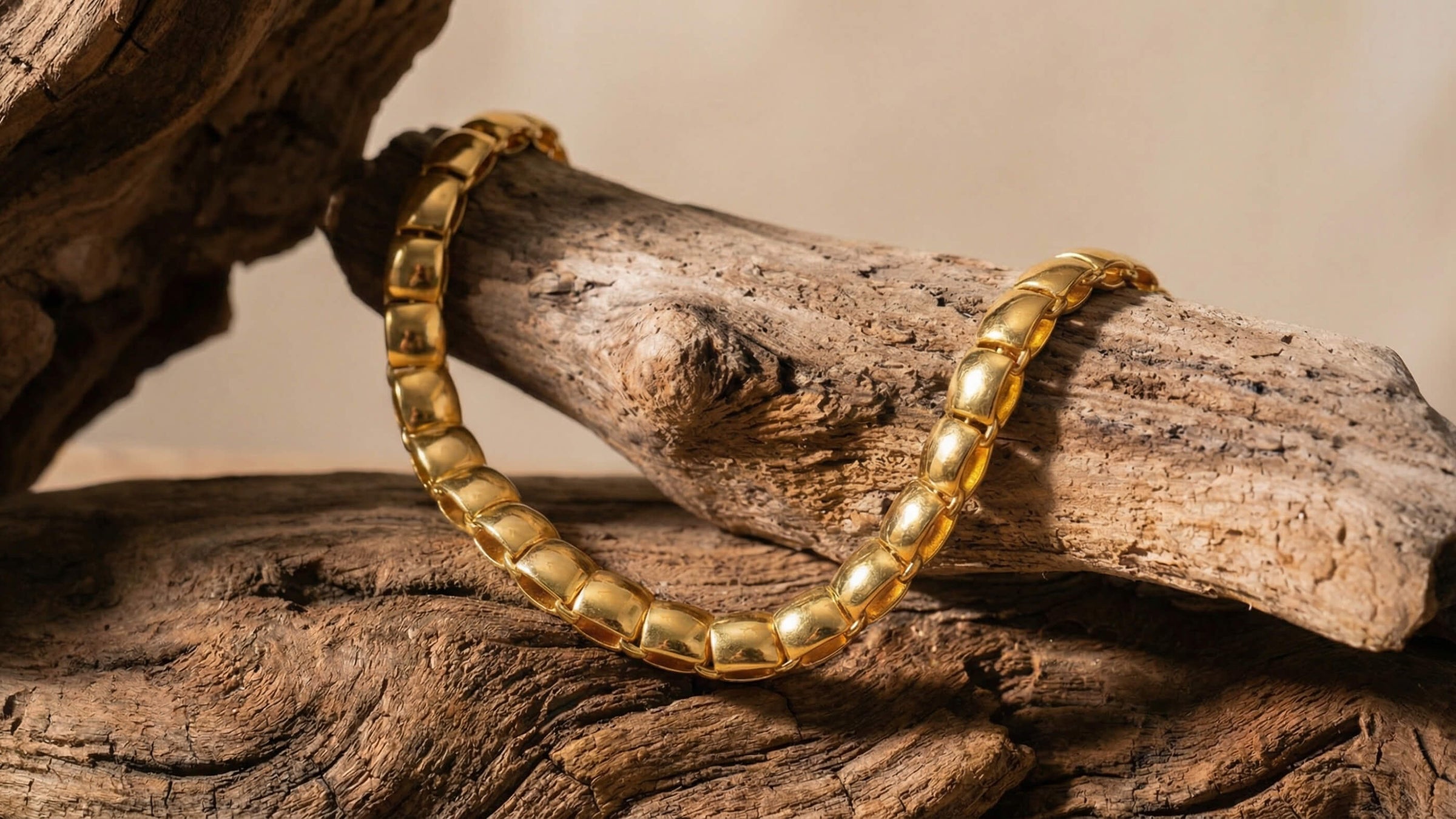
24K Gold Jewelry, Decoded: The Richest Color, Real Trade‑Offs, and Smart Ways to Wear It
Thinking about 24k gold jewelry? Here’s the calm, honest version: pure gold delivers the richest, most saturated yellow on earth, but it also brings real trade‑offs in durability, price, and practicality. If you love the look of high karat gold and want to make a confident choice, this guide breaks down what 24K actually means, how it compares with 22K, 18K, and 14K, where it shines in daily life, and the signals to check before you buy.
What 24K really means
Karat describes how much of an item is pure gold out of 24 parts. By definition, 24K is essentially pure gold; in practice you’ll often see fineness stamped as 999 or 999.9. As karat numbers drop, alloys like silver, copper, palladium, or nickel are added for strength and to tune color. The World Gold Council has an excellent consumer explainer that shows typical fineness marks and alloy mixes for yellow, white, and rose gold. It also notes that gold is alloyed both for durability and for color variety. See the World Gold Council’s guide to color, karat, and purity.
Two quick truths keep decisions grounded:
- Pure gold has the warmest, most saturated yellow hue; lower karats trend slightly less yellow in exchange for hardness.
- Pure gold is malleable. It resists tarnish but scratches and dings more readily than most lower‑karat alloys.
24K versus 22K, 18K, and 14K: what changes in real wear
- Color: 24K reads as deep, sun‑lit yellow. 22K stays richly yellow with small shifts from its alloy. 18K and 14K appear progressively less saturated. For many shoppers this is a style call as much as a materials decision.
- Hardness and dent resistance: added alloying metals make 18K and 14K tougher for daily wear, especially for rings and bracelets that see frequent impact. Pure 24K is soft enough to show life quickly on high‑contact pieces.
- Hypoallergenic considerations: pure gold is generally gentler on sensitive skin. Some white‑gold alloys use nickel; if you’re nickel‑sensitive, ask what metals are in the alloy or choose yellow gold. (White gold is often rhodium plated to brighten color; if you’re curious about plating care and re‑dips, our deep dive on rhodium plating explains how it works.)
- Price: higher gold content usually means a higher price for a comparable design and weight. Market demand also moves pricing. World Gold Council’s recent demand trends explain how record prices have shifted jewelry buying toward pieces that deliver presence even as spot prices rise. Read the 2025 jewelry demand context.
So…who should choose 24K?
Choose 24K when you want the color to be the story and you can protect the piece from routine knocks. That’s why 24K excels in:
- Pendants and medallions that sit on the chest.
- Earrings and drops that rarely hit hard surfaces.
- Dress‑chain links worn over soft fabrics, not tucked under collars.
If you’re hard on jewelry, reach for 18K or 14K for rings and daily bracelets, then reserve 24K for low‑impact designs. There’s one nuance worth knowing: in some markets, designers use processing techniques to make “hard” 24K that’s more wear‑resistant while remaining high purity. It’s still 24K in spirit, yet engineered to hold crisp detail better than traditional soft 24K. (Industry groups in Asia have promoted standards for so‑called “24K hard gold.”) See background from the World Gold Council.
When 24K isn’t ideal
- Tight collars and rough fabrics: friction scuffs soft metal. If you love crewnecks, consider a slightly longer drop or a smoother chain profile.
- Gym, yard work, or busy travel days: save 24K for after‑work plans and special events.
- Rings you never take off: even small knocks accumulate. For lifelong rings, most clients prefer 18K or 14K.
How to verify what you’re buying (and avoid plated look‑alikes)
- Read the quality mark. In the U.S., karat marks like “24K” or fineness marks like “999” indicate purity. The FTC’s consumer guide also clarifies terms for gold‑plated, gold‑filled, and vermeil so you know exactly what you’re purchasing. Review the FTC’s gold labeling basics.
- Ask about testing. Surface‑reading tools like XRF are common and fast. They’re excellent for screening, but heavy plating or electroformed shells can fool quick checks. The GIA recently documented a bracelet constructed by electrodeposition and sold as solid gold—reinforcing why reputable verification and full disclosure matter. See GIA’s lab note on electroformed gold.
- Buy from sellers who welcome questions. Craft origin, alloy details, return windows, and service policies should be easy to understand.
At Zalori, we regularly test precious metals and explain hallmarks in plain English. If you want a primer on stamps and lab tools, our guide to hallmarks and XRF testing is a quick, useful read.
Choosing the right 24K chain and pendant pairing
A 24K pendant looks best when the chain complements both color and weight. Practical pointers:
- Keep textures balanced. If your pendant is high‑polish, choose a smoother chain (box, snake, wheat) for a sleek look. If the pendant has hand‑worked texture, a subtly faceted foxtail or curb can echo that character.
- Match scale to bail. Ensure the chain’s width and end caps fit comfortably through the pendant’s bail opening.
- Place it well. Most men prefer pendants at 20–24 inches; many women like 16–20 inches for everyday and 20–24 inches over knits. For a full refresher on how lengths sit on the body, use our practical necklace and chain length guide.
Ready to browse? Explore our curated selection of men’s chains to dial in texture and proportion, then pair with a pendant you love. Shop men’s necklaces and chains.
24K versus lower‑karat alternatives: a quick comparison
- Best everyday durability: 14K and 18K. They trade a touch of color intensity for resilience—ideal for rings, bracelets, and collars that see frequent contact.
- Best color purity: 24K. When you want the unmistakable warmth only pure gold delivers, 24K wins.
- Best compromise for heirlooms: 18K. It keeps much of gold’s rich hue with strength ready for decades of wear.
If you’re tempted by pure color for high‑impact occasions but want a worry‑free daily uniform, combine both: a 24K hero piece for special moments plus a core set of 18K or 14K staples you don’t think twice about.
Care tips that keep 24K looking luminous
- Handle and store softly. Use individual pouches so softer surfaces don’t rub against harder metals or gemstones.
- Clean gently. Warm water, a drop of mild dish soap, and a soft brush are enough. Avoid abrasives and harsh chemicals that can drag grit across the surface.
- Put jewelry on last, take it off first. Fragrance and hair product residues can dull a mirror finish over time.
- Expect patina. Micro‑scratches are part of the story with 24K. Occasional professional polishing restores luster, but many collectors love the subtle glow pieces develop with wear.
Style ideas: make the color do the work
- Monochrome minimalism: place a 24K pendant over a black knit or a raw silk shirt to let color carry the look.
- One‑and‑done statement: choose a single 24K chain with presence and skip extra layers. The shape and color will read from across the room.
- Mixed‑metal stacks done right: if you mix, keep the 24K piece as the focal point and let supporting chains sit in thinner gauges and cooler tones.
Sustainable choices you can feel good about
Purity simplifies recycling at the end of a piece’s life and reduces the unknowns around mixed base metals. Pair that with transparent seller practices—documentation, honest stamping, responsible sourcing—and you get jewelry that looks good and feels right to own. The World Gold Council also tracks macro trends in jewelry demand and value; following those reports can help you understand how price environments influence what designers create and what consumers choose. Explore their latest data snapshots.
Your next best step
If the color is calling you, start with pieces that play to 24K’s strengths: pendants and dress chains. Explore our curated assortment of pure‑gold designs, then use the chain guide to dial length and scale. For any technical question—stamps, testing, or matching a bail to a chain—reach out. We love helping clients get the details right the first time.
- Shop pure‑gold designs: Zalori 24K Collection
- Find the perfect chain: Men’s necklaces and chains
When the goal is unmistakable, radiant color with honest, long‑term value, 24K done well is unforgettable. Let’s find the version that fits your life—and then let it shine.
Related Articles
View all